Friday 16 / October / 2026
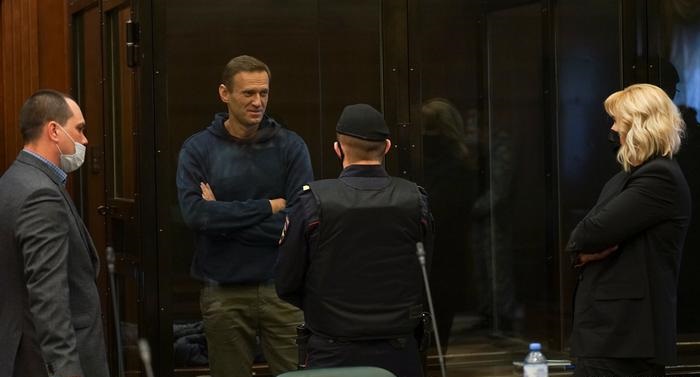
A Moscow court on Tuesday began hearing whether opposition figure Alexei Navalny should face prison time.
There was a heavy security presence outside the building, where riot police were seen hauling protesters off. The OVD-Info monitoring group reported that more than 230 people were detained. Outside a nearby metro station large numbers of police mini vans awaited new detainees and police officers randomly searched people coming out of the metro.
DW correspondent Emily Sherwin said those arrested had been peaceful.
One young protester told DW: "I believe that people should be free to their opinion and that Navalny should be free. And I want to live in a country where money is used for charity and for the people and not for our president because it’s just unfair."
Another protester Sophia, 19, told was there with two friends. She told DW that despite the arrests, she shouldn’t be afraid, just like Navalny wasn’t afraid to come back to Russia.
"I came here because I want to support political prisoner Alexei Navalny. I think that lawlessness is taking place in Russia at (high) levels and I really want it to stop," she said.
"Many people are very afraid about the situation. They are afraid of losing their job, of getting imprisoned. But I believe that we should all follow the behaviour of Alexei Navalny. He is a political prisoner and he is a hero for many of us."
What is the case about?
Navalny was arrested on January 17 as he returned from Germany, where had been recovering from an attempted assassination with a military-grade nerve agent. There is international consensus that Russian security forces were behind the poisoning, though the Kremlin vehemently denies the allegations.
The 44-year-old anti-corruption investigator stands accused of violating the probation conditions of a 2014 money-laundering conviction that he says was a politically motivated fabrication. Penitentiary services asked the Simonovsky District Court to upgrade his three-and-a-half year suspended sentence into a custodial sentence.
Navalny's lawyers argue that he could not register with Russian authorities in person as stipulated, because he was recovering in Germany. Navalny also said his rights to due process were grossly violated and that his arrest was a travesty of justice.
He is already serving a 30-day sentence in connection with the same case.
Kremlin spokesman Dmitry Peskov said he hoped that the "nonsense" would not affect ties with the European Union, which has sharply criticized Moscow's treatment of Navalny. He said Russia would not be lectured by EU foreign affairs chief Josep Borrell when he visits Moscow this week.
Mass protests call for Navalny's release
More than 5,750 people have been arrested over the past two weekends, with tens of thousands of people defying authorities and miserably cold weather to protest his detention. Most of them were released, but face fines and short jail terms.
Police have since targeted Navalny's associates, placing his brother and several others under house arrest for supposed coronavirus rule violations.