Saturday 21 / November / 2026
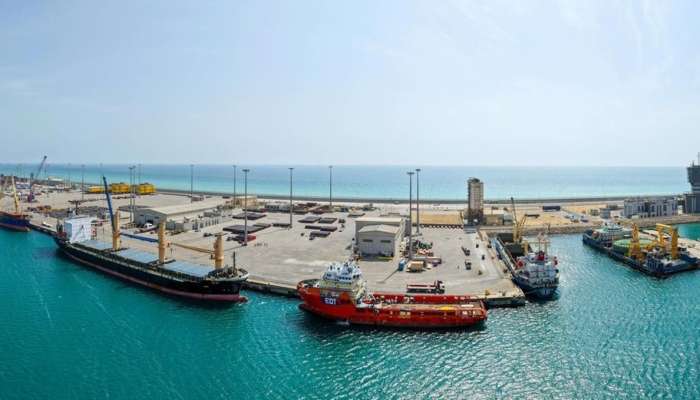
Muscat: The Lab for Improving the Operational Efficiency of Duqm Port and Integration with the Economic System has set out a roadmap to enhance the port's competitiveness and consolidate its role as a driver of economic and investment growth, through 22 initiatives aimed at raising operational efficiency, localising cargo, attracting industrial investments and global shipping lines, and strengthening the port's integration with the economic and logistics system in the Special Economic Zone at Duqm (SEZAD).
The initiatives are distributed across three main pillars: 8 initiatives for service projects aimed at raising the port's operational efficiency, 10 initiatives for investment projects aimed at attracting industrial projects that contribute to localising cargo and enhancing added value, in addition to 4 initiatives related to general enablers focusing on infrastructure, improving the business environment, incentives and marketing.
His Excellency Qais bin Mohammed Al Yousef, Chairman of the Public Authority for Special Economic Zones and Free Zones (OPAZ), affirmed that Duqm Port represents one of the main drivers of economic activity and development in SEZAD, and its role is not limited to shipping and handling operations, but extends to being an enabler and catalyst for various economic sectors, which requires integration of the economic, investment and logistics system.
He explained that the lab focused on three main axes: identifying the enablers needed to enhance economic growth, identifying targeted investments, and examining appropriate governance mechanisms to ensure integration of efforts and accelerate implementation of initiatives and projects, in a way that contributes to achieving the development targets of SEZAD.
He noted that discussions addressed a number of strategic investments for which the zone has competitive advantages to attract, especially projects linked to the port, renewable energy and mining materials, stressing that these projects represent a fundamental pillar for stimulating economic activity and enhancing added value.
He added that a number of these projects have entered negotiation or implementation stages, including green iron and aluminium projects, in addition to new projects expected to contribute to stimulating economic activity and opening wider horizons for industrial investments, as well as projects related to food security, particularly the fisheries sector and fish industries, benefiting from the presence of the fishing port and its associated infrastructure.
He said technical team estimates indicate the possibility of a qualitative leap in economic activity and port traffic in the coming period, through attracting investments and providing the necessary enablers, which will enhance Duqm Port's position and raise its activity and competitiveness compared to other ports.
He stressed the importance of integrating the logistics advantages enjoyed by SEZAD, through linking the port to the airport and the economic zone, and the availability of sea, air and land transport modes, which enhances Duqm's opportunities to become an integrated logistics hub serving industrial, commercial and investment activities.
He pointed to the importance of attracting new shipping lines and logistics operators, in light of what Duqm has proven in terms of economic potential, investment feasibility and strategic importance, and infrastructure integration, affirming OPAZ's welcome to investors and operators from various markets, and the readiness of the concerned government entities to provide the necessary facilities and incentives to enhance the attractiveness of the Sultanate of Oman as a preferred investment destination.
Regarding follow-up on implementation of the lab's outputs, His Excellency said the technical team is studying the establishment of a project management centre to coordinate efforts between the concerned government entities and continuously follow up on initiatives and projects, ensuring overlaps in mandates are addressed and implementation pace is accelerated.
He noted that the proposed centre will form a coordination umbrella bringing together the various relevant entities, ensuring continuity of collaborative work and moving from the stage of identifying initiatives and objectives to preparing integrated implementation cards for each project, including implementation steps, responsible entities, targets and specific timeframes.
He affirmed that the resources needed to implement initiatives and enablers are available through existing programmes and initiatives, particularly regulatory and procedural initiatives that can be implemented directly, while financial allocations are available for initiatives requiring funding in accordance with approved frameworks.
He added that integration of roles between relevant entities in the field of investments is represented in preparing investment opportunities and providing the necessary enablers for them, then promoting them through concerned channels and platforms, including the "Invest in Oman" platform, contributing to attracting investors and turning promising opportunities into productive economic projects.
For his part, His Excellency Eng. Khamis bin Mohammed Al Shammakhi, Undersecretary of the Ministry of Transport, Communications and Information Technology for Transport, affirmed that agreement was reached on the lab's initiatives, and joint working teams were formed through which each entity will implement its assigned roles and responsibilities, stressing the importance of Duqm Port management and the concerned entities in SEZAD following up on implementation of these initiatives.
He explained that the next stage will focus on attracting new shipping lines to the port, attracting investment and industrial projects, in addition to enhancing the maritime connectivity system between Duqm Port and other ports, contributing to expanding the scope of logistics services and raising the efficiency of trade movement.
He pointed out that Duqm Port has witnessed an increase in handling volume, in addition to the presence of global operators, as well as growing interest from some neighbouring countries in benefiting from the port's advantages, expressing his expectation that Duqm will witness growing economic and logistics activity in the coming period.
He said OPAZ is following up on implementation of the lab's initiatives, in coordination with the Ministry of Transport, Communications and Information Technology and other relevant entities, to ensure integration of roles and achievement of targets.
Regarding the logistics corridor launched from Duqm Port, he explained that it aims to link ports of regional countries directly to the ports of the Sultanate of Oman, through an integrated system including customs facilities and procedures aimed at accelerating the transit of goods and facilitating their flow without delay to neighbouring countries' ports, enhancing the efficiency of trade and logistics connectivity between Oman and regional markets.
He affirmed that attracting new shipping lines was among the most prominent topics the lab focused on, given their role in increasing trade movement and strengthening the port's connection to global maritime transport networks, and creating conditions to attract more investments and economic and industrial projects.
The Lab for Improving the Operational Efficiency of Duqm Port reflects a shift from identifying opportunities and potential to practical implementation of initiatives and projects, enhancing integration between the port, the economic zone, the airport and the private sector, raising the efficiency of utilising Duqm's strategic advantages, and supporting its contribution to diversifying the national economy and enhancing Oman's position on the map of logistics services and global trade.
Mark Geilenkirchen, former CEO of Sohar Port, affirmed that Duqm Port has promising future potential qualifying it to enhance its position as one of the pivotal ports in the region, noting that recent developments have proven its ability to deal with regional variables and absorb the large increase in shipping and handling movement.
He said Duqm Port demonstrated remarkable operational efficiency in dealing with the repercussions of the closure of the Strait of Hormuz, by receiving additional shipments and handling them, noting that some sectors recorded growth of up to 700 percent, reflecting the port's readiness and ability to respond to variables and enhance its role in supply chains and logistics services.
He added that the next stage requires focusing on attracting more investors, as investment is the main driver of the port's growth and expansion of its economic activities, stressing the importance of enhancing cooperation and integration between various concerned entities. He explained that this cooperation represents a fundamental pillar for building a prosperous economic future for Duqm, noting that current indicators are encouraging amid growing company interest and increasing partnerships between relevant institutions.
He pointed out that Duqm Port is already witnessing growth in the number of shipping lines, having recorded an increase last month, reflecting its growing importance in trade and maritime shipping movement, and he expected the port to attract more shipping lines in the coming period.
He stressed the importance of keeping pace with this growth by developing infrastructure and supporting services in the zone, including improving the road network, signage, lighting and other necessary facilities, to ensure smooth movement and enhance Duqm's attractiveness for investments and economic projects.
Regarding the lab and workshop outputs, he explained that the priority in the next stage is to turn the ideas and recommendations reached into tangible implementation steps, through coordinating efforts between Duqm Port, OPAZ and Asyad Group, and working to implement the identified initiatives and measures.
He affirmed that the planning and brainstorming stage is complete, and the real challenge now lies in moving to implementation, and translating outputs into projects and initiatives that contribute to enhancing Duqm Port's competitiveness and consolidating the zone's position as a promising investment and logistics destination.




