Sunday 08 / November / 2026
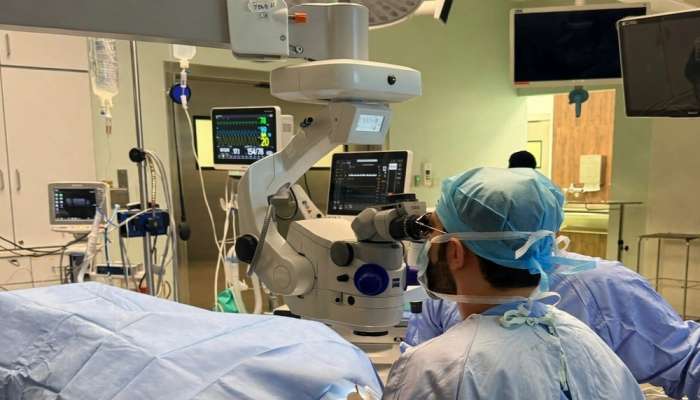
Muscat: More than 300 corneal transplants were performed in the Sultanate of Oman by the end of October 2026, since the activation of a programme to localize ophthmology services in 2023. This milestone reflects the success of the programme and minimises the need for patients to travel abroad for treatment.
Dr. Haitham bin Hilal Al Mahrouqi, Consultant in corneal transplants, cataract surgery and vision correction at Al Nahda Hospital, told Oman News Agency (ONA) that the initiative seeks to establish a sustainable treatment system through cooperation with international eye banks and Oman Centre for Organ and Tissue Donation and Transplantation, in addition to local hospitals.
“This milestone points to an unprecedented surge in the number of such treatments and serves as testament to the programme’s success in localizing specialized corneal transplant techniques,” said Al Mahrouqi, noting that corneal transplant procedures comprise two categories: full-thickness transplants and partial-thickness transplants.
He pointed out that partial-thickness transplants category includes three types—all of which have been fully implemented within the Sultanate of Oman. He noted that some of these techniques allow for the transplantation of an ultra-thin layer of the cornea, measuring not more than 20 microns in thickness.
Al Mahrouqi explained that the organizers of the programme are currently engaged in establishing a corneal bank in the Sultanate of Oman, making optimum use of the existing system of donation of human organs.
He expressed the hope that the corneal bank would be integrated into the National Ophthalmology and Eye Surgery Programme (a facility whose establishment has been the outcome of Royal directives). This, he explained, underlines the progress of corneal transplant services and their integration into a specialised national healthcare framework.
Localising corneal transplant services has eliminated the need to refer relevant patients to specialised centres abroad, said Al Mahrouqi, noting that Oman used to send approximately 80 patients annually abroad for such procedures—a process that incurred significant financial burdens and additional strain on both the patients and their families.
He added that the service was made fully local in 2023 and that, since then, the department concerned has registered no referral of patients for corneal transplants abroad.




