Thursday 05 / November / 2026
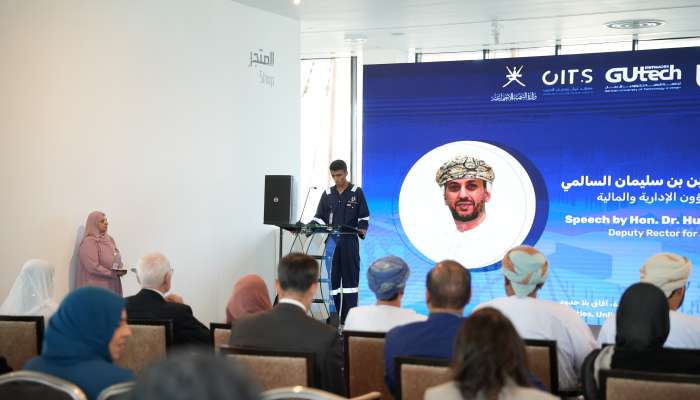
The German University of Technology in Oman (GUtech) officially launched the Uniquely Abled Academy, under the patronage of H.E. Dr. Laila bint Ahmed Al Najjar, Minister of Social Development. This initiative aims to develop the professional and technical skills of individuals with autism spectrum disorder, intellectual disabilities, and Down syndrome, opening new pathways for their active participation in the labour market and promoting greater independence.
The launch follows a cooperation agreement between the Ministry of Social Development and GUtech to implement a vocational training programme focused on employment and professional inclusion for individuals with autism spectrum disorder, intellectual disabilities, and Down syndrome.
The programme aims to equip participants with fundamental and advanced skills in operating Computer Numerical Control (CNC) machines and 3D printing technologies, in line with professional workplace requirements. It also focuses on developing their social and vocational skills, preparing them for integration into working environments, and enhancing opportunities to progress into employment, advanced training, or entrepreneurship. In addition, the initiative seeks to establish a scalable vocational training model for individuals from these groups whose abilities and skills enable them to benefit from the programme, with the potential to expand into other professional fields in the future, broadening opportunities for vocational development and economic empowerment.
The programme is delivered by Oman Institute for Training Services (OITS), in collaboration with the Uniquely Abled Academy in the United States. It adopts a specialised training model that combines technical education, practical application, and individualised support, taking into consideration participants’ abilities and needs. This approach aims to strengthen their skills, build self-confidence, and prepare them for professional life.
In its first phase, the Academy’s programme targets participants with autism spectrum disorder through specialised training in Computer Numerical Control (CNC) technology. The programme extends over one year, comprising six months of technical and practical training at the university, followed by six months of hands-on training at industrial workplaces. This structure is designed to provide participants with professional experience and prepare them to transition into genuine employment opportunities.
Commenting on the launch, Nawal bint Abdulmahdi Jawad, Associate Deputy Rector for Educational Services at GUtech, stated that the establishment of the Academy reflects the university’s commitment to developing educational and training initiatives that create a tangible and lasting impact on society.
She highlighted that every individual possesses unique abilities and potential that deserve to be discovered, recognised, and developed. She added that the university’s responsibility extends beyond providing education and training to creating meaningful opportunities that enable individuals to apply their skills, achieve greater independence, and contribute actively to society and the economy.
She further explained that the Academy seeks to build a bridge between vocational preparation and labour market needs, while opening sustainable career pathways for participants. She emphasised that the initiative’s success should not be measured solely by the number of participants, but by the opportunities transformed into reality and the lasting impact on the lives of participants and their families.
She also called on business and industrial sector institutions to strengthen partnerships and shared responsibility by contributing to the provision of professional opportunities and more inclusive working environments, helping transform abilities into achievements and skills into real employment opportunities.
This initiative forms part of GUtech’s broader efforts to strengthen the integration of education, vocational training, and the industrial sector, in alignment with the objectives of Oman Vision 2040, particularly in developing human capital and enhancing economic and social participation.
GUtech aspires to further develop the Academy into a sustainable model for vocational training and workplace inclusion through effective partnerships with government institutions and the private sector, contributing to more inclusive working environments and expanding professional opportunities for individuals with autism spectrum disorder.