Thursday 22 / October / 2026
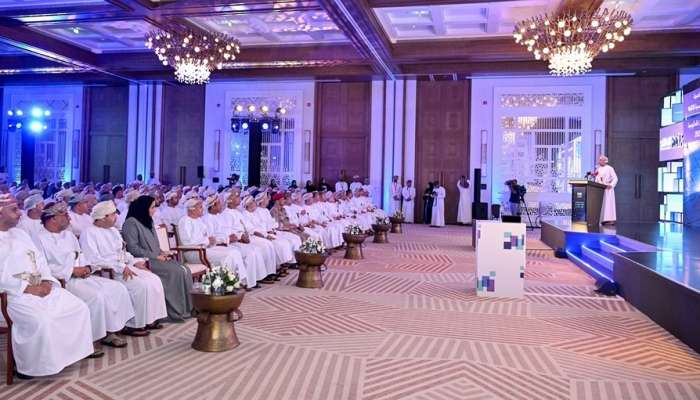
Muscat: The Ministry of Transport, Communications and Information Technology launched today the second phase of the National Program for Digital Economy for the period (2026–2030).
The program aims to achieve a digital economy contribution of RO 1.5 billion to the gross domestic product (GDP), attract technological investments worth RO 300 million, and create 3,000 direct jobs annually through digital economy initiatives.
The launch of the program was held under the auspices of Sultan Salim Al Habsi, Minister of Finance.
The ceremony witnessed the announcement of the digital economy's contribution rate to the GDP, which reached 9 percent based on the results of a survey measuring the digital economy's contribution to the GDP, conducted by the National Centre for Statistics and Information in cooperation with the Ministry of Transport, Communications and Information Technology during this year.
The second phase of the program focuses on digitizing strategic economic sectors, enhancing the adoption of digital solutions, e-commerce, and electronic payment systems, and encouraging small and medium enterprises to undergo digital transformation. It also focuses on expanding the employment of artificial intelligence applications, which contributes to raising efficiency and productivity, fostering innovation, and developing national digital industries.
The ceremony also witnessed the launch of the strategic intelligence platform for the National Program for Digital Economy, in cooperation with the World Economic Forum. The platform aims to monitor future trends and transformations and employ data and knowledge to support policymaking and decision-making, thereby enhancing national priorities and supporting the march of digital transformation in the Sultanate of Oman.
Dr. Ali Amer Al Shidhani, Undersecretary of the Ministry of Transport, Communications and Information Technology for Communications and Information Technology, stated in his speech that the program attaches great importance to qualifying national digital competencies and skills, and enhancing the presence of Omanis in technological activities and professions. He pointed out the rise in the Omanisation rate in technological activities from 33 percent in 2022 to 46 percent in 2026, and in technological professions from 50 percent to 72 percent during the same period, providing more than 5,000 new technological jobs for Omanis over the past five years.
The Under Secretary added that the program, during its first period, included initiatives to develop future specialized skills. Among these were qualifying more than 170 specialists in the field of semiconductors and 800 specialists in the field of artificial intelligence, as well as launching the Master of Science program in Digital Transformation and Innovation in cooperation with the University of Technology and Applied Sciences. This aims to build national competencies capable of keeping pace with the rapid developments in the digital sector.
In the field of digital innovation and national industries, He clarified that the Ministry has achieved a number of qualitative milestones. These were represented in developing a specialized zone for startups operating in the field of artificial intelligence, establishing an artificial intelligence studio through which 50 smart products were developed, and supporting the establishment of 10 local startups in the space sector.
He pointed out that the Ministry enhanced the participation of small and medium enterprises in implementing government technological projects by contracting with 251 companies, establishing 48 business incubators and accelerators to support tech startups, and providing funding exceeding RO 127 million. This contributed to enhancing the innovation and entrepreneurship ecosystem and supporting the growth of national digital industries.
In the pillar of digital infrastructure and green advanced computing, the Undersecretary reviewed the indicators of digital infrastructure development in the Sultanate of Oman. He clarified the Sultanate of Oman's advancement to the 22nd place globally in the United Nations Telecommunication Infrastructure Index for 2024, compared to the 48th place in 2022, and its attainment of the 33rd place globally in the Digital Readiness Index for 2025 issued by the International Telecommunication Union.
Al Shidhani indicated that the volume of data exchanged through the National Integration Platform in the government network increased by 391 percent during the period from 2021 to 2025.
Meanwhile, digital resilience and robustness are supported by 20 submarine cables, and the population coverage rate for high-speed mobile broadband reached 99 percent.
He touched upon the plan to establish specialized data centers for artificial intelligence with a capacity of up to 500 megawatts. This enhances the readiness of the digital infrastructure to accommodate advanced technologies and supports the orientation toward green advanced computing.
On the level of the space sector, he pointed to the growth of private sector investments by 270 percent, the rise in the number of workers by 163 percent, and the increase in the number of companies operating in the sector by 136 percent.
The Undersecretary added that among the most prominent developments in this field is the launch of earth observation satellites owned by Omani companies, and the start of designing and manufacturing the first Omani communications satellite "OmanSat". This is alongside the commencement of operations for a rocket launch pad and the execution of two successful launch experiments, thereby enhancing national capabilities in employing space technologies across various sectors.
In the pillar of digital investment, trade, and economic value, he clarified that the value of investment deals and projects during the COMEX 2025 exhibition amounted to RO 116 million, an increase of 45 percent compared to 2024. Furthermore, 200 tech companies participated in exhibitions outside the Sultanate of Oman over the past three years, during which they concluded agreements worth RO 30 million.
He pointed out that the volume of e-commerce in the Sultanate of Oman reached RO 288 million in 2025, compared to RO 221 million in 2023, while investments in the semiconductor sector amounted to RO 88 million. He added that the volume of non-cash transactions increased by more than 700 percent during the period from 2020 to 2025.
For his part, Eng. Ghalib Said Al Maamari, Undersecretary of the Ministry of Commerce, Industry and Investment Promotion for Commerce and Industry, clarified that the launch of the second phase of the National Program for Digital Economy represents a new milestone in the apparatus's journey toward a more competitive and sustainable digital economy. It employs modern technologies to support economic growth, diversify income sources, raise sectoral productivity, and enhance the competitiveness of national institutions.
He pointed out that the Ministry works within this orientation through the Digital Trade Program, which is one of the executive programs of the National Program for Digital Economy. It aims to transform digital enablers into real economic opportunities for companies, small and medium enterprises, and entrepreneurs, and to open broader horizons for Omani products and services to access markets.
Furthermore, the Undersecretary indicated that digital trade has become an integrated system encompassing marketing, transactions, supply chains, logistics services, and business-to-business and cross-border trade. This provides broader opportunities for Omani companies to grow, expand, and compete.
He stated that the first phase of the Digital Trade Program (2021–2025) established an important foundation for this transformation by regulating the market, enhancing trust, and expanding the adoption of digital trade. Its most prominent achievements include the launch of the "Maroof Oman" platform, the issuance of the executive regulation for e-commerce, and the expansion of its activity licenses. This is alongside building partnerships and supporting the access of small and medium enterprises to global markets.
He mentioned that the second phase (2026–2030) will work on transitioning from building readiness and regulating the market to maximizing the economic impact of digital trade. It will link it more deeply with productive economic sectors and enhance the presence of Omani companies, products, and services regionally and globally.
He pointed out that artificial intelligence and advanced technologies will be a key enabler in this phase. This will be achieved through their employment in marketing, consumer behavior analysis, demand, inventory, and supply chain management, and the development of customer experience. This raises the efficiency of national companies, particularly small and medium enterprises, and enhances their ability to compete and grow.
The National Program for Digital Economy is considered one of the strategic programs supporting "Oman Vision 2040". It includes eight executive programs: National Digital Transformation, Artificial Intelligence, Cybersecurity Industry, Space, Digital Industry, Digital Trade, Financial Technologies, and Digital Infrastructure.
The program is based on three strategic pillars represented in the Digital Society, Digital Government, and Digital Sectors and Businesses. These are supported by four basic foundations including developing the digital infrastructure, enhancing digital policies and governance, developing digital talents and skills, and supporting innovation and national digital industries.
The program is implemented across four phases: the first for the period (2021–2025) to build an integrated digital government, the second for the period (2026–2030) to digitize economic sectors, the third for the period (2031–2035) to consolidate national digital industries, and the fourth for the period (2036–2040) to enhance digital exports and global competitiveness.
The launch of the second phase comes as an extension of national efforts toward enhancing integration between government institutions and the private sector, and expanding the utilization of digital technologies in economic activities. This supports the building of a knowledge- and innovation-based economy and enhances the Sultanate of Oman's competitiveness and position in the digital economy regionally and internationally.