Monday 05 / January / 2026
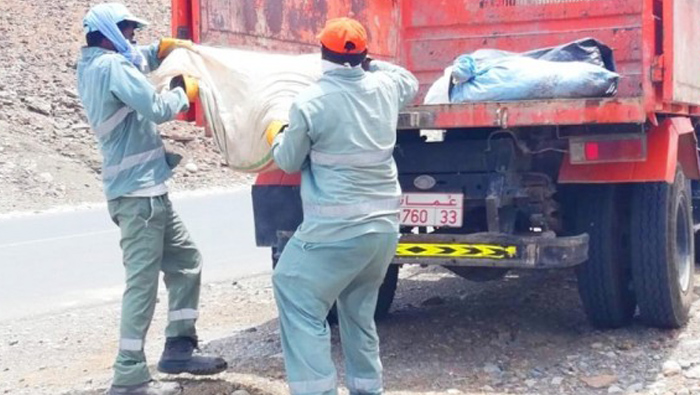
Muscat: Municipalities in Oman have sent teams to clean up waste generated during the Eid holidays, which tends to be significantly higher than at other times during the year.
Improperly disposed-of waste can cause diseases and harm the environment, particularly if it has been haphazardly thrown on the sides of roads and beaches
A statement from the Directorate General of Municipalities in Al Dakhiliyah said, “Cl and spraying efforts are continuing across the villages of Bidbid. Bahla Municipality is intensifying its efforts to remove waste and clean up tourist areas in the wilayah of Bahla.” Meanwhile, in North Al Batinah, Saham municipality reported similar efforts during the Eid break, where they were “removing slaughter waste from the side of the road in the wilayah of Saham.”
All of these efforts stem from a common problem during the Eid holidays, when people slaughter animals and then dump the waste along the sides of the roads.
In this context, the Environmental Society of Oman said, “The amount of municipal and slaughter waste during the Eid period reached more than 20,000 tonnes across the various governorates of the Sultanate, which is equivalent to an increase of around 36 percent compared to normal days. Enjoy the holidays but remember to keep the environment clean.”
Oman’s Environmental Services Company (be’ah) has also complained about the effect that this habit has on their attempts to keep cities clean. An official from be’ah told Times of Oman: “People doing this harms our company, because the trash is not disposed of in designated areas. It means extra work time for employees to transfer the waste from places in which it’s not supposed to be.”
The company has been working to increase awareness on this issue, emphasising the fact that each governorate has designated areas in which slaughtered animal waste can be disposed of.
“We have been even more active this Eid,” he said. “We have announced where people should throw away their waste and have put out videos on the harmful effects of this waste. We have also made videos in which be’ah employees are interviewed about how it affects their jobs when waste is thrown elsewhere.
In addition, the Ministry of Regional Muncipalities and Water Resources has recommended that people use slaughterhouses, which are cleaner and are better able to dispose of the waste. A statement by the ministry read: “Electronic billing at municipal slaughterhouses and medical checks for cattle by a veterinarian can ensure that the meat that reaches consumers is healthy.”
B’eah has also warned that disposing of waste in random locations is harmful, saying, “Improper slaughter waste disposal causes harmful effects on the environment and public health. Make sure you dispose of slaughter waste properly. Harmful effects include haemorrhagic fevers that are transferred either through tick bites or through humans with wounds touching the waste generated from the slaughter of sick animals.”