Wednesday 20 / May / 2026
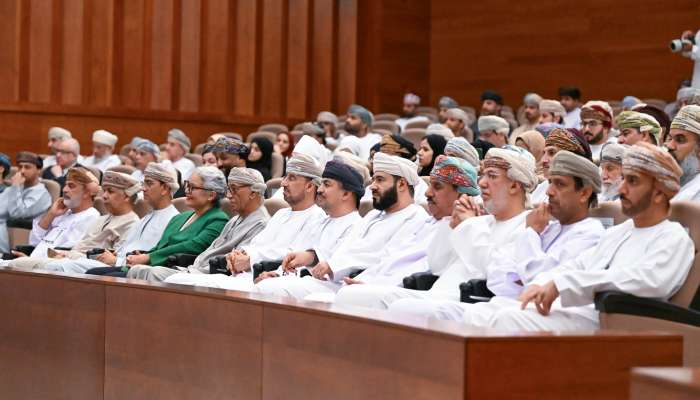
Muscat: The Ministry of Information unveiled the premiere of the documentary Dakhtar Thoms or Doctor Thoms through a screening held at the Ministry's theatre on Wednesday, amidst a cultural, artistic, and media presence, along with a number of cultural content creators in the Sultanate of Oman.
Dr. Abdullah Nasser Al Harrasi, Minister of Information, stated in a press release that the documentary Dakhtar Thoms emerges from the Ministry's broader initiative to chronicle Omani history and illuminate the humanitarian and civilisational dimensions of Omani society. This is achieved through the creation of media and documentary works rendered with a contemporary vision and executed to modern production standards.
Al Harrasi added that In recent years, the Ministry has cultivated a distinguished slate of documentary films and programmes, most notably the sweeping Beit Al Ajaib (House of Wonders) trilogy, the series Walana Athar, and other works devoted to safeguarding cultural heritage and national memory. These are brought before new generations and audiences across the Arab world and beyond in a compelling, contemporary visual language.
The Minister of Information noted that the film turns its lens on the figure of the American physician Dr. Wells Thoms — known with deep familiarity as Dakhtar Thoms — whose humanitarian and medical legacy remains etched into Oman's collective memory. The work traverses a formative chapter in the evolution of the Sultanate of Oman's health services, weaving historical documentation with dramatic intimacy and profound human depth.
He added that the the act of chronicling national history is a cornerstone of the Ministry of Information's cultural and media mandate — a solemn undertaking that fortifies national consciousness, deepens Omani identity, and entrusts the nation's memory intact to the generations yet to come.
A number of specialists in cultural and artistic affairs in the Sultanate of Oman confirmed that the Ministry of Information's cinematic documentation of Dr. Thoms' journey within a visual context constitutes a knowledge asset and a mirror reflecting institutional efforts in monitoring social and cultural transformations and reviewing visual archives. This enables current generations to learn about the important experiences achieved on the land of the Sultanate of Oman.
Omani film director Mohamed Ali Al Kindi said that the film Dakhtar Thoms can be viewed as a model for the concept of a documentary that does not merely narrate a story, but rather reshapes awareness toward it. When a documentary film deals with a character or a social issue, it grants it a deep human space that transcends direct classification, revealing the details of daily life, anxieties, relationships, and cultural transformations that traditional media may not capture. Here lies the power of the documentary, as it makes the viewer live the experience rather than just hear about it.
He pointed out that a documentary film is capable of reflecting societal cultural diversity in a highly profound manner because it deals with culture as a living practice, not a theoretical slogan. It documents customs, dialects, clothing, patterns of thinking, and even the details of the place as living elements in building identity. Through these elements, the film's vision and objectives are formed, as the documentary becomes a space for preserving cultural specificity and, at the same time, a window for dialogue with other cultures. Therefore, some documentary films turn into a humanitarian bridge linking societies, because they allow the other to see a human being who is different in terms of circumstances, yet shares the same dreams and common fears.
He emphasised that the role of documentary films in preserving community memory has become more important than ever, especially in light of the rapid transformations the world is witnessing. It resembles a living visual archive, but it does not only preserve facts; it also preserves emotions—namely, the way people lived those moments. Documentary films also contribute to enhancing cultural and historical communication between different generations, because they transmit human experience from one generation to another through the language of the image. New generations may not live through the major events that societies experienced, but through the documentary, they can get closer to their psychological and social details, and understand their impact on shaping collective identity.
He pointed out the importance of the Ministry of Information producing a dramatic documentary film about Dakhtar Thoms as a project that transcends the traditional artistic or documentary dimension to become a cultural, national, and humanitarian act that re-reads an important part of modern Omani memory. This type of work does not merely present a historical figure, but also documents a social and health phase experienced by Omani society during a time of major transitions before and after the modern Renaissance. Through the character of Dakhtar Thoms, one can evoke the image of the Omani person, the nature of daily life, health challenges, and the human relationships that were formed during that stage.
He added that the choice of a dramatic documentary format specifically carries special importance because it combines the power of the historical document with the depth of dramatic treatment. The documentary aspect gives the work its historical credibility through testimonies, archives, and facts, while drama provides the ability to revive human emotions and details that documentary material alone might not convey. This blending helps create an emotional interaction within the viewer, especially the new generations who did not live through that era.
He explained that from a cultural perspective, the film contributes to saving community memory from begin forgotten, because influential human figures often remain in oral narration more than in visual documentation. Here, the film turns into a "living visual archive" that preserves stories, experiences, and social relationships for future generations. Socially, the work highlights an important aspect of Omani values, such as loyalty, tolerance, and the recognition of those who served society with sincerity, regardless of their cultural or national background. Therefore, reclaiming the biography of Dakhtar Thoms also reflects the image of a humanly open Omani society capable of building relationships based on mutual respect and appreciation. The film also carries deep symbolic connotations; the character of the physician here does not represent an individual only, but symbolises the concept of the "savior human" or the "human conscience" within a society that was facing complex health and social challenges. The Omani location itself within the film turns into a significant element documenting the environment, memory, and cultural transformations.
He added that the production of this work by the Ministry of Information gives the documentary national value, because it confirms the interest of cultural institutions in the Sultanate of Oman in documenting social and human history, rather than restricting it to political or official history alone. This is an important development in visual cultural awareness, because nations are not built by the memory of authority alone, but also by the memory of ordinary people and the human experiences that crafted the soul of society.
Dr. Sulaiman Umair Al Mahdhouri, a researcher in historical affairs, stated: "These works document prominent aspects of Omani history, including health history, which requires this type of documentation. It tells the story of a Physician, Dr. Thoms, who provided health and humanitarian services in Oman, especially during the first half of the twentieth century. This is an important period that marks the beginnings of the establishment of health services in the Sultanate of Oman."
He added that this documentary contributes to preserving an Omani historical legacy from a specific era. This documentation is important for various generations to view, particularly regarding the health aspects that still require further documentation, and the humanitarian contributions provided by others. It serves as a model of coexistence between Omanis and various foreign figures who visit or reside in Oman.
On his part, film director Mohammed Abdullah Al Ajmi said: "I believe that the documentary Dakhtar Thoms represents an important experience within the trajectory of the Omani film industry, especially in its approach to addressing topics related to human and social memory in the Sultanate of Oman. Such works add a cultural and cognitive dimension to local cinema because they do not merely rely on artistic narrative but also contribute to documenting stories and experiences that carry historical and human value for society."
He added: "The documentary’s exploration of a phase associated with the development of healthcare and social care gives the work special significance, as it is part of documenting the transformations witnessed by the Sultanate of Oman across different stages. This type of film enhances the role of cinema as a means of preserving memory and transmitting identity and culture to future generations through an influential visual language that resonates with the audience."
Al Ajmi noted that the cultural value offered by the work can be capitalised upon through its presence in festivals, cultural events, and educational institutions, serving as a crucial visual reference. It can also act as a source of inspiration for young filmmakers to create works based on Omani stories and local themes with a contemporary cinematic spirit capable of reaching both local and international audiences.
He added that today's audience is increasingly interested in works that carry a genuine identity and stories stemming from the community itself. This gives the film added value, as it draws on Omani memory and re-presents it within a modern visual template that keeps pace with the evolution of the film industry.
He concluded by indicating that such experiences pave the way for producing more works that highlight prominent figures and inspiring Omani stories. Furthermore, they grant young filmmakers the confidence that local content can compete and achieve widespread reach when presented with high quality and a clear artistic vision.