Saturday 25 / April / 2026
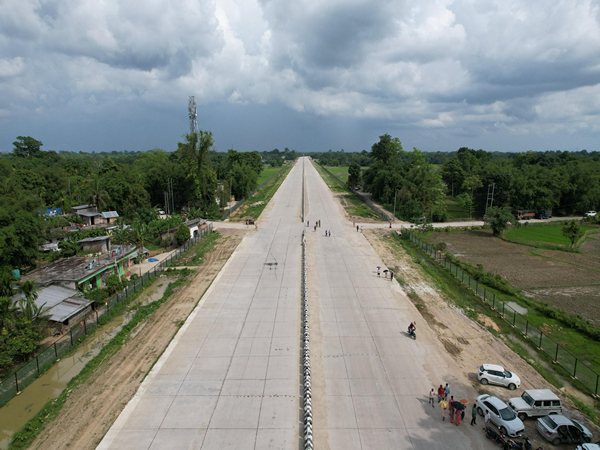
New Delhi: India’s road infrastructure has experienced one of the most significant transformations in its post-independence history. Over the past two decades, the country has dramatically expanded its national highway network while simultaneously upgrading its capacity and quality.
The change has been driven by a combination of higher government spending, innovative financing models, technological advancements, and policy reforms aimed at improving efficiency.
What was once a largely two-lane highway network has gradually evolved into a system that increasingly features multi-lane highways and access-controlled expressways. The shift reflects a broader change in the government’s strategy, from merely expanding connectivity to building high-capacity transport corridors that can support economic growth, reduce logistics costs, and enable faster movement of goods and people across the country.
At the centre of this transformation lies a massive increase in public spending. The budgetary allocation for the Ministry of Road Transport and Highways (MoRTH) has risen nearly twentyfold since the late 2000s, creating the financial foundation for large-scale highway expansion.
The financial commitment to road infrastructure has grown exponentially in recent years. For the financial year 2026-27, the Ministry of Road Transport and Highways has been allocated Rs 3.09 lakh crore. This marks a dramatic increase compared to the Rs 15,450 crore allocated in 2009-10.
The current allocation is also about 2.5 times higher than the funding provided in 2021-22. A particularly sharp increase occurred between 2021-22 and 2022-23, when the budget rose by nearly 70 per cent, from Rs 1.23 lakh crore to Rs 2.08 lakh crore.
The ministry in its current independent form was created in 2009. Before that, road transport and highways were managed under different ministerial structures. Since its formation, the ministry has gradually expanded its financial capacity, enabling the government to simultaneously execute multiple highway projects across the country.
Greater availability of funds has helped avoid delays caused by payment bottlenecks and has allowed for more ambitious project planning. However, financial resources alone cannot explain the pace of transformation; structural reforms in project execution have also played a crucial role.
Expansion of the National Highway Network
The expansion of the national highway network over the past two decades has been remarkable. According to government data, the total length of national highways has doubled since 2008-09.
At the end of the financial year 2008-09, India had approximately 70,548 kilometres of national highways. By December 2025, that number had risen to about 1.46 lakh kilometres.
This means that more than 76,000 kilometres of national highways have been added to the network since 2008-09. Remarkably, the expansion achieved during this period exceeds the total addition made between 1951 and 2008-09.
For context, India had only 19,811 kilometres of national highways in 1951, soon after independence. Over the next several decades, the network expanded gradually, but the pace accelerated significantly in the last twenty years.
The growth becomes even more striking when compared to the network size in 2005-06. At that time, India had around 66,590 kilometres of national highways.
Today, the total stands at approximately 1,46,572 kilometres—an increase of nearly 80,000 kilometres. Beyond the sheer expansion in length, the quality and capacity of highways have also improved significantly.
In 2005-06, India’s highway network was dominated by two-lane or smaller roads. Out of the total 66,590 kilometres of highways at the time, only about 7,856 kilometres were four-lane or above.
Today, the length of four-lane and above highways has grown to 48,421 kilometres, representing a more than six-fold increase.
This means that nearly 40,000 kilometres of additional multi-lane highways have been built within less than two decades. The share of four-lane and above highways in the national network has therefore increased from around 12 per cent in 2005-06 to approximately 33 per cent by December 2025.
In other words, nearly one-third of India’s national highway network now consists of four-lane or larger roads.
This represents a dramatic shift from the earlier situation where nearly nine out ofm every ten kilometres of highways were two-lane or smaller. Despite the growth in multi-lane corridors, two-lane highways still form the largest portion of the national highway network.
The length of two-lane highways has more than doubled over the past two decades, from about 37,238 kilometres in 2005-06 to 84,774 kilometres by December 2025.
At the same time, the length of roads below two lanes has decreased significantly. Such roads have reduced from 21,496 kilometres in 2005-06 to around 13,000 kilometres today.
This shift reflects the government’s effort to gradually upgrade lower-capacity roads into wider highways capable of handling increasing traffic volumes.
From connectivity to capacity India’s highway development strategy has also evolved over time. Earlier policies primarily focused on expanding connectivity by building new roads.
Today, the emphasis has shifted toward improving the carrying capacity of existing corridors.
Instead of simply adding kilometres of roads, planners are increasingly focusing on creating multi-lane highways and fully access-controlled expressways that can move traffic more efficiently.
The goal is to reduce travel time, lower transportation costs, and strengthen longterm logistics efficiency, factors that are critical for economic growth. Along with expansion and upgrades, the pace of highway construction has also accelerated significantly.
Until around 2015-16, India was building approximately 5,000 to 6,000 kilometres of national highways each year.
However, the construction output doubled between 2014-15 and 2018-19, when the country crossed the 10,000-kilometre mark for the first time.
Since then, annual highway construction has largely remained above that level. In terms of daily averages, the construction speed has also improved substantially.
Before 2016-17, India typically built fewer than 15 kilometres of highways per day. After 2016-17, the pace increased to more than 20 kilometres per day.
The fastest construction pace on record occurred in 2020-21, when India built highways at an average rate of 36.5 kilometres per day.
In the current financial year, the pace stood at around 18 kilometres per day until
December. The pace is expected to improve in the final quarter of the financial
year.
Hybrid annuity model revives private participation
A major policy reform that helped accelerate highway construction was the
introduction of the Hybrid Annuity Model (HAM) in January 2016.
The model was designed to revive private sector participation in highway
development at a time when many projects were stalled due to financial stress.
Under HAM, the government provides 40 per cent of the project cost as
construction support. The remaining 60 per cent is paid to the developer as
annuity payments over the operational period, along with interest.
atically expanded its national highway network while
simultaneously upgrading its capacity and quality. The change has been driven by
a combination of higher government spending, innovative financing models,
technological advancements, and policy reforms aimed at improving efficiency.
What was once a largely two-lane highway network has gradually evolved into a
system that increasingly features multi-lane highways and access-controlled
expressways. The shift reflects a broader change in the government’s strategy, from
merely expanding connectivity to building high-capacity transport corridors that
can support economic growth, reduce logistics costs, and enable faster movement
of goods and people across the country.
At the centre of this transformation lies a massive increase in public spending. The
budgetary allocation for the Ministry of Road Transport and Highways (MoRTH) has
risen nearly twentyfold since the late 2000s, creating the financial foundation for
large-scale highway expansion.
The financial commitment to road infrastructure has grown exponentially in
recent years. For the financial year 2026-27, the Ministry of Road Transport and
Highways has been allocated Rs 3.09 lakh crore. This marks a dramatic increase
compared to the Rs 15,450 crore allocated in 2009-10.
The current allocation is also about 2.5 times higher than the funding provided in
2021-22. A particularly sharp increase occurred between 2021-22 and 2022-23, when
the budget rose by nearly 70 per cent, from Rs 1.23 lakh crore to Rs 2.08 lakh crore.
The ministry in its current independent form was created in 2009. Before that, road
transport and highways were managed under different ministerial structures. Since
its formation, the ministry has gradually expanded its financial capacity, enabling
the government to simultaneously execute multiple highway projects across the
country.
Greater availability of funds has helped avoid delays caused by payment
bottlenecks and has allowed for more ambitious project planning. However,
financial resources alone cannot explain the pace of transformation; structural
reforms in project execution have also played a crucial role.
Expansion of the National Highway Network
The expansion of the national highway network over the past two decades has
been remarkable. According to government data, the total length of national
highways has doubled since 2008-09.
At the end of the financial year 2008-09, India had approximately 70,548 kilometres
of national highways. By December 2025, that number had risen to about 1.46 lakh
kilometres.
This means that more than 76,000 kilometres of national highways have been
added to the network since 2008-09. Remarkably, the expansion achieved during
this period exceeds the total addition made between 1951 and 2008-09.
For context, India had only 19,811 kilometres of national highways in 1951, soon after
independence. Over the next several decades, the network expanded gradually, but
the pace accelerated significantly in the last twenty years.
The growth becomes even more striking when compared to the network size in
2005-06. At that time, India had around 66,590 kilometres of national highways.
Today, the total stands at approximately 1,46,572 kilometres—an increase of nearly
80,000 kilometres.
Beyond the sheer expansion in length, the quality and capacity of highways have
also improved significantly.
In 2005-06, India’s highway network was dominated by two-lane or smaller roads.
Out of the total 66,590 kilometres of highways at the time, only about 7,856
kilometres were four-lane or above.
Today, the length of four-lane and above highways has grown to 48,421 kilometres,
representing a more than six-fold increase.
This means that nearly 40,000 kilometres of additional multi-lane highways have
been built within less than two decades.
The share of four-lane and above highways in the national network has therefore
increased from around 12 per cent in 2005-06 to approximately 33 per cent by
December 2025.
In other words, nearly one-third of India’s national highway network now consists
of four-lane or larger roads.
This represents a dramatic shift from the earlier situation where nearly nine out of
every ten kilometres of highways were two-lane or smaller.
Despite the growth in multi-lane corridors, two-lane highways still form the largest
portion of the national highway network.
The length of two-lane highways has more than doubled over the past two decades,
from about 37,238 kilometres in 2005-06 to 84,774 kilometres by December 2025.
At the same time, the length of roads below two lanes has decreased significantly.
Such roads have reduced from 21,496 kilometres in 2005-06 to around 13,000
kilometres today.
This shift reflects the government’s effort to gradually upgrade lower-capacity
roads into wider highways capable of handling increasing traffic volumes.
From connectivity to capacity
India’s highway development strategy has also evolved over time. Earlier policies
primarily focused on expanding connectivity by building new roads.
Today, the emphasis has shifted toward improving the carrying capacity of existing
corridors.
Instead of simply adding kilometres of roads, planners are increasingly focusing on
creating multi-lane highways and fully access-controlled expressways that can
move traffic more efficiently.
The goal is to reduce travel time, lower transportation costs, and strengthen longterm logistics efficiency, factors that are critical for economic growth.
Along with expansion and upgrades, the pace of highway construction has also
accelerated significantly.
Until around 2015-16, India was building approximately 5,000 to 6,000 kilometres of
national highways each year.
However, the construction output doubled between 2014-15 and 2018-19, when the
country crossed the 10,000-kilometre mark for the first time.
Since then, annual highway construction has largely remained above that level.
In terms of daily averages, the construction speed has also improved substantially.
Before 2016-17, India typically built fewer than 15 kilometres of highways per day.
After 2016-17, the pace increased to more than 20 kilometres per day.
The fastest construction pace on record occurred in 2020-21, when India built
highways at an average rate of 36.5 kilometres per day.
In the current financial year, the pace stood at around 18 kilometres per day until
December. The pace is expected to improve in the final quarter of the financial
year.
Hybrid annuity model revives private participation
A major policy reform that helped accelerate highway construction was the
introduction of the Hybrid Annuity Model (HAM) in January 2016.
The model was designed to revive private sector participation in highway
development at a time when many projects were stalled due to financial stress.
Under HAM, the government provides 40 per cent of the project cost as
construction support. The remaining 60 per cent is paid to the developer as
annuity payments over the operational period, along with interest.
India’s road infrastructure has experienced one of the most significant
transformations in its post-independence history. Over the past two decades, the
country has dramatically expanded its national highway network while
simultaneously upgrading its capacity and quality. The change has been driven by
a combination of higher government spending, innovative financing models,
technological advancements, and policy reforms aimed at improving efficiency.
What was once a largely two-lane highway network has gradually evolved into a
system that increasingly features multi-lane highways and access-controlled
expressways. The shift reflects a broader change in the government’s strategy, from
merely expanding connectivity to building high-capacity transport corridors that
can support economic growth, reduce logistics costs, and enable faster movement
of goods and people across the country.
At the centre of this transformation lies a massive increase in public spending. The
budgetary allocation for the Ministry of Road Transport and Highways (MoRTH) has
risen nearly twentyfold since the late 2000s, creating the financial foundation for
large-scale highway expansion.
The financial commitment to road infrastructure has grown exponentially in
recent years. For the financial year 2026-27, the Ministry of Road Transport and
Highways has been allocated Rs 3.09 lakh crore. This marks a dramatic increase
compared to the Rs 15,450 crore allocated in 2009-10.
The current allocation is also about 2.5 times higher than the funding provided in
2021-22. A particularly sharp increase occurred between 2021-22 and 2022-23, when
the budget rose by nearly 70 per cent, from Rs 1.23 lakh crore to Rs 2.08 lakh crore.
The ministry in its current independent form was created in 2009. Before that, road
transport and highways were managed under different ministerial structures. Since
its formation, the ministry has gradually expanded its financial capacity, enabling
the government to simultaneously execute multiple highway projects across the
country.
Greater availability of funds has helped avoid delays caused by payment
bottlenecks and has allowed for more ambitious project planning. However,
financial resources alone cannot explain the pace of transformation; structural
reforms in project execution have also played a crucial role.
Expansion of the National Highway Network
The expansion of the national highway network over the past two decades has
been remarkable. According to government data, the total length of national
highways has doubled since 2008-09.
At the end of the financial year 2008-09, India had approximately 70,548 kilometres
of national highways. By December 2025, that number had risen to about 1.46 lakh
kilometres.
This means that more than 76,000 kilometres of national highways have been
added to the network since 2008-09. Remarkably, the expansion achieved during
this period exceeds the total addition made between 1951 and 2008-09.
For context, India had only 19,811 kilometres of national highways in 1951, soon after
independence. Over the next several decades, the network expanded gradually, but
the pace accelerated significantly in the last twenty years.
The growth becomes even more striking when compared to the network size in
2005-06. At that time, India had around 66,590 kilometres of national highways.
Today, the total stands at approximately 1,46,572 kilometres—an increase of nearly
80,000 kilometres.
Beyond the sheer expansion in length, the quality and capacity of highways have
also improved significantly.
In 2005-06, India’s highway network was dominated by two-lane or smaller roads.
Out of the total 66,590 kilometres of highways at the time, only about 7,856
kilometres were four-lane or above.
Today, the length of four-lane and above highways has grown to 48,421 kilometres,
representing a more than six-fold increase.
This means that nearly 40,000 kilometres of additional multi-lane highways have
been built within less than two decades.
The share of four-lane and above highways in the national network has therefore
increased from around 12 per cent in 2005-06 to approximately 33 per cent by
December 2025.
In other words, nearly one-third of India’s national highway network now consists
of four-lane or larger roads.
This represents a dramatic shift from the earlier situation where nearly nine out of
every ten kilometres of highways were two-lane or smaller.
Despite the growth in multi-lane corridors, two-lane highways still form the largest
portion of the national highway network.
The length of two-lane highways has more than doubled over the past two decades,
from about 37,238 kilometres in 2005-06 to 84,774 kilometres by December 2025.
At the same time, the length of roads below two lanes has decreased significantly.
Such roads have reduced from 21,496 kilometres in 2005-06 to around 13,000
kilometres today.
This shift reflects the government’s effort to gradually upgrade lower-capacity
roads into wider highways capable of handling increasing traffic volumes.
From connectivity to capacity
India’s highway development strategy has also evolved over time. Earlier policies
primarily focused on expanding connectivity by building new roads.
Today, the emphasis has shifted toward improving the carrying capacity of existing
corridors.
Instead of simply adding kilometres of roads, planners are increasingly focusing on
creating multi-lane highways and fully access-controlled expressways that can
move traffic more efficiently.
The goal is to reduce travel time, lower transportation costs, and strengthen longterm logistics efficiency, factors that are critical for economic growth.
Along with expansion and upgrades, the pace of highway construction has also
accelerated significantly.
Until around 2015-16, India was building approximately 5,000 to 6,000 kilometres of
national highways each year.
However, the construction output doubled between 2014-15 and 2018-19, when the
country crossed the 10,000-kilometre mark for the first time.
Since then, annual highway construction has largely remained above that level.
In terms of daily averages, the construction speed has also improved substantially.
Before 2016-17, India typically built fewer than 15 kilometres of highways per day.
After 2016-17, the pace increased to more than 20 kilometres per day.
The fastest construction pace on record occurred in 2020-21, when India built
highways at an average rate of 36.5 kilometres per day.
In the current financial year, the pace stood at around 18 kilometres per day until
December. The pace is expected to improve in the final quarter of the financial
year.
Hybrid annuity model revives private participation
A major policy reform that helped accelerate highway construction was the
introduction of the Hybrid Annuity Model (HAM) in January 2016.
The model was designed to revive private sector participation in highway
development at a time when many projects were stalled due to financial stress.
Under HAM, the government provides 40 per cent of the project cost as
construction support. The remaining 60 per cent is paid to the developer as
annuity payments over the operational period, along with interest.