Thursday 22 / October / 2026
New Delhi: The year 2025 will be remembered as a defining chapter in India’s scientific journey—one in which research moved decisively from laboratories to the heart of national development.
At the centre of this transformation stood the Council of Scientific and Industrial Research (CSIR), whose laboratories across the country delivered a remarkable spectrum of innovations that strengthened infrastructure, improved healthcare outcomes, enhanced climate resilience and reinforced India’s strategic autonomy.
A comprehensive year-ender released by the Department of Scientific and Industrial Research (DSIR) captured how CSIR aligned science with national priorities such as Viksit Bharat @2047, sustainability and self-reliance.
What emerged was a portrait of an institution that did not merely pursue discovery for its own sake, but translated knowledge into solutions that touched everyday life, industry and national security.
Reinventing roads and mobility through green innovation
One of CSIR’s most visible contributions in 2025 came in the domain of green infrastructure.
At Hazira in Gujarat, CSIR–Central Road Research Institute (CRRI) developed the world’s first port road built using steel slag technology, turning industrial waste into a durable and environmentally responsible asset.
The project demonstrated how circular economy principles can be embedded into large-scale infrastructure without compromising performance.
This sustainability-driven approach extended across rural India as well. CSIR-CRRI’s MSS+ green road technology was scaled up for more than 200 kilometres of rural roads in Uttar Pradesh under the PMGSY programme.
By eliminating the need to heat bitumen, the technology reduced emissions while enabling faster, all-weather construction—bringing climate-conscious innovation directly to village connectivity.
Urban road maintenance also saw a leap forward with ECOFIX, a rapid pothole repair solution that sets within 20 minutes using steel slag.
After successful demonstrations in Delhi, the technology gained adoption across multiple Indian states and even internationally, underlining CSIR’s growing global footprint in applied engineering.
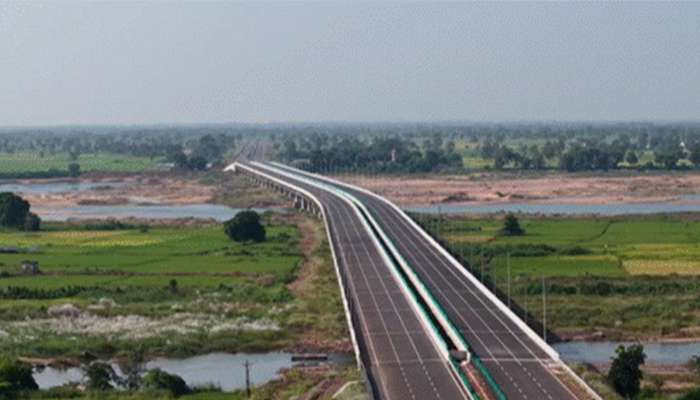
In another first, CSIR-CRRI integrated nearly 30 tonnes of end-of-life plastic technical textiles into expressway construction, offering a scalable model for recycling waste plastics into long-lasting public infrastructure.
Advancing agriculture and protecting biodiversity
In agriculture, CSIR laboratories delivered breakthroughs with global significance.
CSIR–National Botanical Research Institute (NBRI) developed the world’s first genetically modified cotton fully resistant to pink bollworm, a pest responsible for heavy crop losses.
The innovation promised improved yields and stability for cotton farmers, reinforcing India’s leadership in agri-biotechnology.
Conservation science also advanced decisively. CSIR–Centre for Cellular and Molecular Biology (CCMB) created the world’s first DNA-based test to detect illegal shahtoosh in pashmina shawls, strengthening efforts to protect the endangered Tibetan antelope.
The lab further established India’s first Zoo Bio Bank at Darjeeling Zoo, preserving genetic material of endangered species for future conservation and research.
Together, these achievements showcased CSIR’s ability to blend cutting-edge science with ecological stewardship.
Transforming healthcare through indigenous science
Healthcare innovation remained a cornerstone of CSIR’s impact in 2025. CSIR-CCMB developed a rapid, low-cost molecular test for sickle cell anaemia, enabling early diagnosis using just a single drop of dried blood.
Under CSIR’s Sickle Cell Anaemia Mission, more than 20 lakh tribal individuals were screened, directly supporting India’s ambition to eliminate the disease by 2047.
In cancer research, CSIR–Indian Institute of Chemical Biology and partner laboratories advanced novel therapies for triple-negative breast cancer, along with smart anti-cancer agents and targeted nanoparticle drug delivery systems.
These innovations addressed treatment resistance and opened new pathways for precision oncology.
A landmark achievement came from CSIR–Institute of Genomics and Integrative Biology (IGIB), which developed India’s first indigenous CRISPR-based gene therapy for sickle cell disease.
With the technology transferred to industry, the breakthrough marked a crucial step towards affordable, homegrown gene therapies.
Building climate-resilient homes and smarter waste systems
CSIR’s contributions to climate resilience extended into housing and waste management.
CSIR–Central Building Research Institute (CBRI) unveiled India’s first climate-resilient buildings, capable of reducing carbon emissions by up to 60% while enhancing thermal comfort.
These designs demonstrated how sustainability and affordability can coexist in India’s construction sector.
CBRI also showcased India’s first 3D-printed rural house, supporting rapid, cost-effective housing under PMAY-G and highlighting the future of construction technology.
In healthcare waste management, CSIR–National Institute for Interdisciplinary Science and Technology (NIIST) developed India’s first automated biomedical waste treatment rig, launched at AIIMS Delhi.
By disinfecting waste without incineration, the system reduced environmental impact while handling high daily volumes—offering a cleaner, scalable alternative for hospitals nationwide.
Strengthening strategic and defence capabilities
Strategic technologies formed another pillar of CSIR’s achievements in 2025. CSIR–National Aerospace Laboratories (NAL) advanced work on high-altitude platforms for surveillance, communication relay and border monitoring, while also developing the NJ-100 small gas turbine engine for UAVs and loitering munitions.
In collaboration with DRDO and ISRO, CSIR-NAL helped build an advanced continuous trisonic wind tunnel, a critical national asset that reduces dependence on foreign testing facilities and accelerates indigenous aerospace development.
Timekeeping, a subtle but vital strategic capability, also saw progress. CSIR–National Physical Laboratory secured a trademark for Indian Standard Time (IST) and, along with ISRO, initiated atomic clock-based reference labs to ensure accurate time synchronisation even in GPS-denied scenarios.
Driving innovation through industry and startups
Beyond breakthroughs, CSIR focused on ensuring impact through partnerships and technology transfer.
Multiple MoUs with Indian and global companies enabled commercialisation across roads, aerospace, pharmaceuticals, clean energy and advanced materials.
New innovation and incubation hubs were launched across Mumbai, Assam, Jammu, Kerala and the Northeast, nurturing startups, MSMEs and deep-tech enterprises.
BioNEST incubators, startup conclaves and CSIR innovation complexes strengthened the bridge between research and markets, making science a driver of entrepreneurship and jobs.
Science as a national catalyst
Taken together, 2025 emerged as a landmark year for CSIR and India’s scientific ecosystem.
From world-first infrastructure solutions and pioneering medical technologies to climate-resilient housing and strategic systems, CSIR demonstrated how publicly funded science can serve as a catalyst for national progress.
By aligning research with sustainability, inclusivity and self-reliance, CSIR not only strengthened India’s innovation landscape but also positioned the country as a global source of science-led solutions