Monday 20 / April / 2026
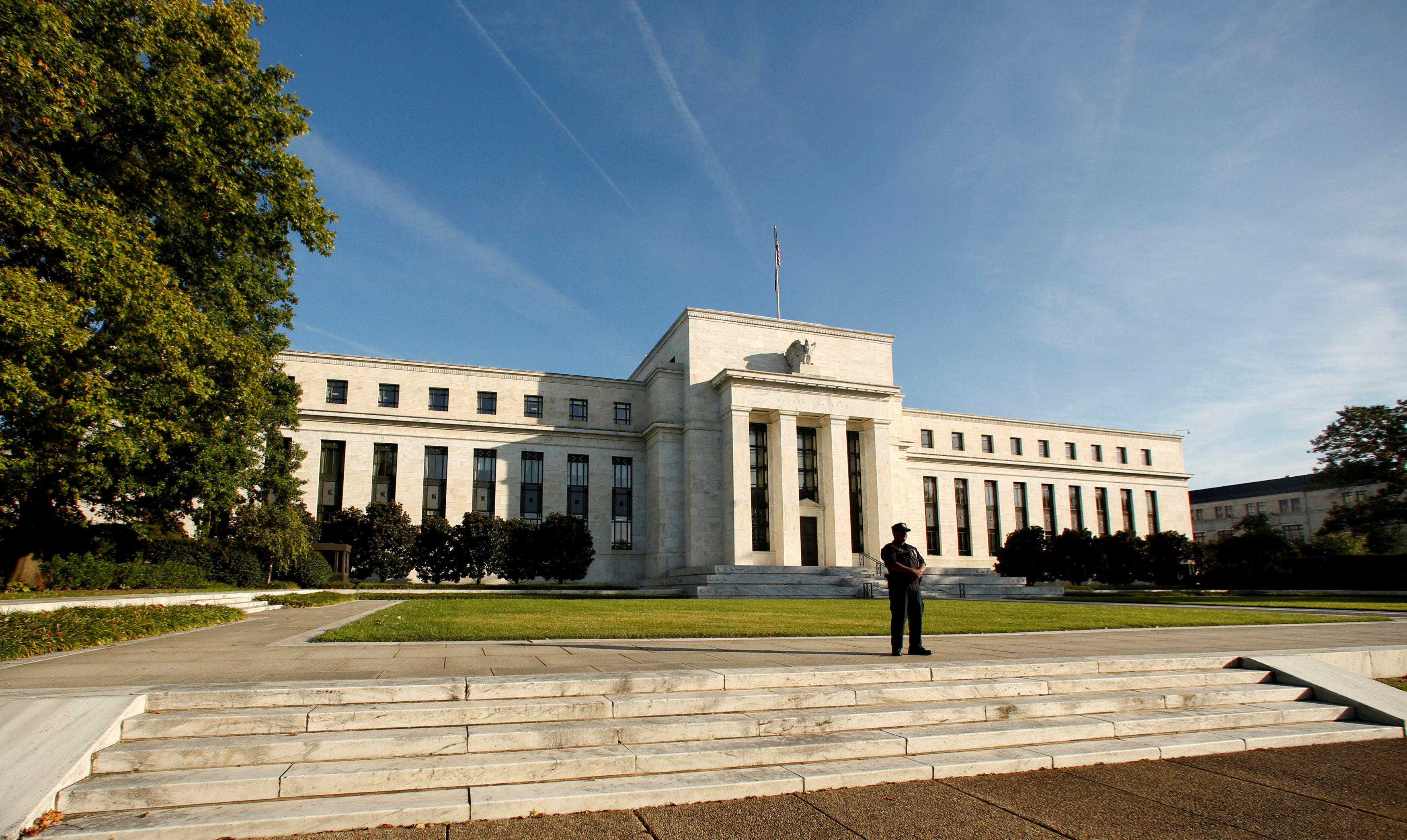
Washington: US consumer prices accelerated in the year to May, with a measure of underlying inflation hitting the Federal Reserve's 2 per cent target for the first time in six years.
The rise in price pressures reported by the Commerce Department on Friday will probably not shift the Fed from its stated path of gradual interest rate increases as policymakers have indicated they would not be too concerned with inflation overshooting its target.
"This doesn't warrant the Fed turning more hawkish, as two additional rate hikes this year remain appropriate," said Ryan Sweet, senior economist at Moody's Analytics in West Chester, Pennsylvania.
"The Fed expects inflation to temporarily overshoot its inflation objective."
The US central bank increased interest rates early this month for a second time this year and forecast two more rate hikes by the end of 2018. Inflation is pushing higher in part because of a tightening labour market, which is characterised by a 3.8 per cent unemployment rate.
Consumer prices as measured by the personal consumption expenditures (PCE) price index rose 0.2 per cent after a similar gain in April. In the 12 months through May, the PCE price index surged 2.3 per cent.
That was the largest rise since March 2012 and followed a 2.0 per cent increase in April.
Excluding the volatile food and energy components, the PCE price index advanced 0.2 per cent for a sixth straight month.
That lifted the year-on-year increase in the so-called core PCE price index to 2.0 per cent, the biggest gain since April 2012. The annual core PCE price index rose 1.8 per cent in April. The core PCE index is the Fed's preferred inflation measure.
US financial markets were little moved by the data as investors kept a wary eye on developments surrounding growing tensions between the United States and its major trade partners.
Treasury Secretary Steve Mnuchin on Friday denied a report that President Donald Trump wanted the United States to withdraw from the World Trade Organization. The trade tensions are starting to hurt consumer morale. A survey by the University of Michigan showed consumer confidence dipping in late June and households' near-term inflation expectations ticking up.
The dollar weakened against a basket of currencies. Prices for US Treasuries fell while stocks on Wall Street were trading higher.
With inflation accelerating, consumer spending moderated. The government said consumer spending, which accounts for more than two-thirds of US economic activity, rose 0.2 per cent in May. Data for April was revised down to show spending rising 0.5 per cent instead of the previously reported 0.6 per cent jump.
Economists polled by Reuters had forecast spending gaining 0.4 per cent last month. Spending was held back by a drop in outlays on household utilities. Purchases of long-lasting goods such as motor vehicles edged up 0.1 per cent in May.
Nondurable goods purchases increased 0.6 per cent, likely reflecting higher gasoline prices. Outlays on services ticked up 0.1 per cent. The slowdown in consumer spending last month was also the result of households boosting savings.
When adjusted for inflation, consumer spending was unchanged in May after increasing by a downwardly revised 0.3 per cent in the prior month. The so-called real consumer spending was previously reported to have increased 0.4 per cent in April.
Last month's flat reading and the downward revision to April's data prompted the Atlanta Fed to cut its lofty second-quarter consumer spending and gross domestic product estimates.
The Atlanta Fed is now forecasting second-quarter GDP rising at a 3.8 per cent annualised rate instead of the 4.5 per cent pace it had projected before the consumer spending data was released.
"Right now, the extended period of strong growth that so many are predicting is just a wish and a hope," said Joel Naroff, chief economist at Naroff Economic Advisors in Holland, Pennsylvania. "Households seem to taking their tax cuts and saving them."
Growth in consumer spending braked to a 0.9 per cent annualised rate in the first quarter, the slowest pace in nearly five years, after rising at a 4.0 per cent rate in the fourth quarter. The economy grew at a 2.0 per cent pace in the first three months of the year.
Still, consumer spending remains supported by the robust labour market and lower income tax rates which came into effect in January. Last month, personal income rose 0.4 per cent after gaining 0.2 per cent in April. Wages increased 0.3 per cent.
Savings rose to $482.0 billion in May from $448.0 billion in the prior month.