Monday 26 / January / 2026
The Middle East has an estimated 2 to 3 million couples in the age group of 20-40 who are facing difficulties in starting a family and we are already witnessing a lot of couples who are fighting this challenge. This challenge is infertility and is globally acknowledged to be a major health issue. In the last few years, we all have probably read or heard about advancements in fertility treatments. Couples facing infertility are more researched, have better access to fertility treatments and are aware that science has made many breakthroughs possible.
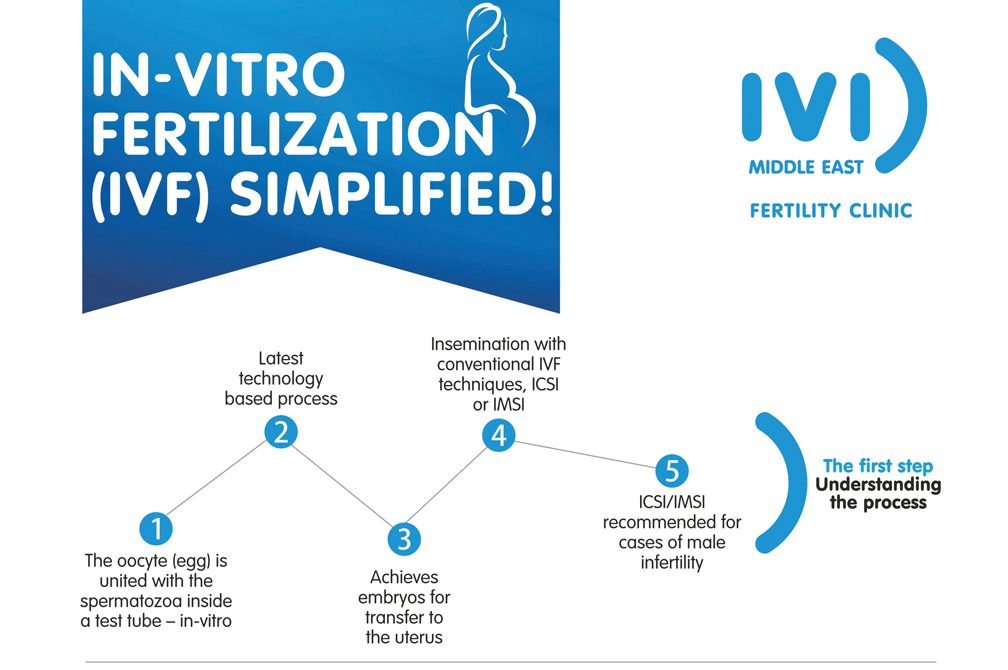
Infertility treatment is better known as IVF i.e. in vitro fertilization. It involves combining the egg and the sperm outside the body in a laboratory. Once an embryo or embryos form, they are then transferred back to the uterus of the woman.
If done with the correct approach, this technique delivers successful results. However, there have been cases of severe male sterility, previously failed IVF cycles, failure with Intrauterine Insemination or even limited number of available eggs that pose challenges. Such cases do not necessarily see results with the conventional IVF technique.
The most utilised and successful methodology of IVF is the Intracytoplasmic Sperm Injection (ICSI) which involves the injection of a single sperm directly into a mature egg in the IVF laboratory.
At IVI Fertility Muscat, a lot of emphasis is put on patient education. Extensive counselling is given to familiarise them with the designed treatment. Before the start of IVF/ICSI treatment, the clinic also customises the ovarian stimulation as per the patient’s needs for egg production.
These eggs are then collected and each egg is injected with a single sperm from the spouse. The rest of the process is the same as IVF. The patient is more likely to become pregnant with twins or triplets if more than one embryo is transferred so at IVI Fertility, a single embryo transfer (SET) is typically recommended.
ICSI was pioneered by Dr Prof Paul Devroey - a prominent Belgian researcher and professor specialised in human fertility. He worked for over 30 years at the University of Brussels and has trained Dr Human Fatemi, Medical Director at IVI Fertility, Middle East, in various Assisted Reproductive Techniques. At IVI, we have several proprietary tests and techniques that are now used worldwide and are known to enhance the chances of one getting pregnant.
It is interesting to note that over 98% successful pregnancies at IVI Fertility Muscat are a result of ICSI backed by effective proprietary tests. According to Dr Human Fatemi, Medical Director, IVI Fertility, “we see an average of 90 patients per month at IVI Muscat and do almost 60 egg pick-ups. ICSI is performed on every patient at some stage of their treatment and delivers over 70% success rate in the Middle East which is much higher than IVI’s success rates in other parts of the world. The reason for this success rate can be attributed to an in depth understanding of region-specific causes of infertility and a combination of highly specialised diagnostic tests followed by ICSI.
Dr Human Fatemi has carried out extensive research on treating infertility in the region and highlights three specific causes that impact fertility. These are the higher prevalence of Consanguinity (marrying of first- or second-degree cousins), Vitamin D deficiency and Obesity. Fortunately, science today has the answer to most fertility problems. However, such treatments are successful only after the right tests and assessments are carried out to diagnose the exact cause of infertility. “At IVI, our extensive research in understanding of region-specific factors like consanguinity and its impact on fertility and customising treatments to address those, is the backbone of a very high success rate,” added Dr Frank Ruiz, IVF Specialist, IVI Fertility Muscat.
This unique knowledge also helps us augment our success rate by adding specialised techniques like the PGS (pre genetic screening) and the CGT (carrier genetic testing). These techniques are focused on addressing specific parameters and greatly contribute to a much scientific and planned way of a healthy conception, added Dr Frank.
—[email protected]