Sunday 08 / November / 2026
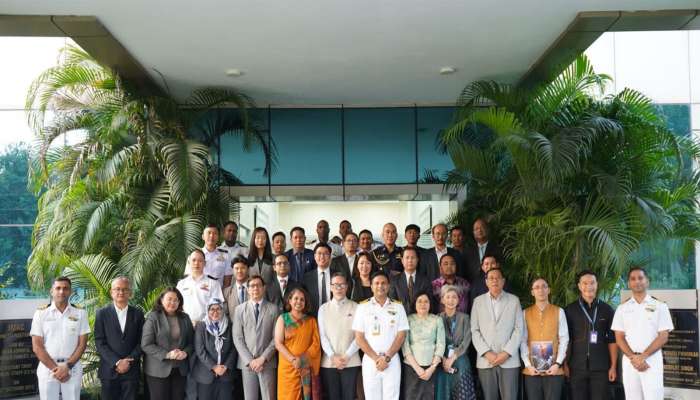
India's economic partnership with the Association of Southeast Asian Nations (ASEAN) is entering a new phase, with bilateral merchandise trade reaching US$128 billion in 2025–26. The ongoing review of the ASEAN–India Trade in Goods Agreement (AITIGA) is expected to provide fresh opportunities to address trade imbalances, improve market access and strengthen economic cooperation between the two sides.
India and ASEAN share longstanding relations shaped by geographical proximity, historical connections, cultural exchanges and expanding commercial engagement. Over the years, the relationship has evolved beyond traditional diplomacy to encompass trade, investment, manufacturing, technology, connectivity and regional security.
ASEAN occupies a strategic position in the global economy, connecting major international markets through its manufacturing capabilities, trade networks and maritime routes. For India, the region is an important export destination, a source of industrial inputs and energy resources, and a gateway to the wider Asia-Pacific market.
Bilateral Trade More Than Doubles
The implementation of AITIGA has significantly expanded merchandise trade between India and ASEAN. Bilateral trade increased from approximately US$56 billion in 2010–11 to US$128 billion in 2025–26, highlighting the growing economic interdependence between the two sides.
During this period, India's exports to ASEAN increased from US$26 billion to US$38 billion, while imports surged from US$31 billion to US$90 billion. ASEAN accounted for 10.55 per cent of India's total global trade in 2025–26.
Although the growth reflects deeper economic integration, the widening gap between exports and imports highlights the need to improve the competitiveness of Indian products and expand their presence in Southeast Asian markets.
Imports from ASEAN include energy resources, industrial raw materials, machinery, electronics and intermediate goods, which support India's manufacturing and industrial activities. Strengthening exports and diversifying India's product basket will therefore be essential for achieving a more balanced trading relationship.
Complementary Trade Opportunities
India's major exports to ASEAN include petroleum products, engineering goods, machinery, chemicals, pharmaceuticals, agricultural commodities and manufactured materials. Petroleum products, including motor gasoline and automotive diesel, reflect India's refining capabilities, while agricultural products and aluminium ingots offer opportunities to expand commercial engagement.
In return, India imports steam coal, cooking coal, crude petroleum, crude palm oil, refined palmolein, electronics, machinery and industrial inputs from ASEAN countries.
These trade patterns demonstrate considerable economic complementarities. India's strengths in pharmaceuticals, engineering, petroleum refining and food processing can complement ASEAN's capabilities in electronics, industrial production, energy and regional distribution.
Indian businesses can further explore opportunities in processed foods, automotive components, electrical machinery, chemicals and value-added manufacturing.
Strengthening Regional Supply Chains
ASEAN has also emerged as an important partner in India's efforts to diversify supply chains and strengthen domestic manufacturing. Cooperation in electronics, semiconductors, automotive production, renewable energy, pharmaceuticals and advanced manufacturing could create stronger regional production networks.
Closer integration would enable Indian companies to participate more effectively in regional value chains while providing ASEAN businesses access to India's expanding consumer market, skilled workforce and industrial infrastructure.
Improved connectivity, including ports, shipping networks, road corridors and digital infrastructure, will further facilitate trade and reduce logistics costs.
Investment cooperation in electric mobility, financial services, artificial intelligence, digital payments, cybersecurity and renewable energy also offers significant potential.
The ongoing AITIGA review is a key opportunity to improve transparency, simplify trade procedures, address non-tariff barriers and ensure predictable market access.
Greater participation by micro, small and medium enterprises (MSMEs), stronger business-to-business engagement and improved institutional cooperation will also be important in expanding commercial opportunities.
India and ASEAN are increasingly positioned as complementary economic partners across manufacturing, technology, energy and international supply chains. With bilateral trade at US$128 billion, a modernised trade agreement, stronger connectivity and diversified exports could help transform the relationship into a more balanced, resilient and mutually beneficial economic partnership.