Wednesday 21 / October / 2026
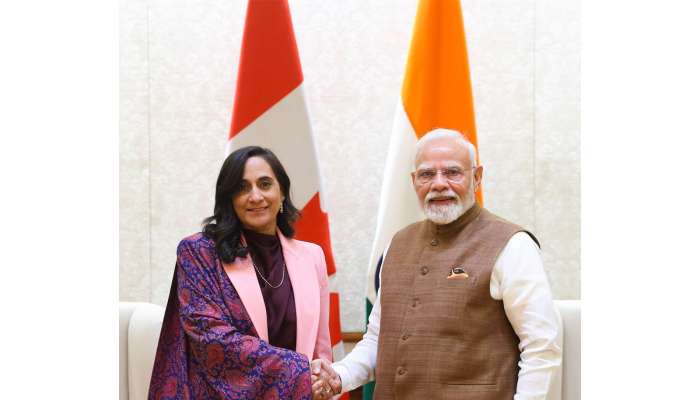
Canada-India relations have reached a new high, with renewed political engagement and fresh investment announcements paving the way for a stronger economic partnership.
Nearly three years after the originally scheduled Team Canada Trade Mission to India, the largest Canadian business delegation to visit the country in three decades travelled there last week, signalling renewed momentum in bilateral relations.
Led by Canadian Foreign Affairs Minister Anita Anand and International Trade Minister Maninder Sidhu, the delegation included representatives of Canadian companies exploring opportunities to expand their presence in the Indian market.
Among the major developments, Fairfax received approval to acquire a majority stake in IDBI Bank, marking a significant milestone for foreign investment in India's banking sector. Meanwhile, McCain Foods announced plans to acquire part of Falcon Agrifriz Foods' business, further strengthening its position in India's rapidly growing market.
Political relations between the two countries have continued to improve, raising expectations that negotiations on a Comprehensive Economic Partnership Agreement (CEPA) could soon conclude.
Trade ministers and officials held discussions during the visit to advance negotiations, which are progressing at an accelerated pace. The momentum has raised hopes that the agreement could be finalised during Indian Prime Minister Narendra Modi's planned visit to Canada on December 11-12.
CEPA is widely viewed as a significant step towards expanding bilateral trade and investment. However, it represents the beginning of a broader economic partnership rather than its culmination.
Negotiations are also underway on a Foreign Investment Promotion and Protection Agreement, which would provide Canadian businesses with stronger safeguards for their investments in India. Such an agreement is expected to become a key priority following the conclusion of CEPA.
Effective implementation of the trade agreement will also be essential to ensure businesses in both countries can fully benefit from the opportunities it creates.
Discussions with government officials, policymakers and business leaders in Mumbai highlighted the importance of adopting a region-specific approach to economic engagement with India, given the country's considerable diversity.
Maharashtra, one of India's leading economic centres, is pursuing major infrastructure and industrial development projects. These include plans for a deep-water port capable of accommodating the world's largest vessels and an offshore airport designed to improve international connectivity.
The state is also focusing on strategic industries, including critical minerals processing, while continuing to expand its services sector.
Mumbai's rapid transformation, driven by large-scale construction and infrastructure investment, highlights the scale of economic opportunities emerging across India. The pace of development is expected to reshape the city over the coming decade, creating potential openings for foreign investors and businesses.
Although capital outflows and weakness in certain sectors have posed challenges for India in recent years, the latest investment announcements and expansion plans suggest that business confidence is strengthening.
During the Team Canada Trade Mission, Indian participants also emphasised the importance of closer cooperation with Canada to reduce exposure to economic coercion and disruptions in global trade.
India's efforts to strengthen supply-chain resilience and diversify its trading relationships have increased the importance of reliable international partners. Canada, in turn, has an opportunity to deepen its economic engagement with one of the world's major growth markets.
The partnership therefore extends beyond market access, encompassing supply-chain diversification, economic resilience and the development of dependable commercial relationships amid growing global uncertainty.
The latest visit marked a significant moment for Canada-India economic relations, but sustaining the momentum will require concrete action.
Canada's priorities include concluding CEPA, advancing negotiations on an investment protection agreement, ensuring effective implementation of the trade deal and strengthening engagement with rapidly developing regions such as Maharashtra.
With Indian infrastructure and industries expanding rapidly, Canadian companies already established in the market are well positioned to explore new opportunities. However, competition from other countries and international businesses seeking access to India remains intense.
The improving political climate and renewed business interest have created favourable conditions for closer cooperation. The challenge now is to translate the progress into a lasting economic partnership that delivers shared benefits for both countries.