Wednesday 07 / October / 2026
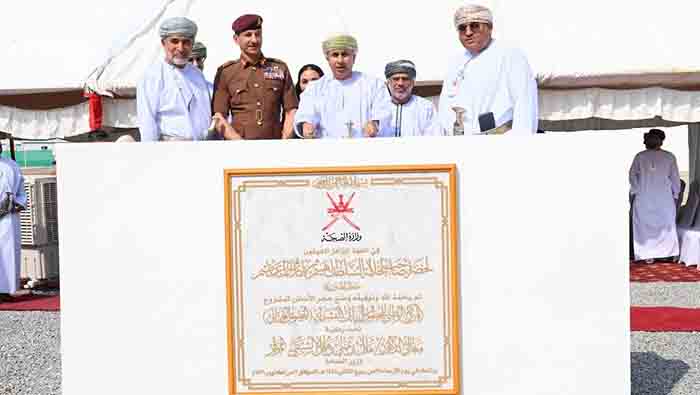
Muscat: The Ministry of Health on Wednesday celebrated the laying of the foundation stone for the National Centre for Genomics and Human Data (Omani Genome) in the Wilayat of A’Seeb, Muscat Governorate, at a construction cost exceeding OMR4.20 million.
The Centre will be built on a total area exceeding 10,000 square metres, and the project's implementation period will take 9 months, in addition to 45 days for equipment and preparation works.
The ceremony was held under the patronage of Dr. Hilal Ali Al Sabti, Minister of Health.
Dr. Khalid Al Rasadi, Professor at the College of Medicine and Health Sciences, Sultan Qaboos University, and Supervisor of the Omani Genome Programme, affirmed in his speech that the project embodies the objectives of Oman Vision 2040.
Its importance, he said, lies in studying the composition of the genomic map of Omani society and establishing a reference database that enhances the Sultanate of Oman's standing as a scientific centre in genomic research, supports the knowledge economy, and advances strategic treatments.
Dr. Ali Al Lawati, Adviser to the Minister of Health for Engineering Affairs, gave an introductory overview of the project from the engineering and technical standpoints. He explained that given the importance of this national project, the Centre has been designed and will be built according to the latest construction technologies and biosafety laboratory design standards, taking into account biosafety requirements, energy efficiency, smart building management systems, and future expandability.
He noted that the Centre will be equipped with the latest high-throughput whole genome sequencing devices, and with an automated national biobank for sample preservation with a capacity of more than one million samples at ultra-low temperatures reaching 80 degrees Celsius below zero and in liquid nitrogen, with round-the-clock monitoring and surveillance systems and backup power that ensure the safety of samples for decades.
On the details of the project, he explained that it is being established in the Wilayat of A’Seeb in Muscat Governorate on a total area of 10,625 square metres, within a shared plot of land with the Central Public Health Laboratory covering 53,000 square metres. It consists of the main laboratory building with an area of 3,000 square metres, and the services building with an area of 600 square metres linked by a concrete services tunnel, in addition to a power station, parking and external services.
The National Centre for Genomics and Human Data is the foundational infrastructure of the Omani Genome Programme, which aims in its first phase (2025-2030) to read the complete genomic sequence of twenty thousand citizens representing the spectrum of Omani society and geography, and will expand in its next two phases to reach 100 thousand participants by 2040, in order to build a reference genetic database for Omani society.
This database contributes to supporting the precision personalised medicine system, providing therapeutic and preventive solutions tailored to the individual's genetic makeup, raising the efficiency of early detection of hereditary and chronic diseases such as diabetes, heart disease and cancer, enhancing premarital and newborn screening programmes, and providing decision-makers with accurate data and evidence to support future health planning.
The laying of the foundation stone constitutes an actual launch for the establishment of this advanced infrastructure in the campus of the Central Public Health Laboratory, ensuring the integration of advanced laboratory testing with modern genetic sequencing technologies and big data analysis under one umbrella.
The Programme gives priority to building and qualifying young national cadres in genomics and bioinformatics sciences, in partnership with Sultan Qaboos University and academic and research institutions. It also opens the door to discovering new therapeutic targets and drugs for hereditary diseases, and to international research partnerships and emerging biosciences industries that support the knowledge economy sought by Oman Vision 2040.
The project embodies the Ministry's commitment to investing in future technologies and fostering medical innovation, and will operate according to the highest standards of privacy, security and ethical governance to protect national genomic data, on the basis of voluntary participation with informed consent.
It is expected to bring about a qualitative leap in the level of healthcare provided to citizens, by linking genetic analysis results to national health records and establishing an integrated biobank, thereby consolidating the Sultanate of Oman's position as an advanced regional centre in the field of medical and genomic research.
The ceremony was attended by a number of senior officials, specialists in the health and academic sectors, and experts in research and biosciences.