Monday 26 / October / 2026
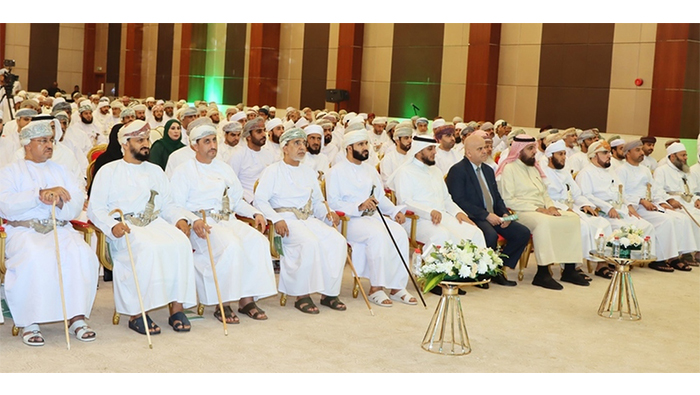
Sohar: The activities of the 4th Zakat Conference and Exhibition, organised by the Ministry of Endowments and Religious Affairs, kicked off on Sunday in the Wilayat of Sohar, North Al Batinah Governorate.
The conference was held under the auspices of Nasser Khamis Al Jashmi, Chairman of the Tax Authority, in the presence of Dr. Mohammed Said Al Maamari, Minister of Endowments and Religious Affairs, alongside a number of officials, specialists, researchers, and individuals interested in Zakat work.
The three-day conference is themed "Zakat from Governance to Sustainability: Integration Establishing Impact and Fiduciary Duty Building Trust," with the participation of more than 600 participants including members of Zakat committees, researchers, and specialists in Zakat affairs from nine Gulf, Arab, and international countries, alongside an elite group of experts and specialists in Sharia, economic, financial, administrative, and technical fields related to the Zakat sector.
The first day of the conference witnessed a main panel discussion titled "Zakat and Sustainable Development: An Integrated Government Vision," which discussed the roles of various sectors in enhancing the developmental impact of Zakat and building an integrated system contributing to transforming Zakat work into a more effective tool in achieving social and economic development.
The conference also witnessed the launch of the Zakat Institutions Readiness Index in the Sultanate of Oman, which aims to support institutional development processes and measure levels of readiness and efficiency in Zakat institutions, thereby contributing to elevating performance levels and enhancing practices built on governance, mastery, and sustainability.
The first day included the signing of a cooperation document between the Ministry of Endowments and Religious Affairs and the SMEs Development Authority, within the framework of supporting and empowering SME projects for Zakat-eligible families, helping make those projects sustainable and transitioning beneficiaries from direct support to economic and productive empowerment.
The conference's scientific programme includes 11 main and panel sessions addressing several Sharia, legislative, developmental, economic, administrative, and technical themes related to developing the Zakat system and enhancing its efficiency and sustainability.
The first session comes under the title "Jurisprudential and Legal Foundations of Zakat Integration," and includes three working papers addressing the integration between institutional governance and jurisprudential foundations in managing the Zakat sector: Sharia frameworks and regulatory controls; codification of Zakat provisions in Omani legislation: legislative necessity and higher objectives and developmental dimensions; and integration among economic sectors and its role in achieving efficiency in Zakat funds.
The second session, "Integration Between Zakat and the Financial and Banking Sector," discusses three main themes through working papers reviewing the experience of the Kingdom of Saudi Arabia in utilising enabling factors available at the collection authority to facilitate Zakat collection and calculation procedures; enhancing the community role of Zakat institutions through Islamic financial institutions: toward an integrated model for governance, empowerment, and sustainable impact; and the integration of corporate Zakat with the tax system in the Sultanate of Oman.
Meanwhile, the third session, titled "Zakat and Impact Making: A Dialogue on Governance and Sustainability," takes the form of a panel discussion, addressing the dimensions of institutional development for Zakat work and mechanisms for maximizing its community impact and enhancing its sustainability in accordance with governance and efficiency frameworks.
The fourth session, "Digital Integration and Modern Technologies in the Service of Zakat," addresses several issues related to technical transformation through working papers on the digital environment in Zakat institutions: its tools, jurisprudential controls, and governance requirements; digital transformation in managing Zakat affairs: Sharia dimensions and modern objectives (the Omani experience as a model); and digital transformation in Zakat services toward a more efficient and trusted beneficiary experience.
The fifth session, "Governance and Administrative Mastery in Zakat Institutions," explores topics on risk forecasting in investing Zakat funds in light of "Oman Vision 2040," risk management in Zakat committees: protecting funds and maximising impact, and governance and management of Zakat through the book Tuhfat Al A'yan bi Sirat Ahl 'Oman (The Gem for the Notable Concerning the History of the People of Oman).
The sixth session, focusing on "Zakat and Its Role in Achieving Sustainable Development Goals," concentrates on the developmental dimensions of Zakat through papers discussing strategic partnership among Zakat institutions and its role in activating Zakat work and its impact on creating a sustainable developmental environment; productive empowerment of Zakat beneficiaries between the condition of ownership transfer and the objective of enrichment: a jurisprudential foundational study in contemporary applications; and institutional transformation of Zakat institutions from the assistance model to economic development.
As for the seventh session, it reviews "Zakat Institutions and Building Community Trust" through a group of papers examining the impact of institutional governance in enhancing the trust of Zakat payers, motives for volunteering in Zakat committees in the Sultanate of Oman: an analytical study, alongside managing social capital in Zakat committees to enhance the role of community trust, partnership, and volunteering in developing Zakat work.
The eighth session, titled "Government Integration in Empowering Zakat Beneficiaries: From Entitlement to Sustainability," is held in the form of a panel discussion examining the roles of government institutions and partners in transitioning beneficiaries from the entitlement stage to empowerment and sustainability, and enhancing integration between support programs and economic and social development.
The ninth session, "Forward-Looking Visions of Zakat in Its Global Context," addresses the future of Zakat work through papers on the future of Zakat in the Sultanate of Oman in light of some Zakat experiences in the Islamic world, forecasting the future of Zakat institutions toward a sustainable developmental Zakat model, alongside Zakat applications in Western societies.
The tenth session, titled "Integration of Institutional Capacities in Zakat Committees," comes in the form of a panel discussion, focusing on developing administrative, organizational, and human capacities of Zakat committees and their role in enhancing efficiency, quality, and institutional sustainability.
The programme sessions conclude with the eleventh session, "Zakat Jurisprudence in a Changing World: Constant Principles of the Obligation and Contemporary Realities," a panel discussion addressing a number of issues and developments related to Zakat jurisprudence and its contemporary applications amidst rapid economic, social, and technological transformations.
Furthermore, the conference includes a number of accompanying panel discussions, including "Experiences and Visions of Female Members of Zakat Committees Between Institutional Excellence and Community Impact," which focuses on experiences and practices in Zakat work and the roles of female committee members in developing initiatives and enhancing the presence of institutional and community work.
The conference is also accompanied by a specialized training program featuring seven training workshops, including: Introduction to the Zakat Standard; Mastery in Zakat Work; The Future of the Electronic Portal for Zakat Services Through Beneficiary Experience; Executive Leadership Skills for Non-Profit Organizations: From Performance to Sustainability; Governance of Financial Rights and Obligations for Charity Workers; Zakat Committees Index for Institutional Transformation; in addition to a workshop on Investing Endowed (Waqf) Lands for Zakat Committees.