Friday 16 / October / 2026
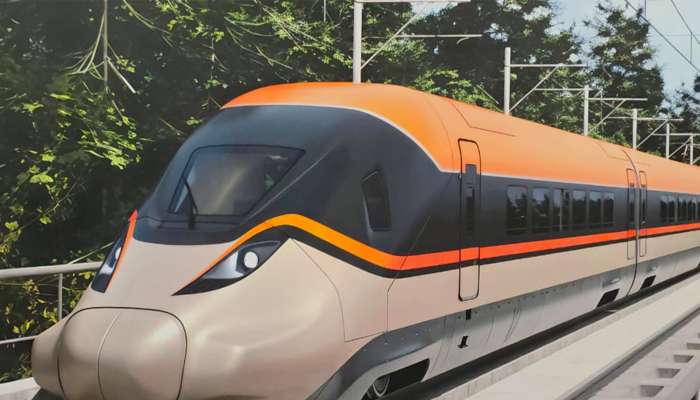
India is entering a new era of high-speed rail with the Mumbai-Ahmedabad bullet train project, the country's first dedicated high-speed railway. Covering about 508 kilometers between Mumbai and Ahmedabad, the corridor is being developed with significant Japanese technical assistance and financing. The trains are designed to reach speeds of up to 320 kilometers per hour, potentially reducing the fastest journey time to around two hours, depending on the number of stops.
The project is based heavily on Japan's Shinkansen technology, which is internationally recognized for its safety, punctuality, advanced signaling, and efficient operations. India's adoption of this technology also reflects its broader cooperation with Japan. The comparison with Japan's planned E10 Shinkansen is particularly notable because both systems are designed for maximum speeds of 320 kilometers per hour.
The Mumbai-Ahmedabad corridor will feature elevated sections, bridges, stations, maintenance facilities, advanced signaling, and tunnels. Among its most challenging engineering elements is an undersea tunnel near Mumbai. The dedicated high-speed railway will operate separately from conventional passenger and freight trains, allowing much higher speeds and more reliable operations.
Safety is a central feature of the system. Shinkansen technology incorporates automatic train control, sophisticated signaling, earthquake detection, and other protective systems. Indian engineers and railway officials are working with Japanese partners to adapt these technologies to India's geographical and operating conditions.
Beyond faster travel, the project could have wider economic and technological effects. Construction and operation are expected to create opportunities in engineering, manufacturing, maintenance, and related industries. Indian companies and engineers can also gain experience in high-speed railway construction and operations, potentially strengthening domestic capabilities for future projects.
The government has considered developing additional high-speed corridors connecting major cities. The experience gained from Mumbai-Ahmedabad could therefore influence India's future railway strategy and provide a foundation for a larger high-speed network.
The project's significance ultimately extends beyond speed. For a country with one of the world's largest railway networks, introducing dedicated high-speed infrastructure represents a major technological and infrastructural step. Its long-term impact will depend on factors such as safety, reliability, affordability, passenger demand, and the ability to apply the experience gained to future corridors.
India's first bullet train is therefore more than an attempt to shorten travel times. It represents an effort to develop the engineering, manufacturing, signaling, and operational capabilities needed for a new generation of transportation. With Japanese expertise and growing Indian participation, the Mumbai-Ahmedabad corridor could become an important foundation for India's future high-speed rail ambitions.