Friday 16 / October / 2026
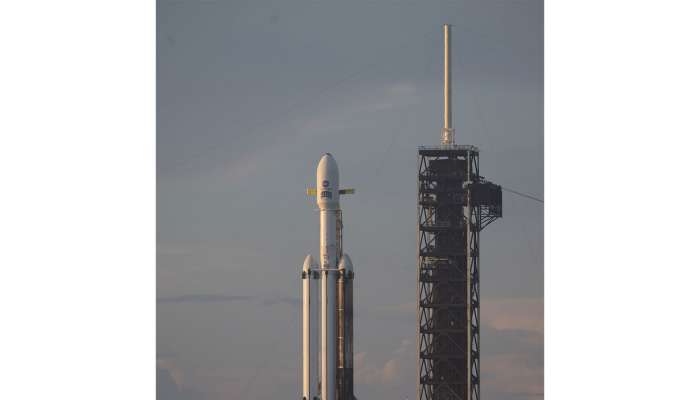
Bengaluru: US Ambassador to India Sergio Gor said that Washington wants India “by our side” as the United States returns to the Moon, revealing that NASA has officially invited ISRO to join its Moon base programme.
The invitation was first extended during an India–US civil-space meeting in Bengaluru in August. The message became even more explicit when US Ambassador Sergio Gor later said that NASA wanted India “by our side” as the United States returned to the Moon and worked toward establishing a permanent lunar presence.
At first glance, the choice appears straightforward: Will India join America's Moon-base effort or stay out?
But New Delhi is looking at the question differently.
For India, the real issue is not simply whether it should participate. It is what India would receive in return, what role it would play, and how much influence it would have over the future of lunar exploration.
A permanent base on the Moon would be very different from a short scientific mission. It would create infrastructure that could operate for years or decades. The countries involved in establishing that infrastructure could have a say in technical standards, scientific-data access, safety procedures and eventually the ways lunar facilities and resources are used.
Early participation could therefore give India an opportunity to help shape the rules of a new era of lunar activity.
Building and maintaining lunar infrastructure will be extraordinarily expensive and technically demanding. India would have to decide whether the scientific and strategic benefits justified the investment. More importantly, New Delhi would not want to become merely a junior partner contributing technology or money to an architecture whose major decisions were made elsewhere.
So far, India has kept its options open.
It has not accepted NASA's invitation to build a permanent lunar base, announced dedicated funding for such a project, or identified a specific piece of hardware it would contribute.
Instead, India and the United States have agreed to expand cooperation in areas including space science, human spaceflight and the sharing of scientific data under the Artemis Accords.
"India is a proud signatory of the Artemis Accords, and NASA has officially invited ISRO to join us in the Moon base program. Make no mistake: we're going back to the Moon, and we want India by our side on the lunar surface," Gor said while speaking at the Bengaluru Space Expo 2026.
His remarks come as under Artemis missions, NASA will send astronauts on increasingly difficult missions to explore more of the Moon for scientific discovery, economic benefits, and to build on foundation for the first crewed missions to Mars.
Highlighting the India-US collaboration in space, Gor said the NISAR mission demonstrated how joint technology could directly contribute to saving lives.
“And when we look at NISAR, we see that NASA and ISRO didn't build a monument to scientific theory; they built a lifesaver. Literally,” he said.
“When a devastating earthquake struck Venezuela just two months ago, NISAR's radar data penetrated dense cloud cover and dust to guide emergency responders directly to ground zero. That is an example of what great things can happen when we work together. That is joint technology saving human lives in real time,” he added.
Gor also highlighted India's growing role in human spaceflight, citing Group Captain Shubhanshu Shukla's mission to the International Space Station and the subsequent cooperation between the two countries.
“Last year, Group Captain Shukla flew to the International Space Station, a landmark moment for India, made possible through American partnership,” Gor said.
“Following the Axiom-4 mission and five joint science investigations, we are now looking at docking standards, interoperability, and astronaut training. TRUST creates capability. Capability creates ambition. And ambition takes us beyond the stratosphere,” he added.
The US envoy also pitched greater opportunities for Indian space startups in the American market, highlighting companies including Pixxel, GalaxEye, Digantara, Bellatrix, Skyroot and Agnikul.
“To every Indian space entrepreneur in this room: the American market is open to you. Our investors are watching you. Our ecosystems welcome you. We are here to help you make that leap,” Gor said.
On broader cooperation in space governance, Gor said Washington and New Delhi were working together to establish global norms.
“Together, we are setting global norms: from space traffic coordination to the upcoming World Radiocommunication Conference in Shanghai. Washington and Delhi are standing shoulder to shoulder to protect open, rules-based space governance against authoritarian dominance,” he said.
Gor said the India-US partnership could have a multiplying effect in the space sector.
“When the United States and India work together, we do not just practice addition; we practice multiplication. Not even the sky is the limit,” he said.
“So from Bengaluru, let us look upwards. Let us work together to build a global space economy. Let us return to the Moon together,” the US Ambassador said.