Thursday 08 / October / 2026
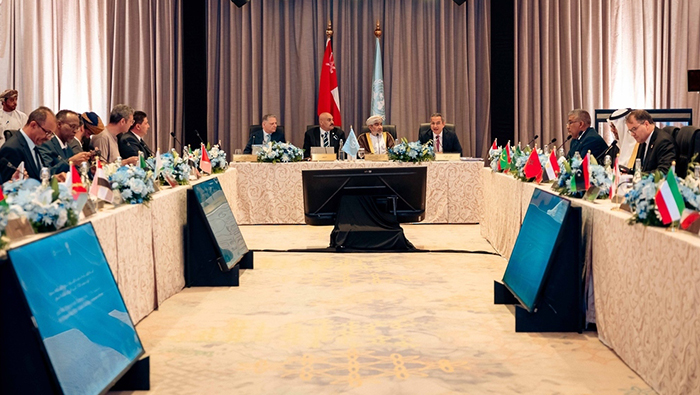
Jabal Akhdar: At the conclusion of its 17th session on Wednesday in the Wilayat of Jabal Akhdar, Al Dhakhiliyah Governorate, the Statistical Committee of the United Nations Economic and Social Commission for Western Asia (ESCWA) adopted a set of recommendations, most notably recommending the establishment of the Muscat Team.
This is concerned with using artificial intelligence (AI) technologies in household income and expenditure surveys and benefiting from the Sultanate of Oman’s experience in utilising modern technologies and innovation in developing statistical work.
The outcomes of the session included a number of recommendations aimed at supporting the development of national statistical systems, enhancing their resilience and capacity to respond to crises, and expanding the utilisation of modern technology, artificial intelligence, and non-traditional data sources in producing official statistics.
The session, hosted by the Sultanate of Oman represented by the National Centre for Statistics and Information (NCSI), witnessed the participation of heads of national statistical agencies and offices in Arab countries, alongside representatives from the United Nations, partner Arab and regional organisations, and a number of experts and specialists in the statistical field.
Participants in the session affirmed the importance of enhancing data governance, improving its quality, developing administrative records, enhancing data comparability, and supporting the production of modern and reliable statistics that meet the needs of decision-makers and contribute to formulating evidence-based policies.
They also stressed the importance of continuing to coordinate statistical capacity-building programmes, exchanging experiences and expertise among member states, and strengthening cooperation with regional and international organisations, thereby contributing to building modern and sustainable national statistical systems.
Dr. Khalifa Abdullah Al Barwani, CEO of the National Centre for Statistics and Information, stated that the recommendation to establish the Muscat Team represents an extension of the success of the Sultanate of Oman’s experience in utilising artificial intelligence technologies in conducting the household income and expenditure survey, reflecting the advanced results achieved by this experience in developing statistical work methods, raising the efficiency of indicator production, and accelerating access to data.
Al Barwani added that the Muscat Team will constitute an important framework for enhancing Arab statistical cooperation, exchanging expertise and knowledge in using artificial intelligence in official statistics, and benefiting from pioneering experiences and practices, thereby supporting the development of national statistical agencies’ capabilities and contributing to building statistical systems that are more efficient, innovative, and responsive to decision-makers’ needs.
The session discussed a number of topics related to developing statistical work in the Arab region, including governance issues, the use of modern technology and non-traditional data sources, information and communication technology (ICT) and digital development statistics, as well as price statistics in the digital age.
It also addressed the role of data and innovative analytics in supporting policymaking during times of crisis, enhancing statistics on refugees, internally displaced persons, and disasters, updating national accounts, as well as coordinating statistical capacity-building activities for national statistical offices.
During the session, the Sultanate of Oman’s experience in implementing the household income and expenditure survey using artificial intelligence was reviewed, alongside the potential these technologies offer to develop data collection, processing, and analysis operations, improve the quality of statistical outputs, and accelerate indicator production.
Participants also reviewed the outcomes of the 56th and 57th sessions of the United Nations Statistical Commission, as well as the evaluation results of previous sessions of the ESCWA Statistical Committee, and discussed priorities for regional cooperation and technical assistance during the coming phase.
The session concluded by addressing a set of recommendations to the Executive Secretariat, calling for continued support for statistical work in the Arab region and promoting national needs in the region according to the approved agenda, alongside addressing a number of recommendations to member states to enhance joint coordination and cooperation efforts in statistical work, thereby bolstering the exchange of expertise and best practices across the Arab region.