Sunday 11 / October / 2026
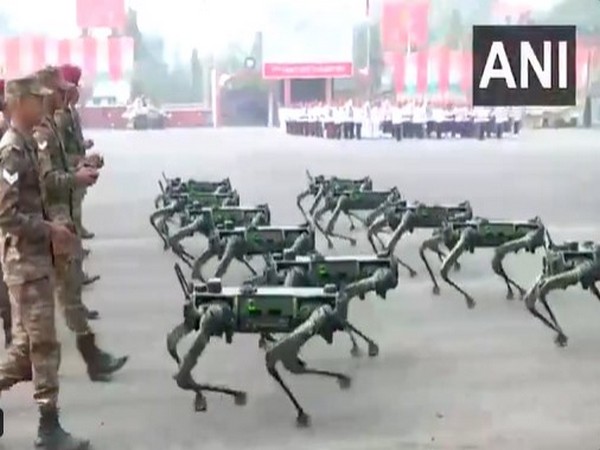
The Indian Army is accelerating a technology-led transformation that aims to connect soldiers, sensors, weapons and command systems through a common digital architecture.
The Army has designated 2026 as the Year of Networking and Data Centricity, highlighting the growing importance of real-time information sharing and data-driven decision-making in military operations.
The initiative is part of a wider modernisation programme encompassing artificial intelligence, quantum technologies, 6G, high-performance computing, space-based systems and unmanned platforms.
The emerging approach marks a shift from viewing individual weapons and platforms as standalone capabilities towards integrating them within a connected information environment.
The Army's transformation framework focuses on internal networking, joint and inter-service connectivity, integration of platforms and sensors, data architecture and governance, AI-enabled network management, cyber defence and advanced analytics.
It also envisages greater national-level networking and closer interaction between military and civilian technology ecosystems.
The Army Commanders' Conference in April also reviewed technology infusion along with networking and data-centricity, underscoring the priority being given to digital capabilities.
Artificial intelligence is becoming a key component of the Army's technology strategy.
A Parliamentary Standing Committee on Defence reported that a high-performance computing-based AI cloud was being developed for use across the three armed services.
The Army is also participating in national technology missions and has established technology clusters involving IITs and other research institutions.
It has set up an AI Incubation Centre in collaboration with Bharat Electronics Limited and is working with IIT Madras on innovation.
The growing links between the military, academia, public-sector technology companies and start-ups are expected to help accelerate the development of emerging defence technologies.
IIT Madras, for instance, has developed a substantial deep-tech ecosystem. During FY2025-26, its incubation cell supported 112 start-ups and filed 431 patents, while its overall portfolio exceeded 500 start-ups.
Quantum technology is also moving from research towards institutional defence planning.
In January 2026, Chief of Defence Staff General Anil Chauhan released the Military Quantum Mission Policy Framework, outlining a roadmap for incorporating quantum technologies into the armed forces.
The framework covers quantum communications, computing, sensing and metrology, as well as quantum materials and devices. It is aligned with India's National Quantum Mission and seeks greater coordination among the three services.
Secure communications are a major potential application. The Military College of Telecommunication Engineering has been identified as a strategic partner in areas including quantum key distribution.
The Army's technology engagement also extends to 6G. The Parliamentary Standing Committee has noted its involvement in national technology missions covering 6G and quantum technologies.
For defence applications, next-generation networks could eventually enable faster and more reliable links between sensors, command systems, weapons and autonomous platforms.
Unmanned systems have become another major element of the Army's modernisation programme, with capabilities being developed in both unmanned aerial systems and counter-unmanned aerial systems.
This digital transformation is taking place alongside a strong push for indigenous defence procurement.
According to the Parliamentary Standing Committee, the Army signed 479 capital acquisition contracts between FY2020-21 and FY2024-25. Of these, 419 contracts, accounting for about 91 per cent of the total contract value, were signed with Indian vendors.
For FY2025-26, ₹22,600 crore, or 86 per cent of the Army's capital acquisition allocation, was earmarked for indigenous procurement. For FY2026-27, ₹28,909 crore out of a total allocation of ₹34,150 crore was proposed for domestic procurement, representing 84 per cent.
The figures highlight the growing alignment between technological modernisation and India's drive for self-reliance in defence production.
Towards a common defence technology ecosystem
The transformation is not limited to advanced digital systems. It also covers ammunition, surveillance equipment, precision systems and conventional military capabilities.
More than 300 capability schemes are planned over the next decade, according to the Parliamentary Standing Committee.
A significant feature of the transformation is the move towards shared technological infrastructure across the armed forces. The proposed AI cloud is intended for all three services, while the Military Quantum Mission Policy Framework calls for greater synergy among the Army, Navy and Air Force.
The Defence Information Technology Consultative Committee has also been examining advanced chip manufacturing, sovereign operating systems and databases, as well as strategic data-centre locations for defence requirements.
Its June 2026 meeting brought together representatives from the Integrated Defence Staff, the three services, DRDO, the Ministry of Electronics and Information Technology, academia and industry.
The direction is increasingly clear: networks provide the connectivity, data supplies the information, AI helps analyse it, quantum technologies offer new possibilities in communications and sensing, while unmanned systems extend surveillance and operational reach.
The Indian Army will continue to rely on soldiers, artillery, armoured vehicles and conventional weapons. But these capabilities are increasingly being connected to a wider digital architecture.
The designation of 2026 as the Year of Networking and Data Centricity reflects this transformation — towards a force where battlefield advantage will depend not only on what the Army possesses, but on how quickly its sensors, commanders, networks and weapons can share information and act together.