Saturday 17 / October / 2026
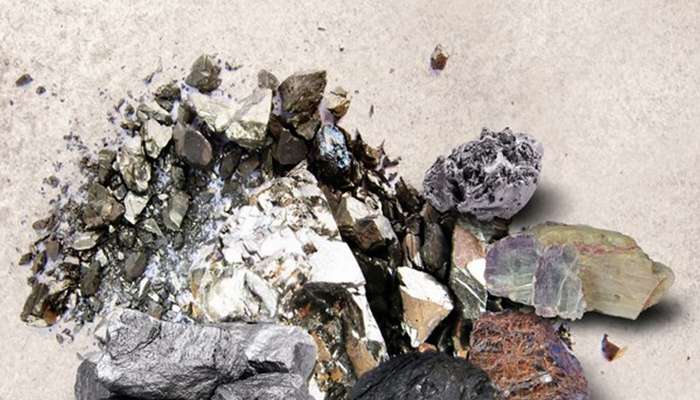
Critical minerals have become indispensable to modern economic growth, powering the global transition to clean energy while supporting advanced manufacturing and emerging technologies. As demand rises for semiconductors, smartphones, computers, electric vehicles (EVs) and renewable energy equipment, securing reliable supplies of rare earth elements and other critical minerals has become a strategic priority for major economies.
India is responding by strengthening domestic exploration and developing overseas partnerships to secure these resources. The National Critical Mineral Mission is central to this effort, supporting exploration, mining, processing and recycling while helping reduce vulnerabilities in critical supply chains.
Critical minerals are essential for India’s green transition, including the production of solar photovoltaic systems, wind turbine permanent magnets and EV batteries. They are also vital to national security, with rare earth elements and other strategic materials used in radar, sonar, precision-guidance systems, aerospace equipment and hypersonic technologies.
Alongside domestic efforts, New Delhi is seeking supplies from mineral-rich countries to diversify its sources and reduce exposure to external shocks. A key objective is to reduce excessive dependence on China, which dominates significant parts of the global rare earth processing and refining chain.
Myanmar has consequently emerged as an important potential partner.
Myanmar has become one of the world’s leading producers of rare earth minerals, with substantial deposits concentrated in its northern regions. For India, these resources offer a potentially valuable alternative source at a time when China has tightened controls over exports of critical minerals and rare earth-related materials.
India’s engagement with Myanmar has gained momentum since 2024, with the two countries exploring greater cooperation in mining and minerals alongside trade, security and connectivity.
The issue received high-level attention during talks between Indian Prime Minister Narendra Modi and Myanmar President Min Aung Hlaing in New Delhi in June 2026. The discussions provided fresh impetus to bilateral cooperation in critical and rare earth minerals, building on longstanding historical and people-to-people ties.
In July, India’s ambassador to Myanmar said cooperation in rare earths and critical minerals had received attention from the leadership of both countries. The engagement could open opportunities for technical exchanges, business partnerships and capacity-building initiatives in the mining and minerals sector.
However, India’s Myanmar strategy faces considerable challenges.
Much of Myanmar’s mineral wealth is located in remote, rugged and conflict-affected areas. Poor infrastructure and difficult terrain make the transportation of raw materials to processing facilities and ultimately to India a major logistical challenge.
Security concerns further complicate the picture. Some mineral-rich areas are controlled or influenced by ethnic armed groups, including the Kachin Independence Army, while Myanmar’s military seeks to maintain control over strategic territory and resources. This creates a difficult operating environment and adds complexity to India’s diplomatic engagement.
India will therefore need to pursue a careful balance, strengthening cooperation with Myanmar’s administration while adapting to the country’s evolving political landscape. Commercial partnerships, infrastructure development and technical cooperation will also be necessary to create a viable and secure mineral supply chain.
For New Delhi, the Myanmar initiative is ultimately about more than access to raw materials. It is part of a broader strategy to build resilient supply chains, strengthen economic security and reduce excessive dependence on a single dominant supplier.
India’s engagement with Myanmar can thus be seen as a high-risk, high-reward gamble. If successful, it could provide New Delhi with greater access to strategic minerals while supporting its ambitions in clean energy, advanced manufacturing and defence technology.
As competition for critical minerals intensifies, diversifying supply chains will become increasingly important. Myanmar could play a significant role in India’s effort to reduce geopolitical vulnerabilities and strengthen its position in the global energy and technology transition.