Sunday 18 / October / 2026
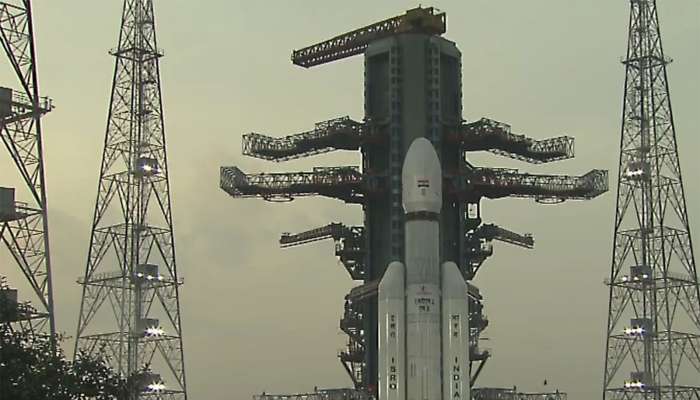
Three years after India’s historic Chandrayaan-3 landing on August 23, 2023, the mission continues to influence the country’s ambitions in space. On National Space Day 2026, its impact is increasingly visible not only in government programmes, but also in classrooms, startups and private investment.
The successful lunar landing helped shift the perception of India’s space programme from a largely government-led effort to a broader national enterprise. Prime Minister Narendra Modi’s recent meeting with founders and chief executives of 20 space startups highlighted that transition, with India now seeking to build a full-fledged space economy spanning rockets, satellites, components, services and deep-space research.
Former ISRO scientist Manish Purohit told NDTV Profit that India now has around 400 registered space entities, with many teams led by young engineers. He said the questions young innovators ask have changed—from how to join ISRO to how to develop propulsion systems, raise capital and turn space technologies into businesses.
Private sector takes centre stage
India’s emerging space industry covers a wide range of technologies. Startups are developing launch vehicles, satellite systems, propulsion technologies, space-weather solutions and debris-removal systems.
Skyroot Aerospace’s Vikram-1 has completed its first orbital flight, while Agnikul Cosmos is working towards reusable launch-vehicle capabilities. Companies such as Pixxel are developing and deploying their own satellite constellations.
The government is also encouraging private participation in launch infrastructure. A new spaceport is being developed at Kulasekarapattinam in Tamil Nadu, with private-sector participation being considered for its operations.
ISRO prepares for a new role
One of the biggest changes is taking place within ISRO itself.
The space agency is gradually moving towards transferring routine launch-vehicle production to industry, allowing ISRO to concentrate more heavily on research, exploration and advanced missions.
Hindustan Aeronautics Limited and Larsen & Toubro have already taken up production of the Small Satellite Launch Vehicle (SSLV). Further efforts are expected to involve the larger LVM3 and eventually other launch systems.
The model would allow commercial launches to increasingly be handled by private companies while ISRO focuses on missions at the technological frontier.
Moon, Mars and Venus on the roadmap
India’s next phase of space exploration is considerably more ambitious.
The Gaganyaan human-spaceflight programme is moving forward, alongside plans for the Bharatiya Antariksha Station. India is also working on missions involving Mars and Venus, as well as technologies that could eventually support human missions to the Moon.
Reusable launch technology is another major priority. India is developing systems capable of returning rocket stages to Earth for reuse, potentially reducing launch costs significantly.
Alongside this, scientists and engineers are developing more powerful launch vehicles, next-generation propulsion systems, methane-fuelled engines and advanced air-breathing propulsion technologies.
Supply chains remain critical
Industry executives say India’s strengths include its large engineering workforce, technical expertise and globally competitive costs. But space manufacturing requires extremely high standards of reliability, safety and quality.
Private companies therefore need better access to testing infrastructure, faster regulatory approvals, advanced design capabilities and domestic suppliers capable of producing the thousands of specialised components required for spacecraft and launch vehicles.
Building a deeper supply chain would allow Indian companies to move beyond assembling final systems and manufacture a much larger share of the technologies that go into them.
From lunar landing to space economy
Chandrayaan-3 demonstrated that India could achieve complex space missions at relatively low cost. Three years later, its wider legacy is becoming clearer: it helped inspire a shift from an India that primarily built space missions to an India seeking to build a global space industry.
With ISRO concentrating increasingly on exploration and advanced research and private companies taking a larger role in commercial space activity, India’s challenge is no longer simply reaching space.
The bigger challenge is turning that capability into a globally competitive space economy.