Saturday 24 / October / 2026
Muscat: Eight decades after India emerged as an independent nation, its relationship with Oman stands as a partnership shaped not only by diplomacy and trade, but by history, people and a long record of mutual trust.
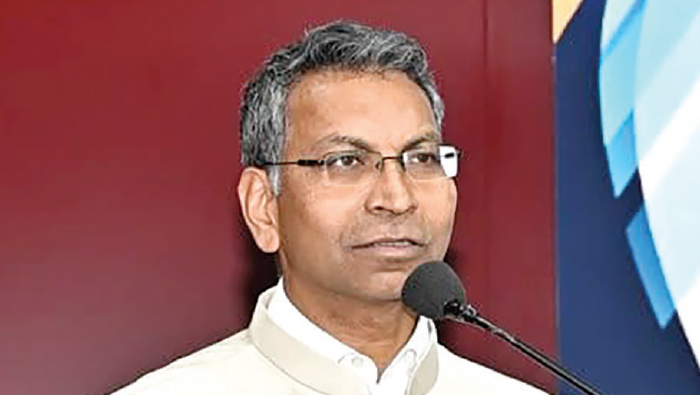
As India marks its 80th Independence Day, Indian Ambassador to Oman, H E Prashant Pise sees the milestone as an opportunity to look beyond the achievements of the past and towards a relationship that, he believes, has the potential to make a “very good amount of progress” across almost every major area of cooperation.
The timing is particularly significant. India and Oman are also marking a journey of roughly seven decades of diplomatic relations, with India among the early countries to establish formal diplomatic ties with the Sultanate. Over the decades, that relationship has expanded from traditional commerce and people-to-people links into a broad strategic partnership encompassing defence, maritime security, energy, investment, technology, education, culture and emerging sectors.
“For 80 years versus 70 years, I think our journey is coinciding,” Pise said, describing the two countries as having evolved side by side.
That evolution mirrors India’s own transformation.
The country that became independent in 1947 faced enormous challenges, but has since emerged as a major global economy and an increasingly influential player in international affairs.
Partnership entering another phase
Pise believes the relationship with Oman has grown alongside that transformation, with India contributing significantly to Oman’s economic and social development through its companies, professionals and wider community.
Today, the partnership is entering another phase.
The ambassador points to the high-level political exchanges between the two countries as having provided momentum and direction, but says the next stage must be about translating that political goodwill into progress across multiple “verticals” of the relationship.
Those include political cooperation, defence and security, maritime security, trade and investment, culture and people-to-people ties, science and technology, space and renewable energy.
“India and Oman are strategic partners,” he said, stressing that the relationship now needs to be developed across all its dimensions.
CEPA opens new chapter
At the heart of the economic relationship is the India-Oman Comprehensive Economic Partnership Agreement (CEPA), which entered into force on June 1 this year.
The agreement has opened a new chapter in bilateral commerce, providing Indian exporters with sweeping access to the Omani market and creating opportunities for businesses to expand beyond traditional sectors as well as for Omani exporters to make an impact in the huge Indian market.
Pise said the impact is already beginning to be seen, with Indian companies using CEPA provisions for exports to Oman.
But for him, the agreement is not simply about removing tariffs. It is about creating a platform for a deeper economic relationship.
The ambassador said the embassy has been holding business meetings, webinars and roundtables involving investors, business leaders, export promotion councils, chambers of commerce and government authorities to familiarise companies with the agreement and encourage them to use its provisions.
There is considerable scope, he believes, in sectors ranging from logistics and warehousing to metals, minerals and chemicals, manufacturing, pharmaceuticals and port-related activities.
Oman potential base for wider markets
Oman’s strategic location adds another dimension. For Indian companies, Oman can serve not only as a market in itself but as a potential base for reaching wider markets in the Gulf, Africa and beyond.
Pise said companies could explore opportunities in warehousing, packaging, manufacturing and value addition, allowing them to build supply chains that take advantage of Oman’s location and infrastructure.
The pharmaceutical sector is another area he highlighted, arguing that Indian companies could establish manufacturing facilities in Oman and use the country as a base for exports and re-exports.
The next phase of economic cooperation, however, is unlikely to be confined to traditional industries.
Pise sees strong potential in renewable energy, critical minerals, artificial intelligence, cybersecurity, digital infrastructure and financial technology.
India’s experience in building a large digital economy, he said, can complement Oman’s own development ambitions.
That creates an important bridge between Oman Vision 2040 and India’s ambition of becoming a developed nation by 2047, when the country will mark 100 years of independence. The two national visions, Pise argues, offer considerable room for collaboration.
Digital India
Indian investment in Oman’s manufacturing sector, for example, can contribute to employment and economic diversification, while India’s experience with digital governance and financial inclusion can offer useful lessons for Oman.
“Digital India” has developed systems covering governance, service delivery and financial inclusion, including reaching people in remote areas and communities that have traditionally had less access to services.
The ambassador sees that experience as potentially relevant to Oman’s own development journey.
But the relationship is not simply an economic equation.
Diaspora a living bridge
One of its most enduring strengths is the Indian community in Oman, which Pise puts at around 700,000 people. From professionals and entrepreneurs to workers across a wide range of occupations, the community has become an integral part of Oman’s social and economic landscape.
For the ambassador, the diaspora represents much more than a workforce.
“They are the living bridge between India and Oman,” he said.
The community’s contribution, he added, extends to the economic relationship as well as the wider image and understanding of India in Oman. Its long history in the Sultanate gives it a distinctive role in strengthening the people-to-people foundation of bilateral ties.
Pise also emphasised the embassy’s responsibilities towards Indians who find themselves in difficulty.
The embassy has a dedicated welfare team and a 24-hour emergency contact mechanism to respond to grievances and cases involving Indians in distress. In coordination with Omani authorities, assistance can include accommodation, medical support, repatriation and emergency travel arrangements for people who cannot afford to return home.
A community welfare fund is used to support those facing genuine financial hardship.
One-stop centre for women
The embassy has also established a one-stop centre to assist women in distress, including those who have overstayed visas or left employers and wish to return to India.
Pise said the embassy works with relevant authorities and sponsors to find solutions and minimise the period of distress before facilitating their return.
The humanitarian dimension of the relationship has also extended to seafarers.
Thankful to Omani authorities
With regional tensions affecting maritime routes, Pise acknowledged the assistance provided by Oman and the Royal Navy of Oman (RNO) to Indians in distress at sea.
He expressed appreciation for the support extended by Omani authorities and stressed the importance of keeping commercial shipping routes safe and secure in the Strait of Hormuz.
That concern is closely linked to India’s energy security.
Pise said a significant share of India’s energy requirements comes from the wider region and that disruptions to maritime routes can affect both supplies and prices.
India, he stressed, wants the regional conflict to be resolved as soon as possible and has consistently advocated the safety and security of commercial navigation.
Maritime cooperation
For India and Oman, maritime cooperation therefore has implications far beyond naval engagement. It is tied to energy, trade, supply chains and the stability of the wider region.
The future partnership, meanwhile, is increasingly expected to be knowledge-driven.
India’s Technical and Economic Cooperation programme, launched in 1964, is one of the key vehicles through which India shares expertise with partner countries.
Pise said Omani officials have benefited from training in areas including information technology, cybersecurity, agriculture, banking and other economic and social sectors.
Scholarships are another important component, with opportunities for Omani students at undergraduate, master’s and PhD levels.
New education policy
Pise also sees scope for Indian universities and educational institutions to establish a greater presence in Oman, particularly as India’s new education policy encourages international engagement and overseas campuses.
Oman already has a substantial Indian school network, with tens of thousands of Indian students studying under the CBSE system. The ambassador believes higher education could become another important bridge between the two countries.
The potential is particularly strong among young people.
Both countries have young populations, and Pise believes youth engagement should become a priority in the years ahead.
India’s demographic strength and Oman’s young population create opportunities for cooperation in education, skills, technology, entrepreneurship and innovation.
Recent exchanges involving Omani students visiting India to see the country’s space programme illustrate the kind of knowledge-sharing that could become more important in the future.
Space, renewable energy, technology and scientific research, he believes, are no longer peripheral areas of the relationship. They could become central to its next phase.
And that is perhaps the defining message from the ambassador as India reaches its 80th year: the relationship cannot remain content with incremental growth.
Expanding economy
Pise wants measurable ambition.
He points to bilateral trade of around $11 billion and says CEPA should help take that relationship o a higher level. He also sees substantial scope for greater investment in both directions.
Indian companies have invested in Oman, but Pise believes Omani investors should also look more actively towards India, particularly in sectors ranging from energy and natural resources to metals, investment funds and capital markets.
India’s expanding economy, he argues, presents a large and increasingly attractive market for Omani capital.
The future, therefore, is not simply about India doing more business in Oman. It is about creating a two-way economic relationship that connects investment, technology, manufacturing, services and people.
After 80 years of independence and around seven decades of formal diplomatic ties with Oman, the relationship has already moved far beyond its original foundations.
Its next chapter is being written against a very different global backdrop — one marked by geopolitical uncertainty, supply-chain disruptions, technological transformation and a race towards new sources of energy and growth.
For India and Oman, that changing environment may make their longstanding trust even more valuable.
Pise sees a “very bright future” for the partnership, but his emphasis is on action rather than sentiment: stronger economic ties, deeper strategic cooperation, greater investment, expanded educational and technological exchanges, stronger maritime collaboration and closer engagement between the two countries’ young people.
The history provides the foundation. The challenge now is to turn that foundation into a partnership ambitious enough for the next 20, 30 and 50 years.
As India looks towards its centenary of independence in 2047, the ambassador believes India-Oman ties should be moving towards their own set of ambitious targets — with trade, investment and cooperation across sectors growing substantially.
At 80, India is looking back with confidence. With Oman, it is also looking ahead.