Wednesday 09 / September / 2026
The Second World War offers a striking lesson for today’s energy-security challenges. Between 1942 and 1945, Allied forces built the Ledo Road through the difficult terrain of northeastern India and northern Burma to connect India with China and support the war effort against Japan. The project, later renamed the Stilwell Road after US General Joseph Stilwell, was completed despite dense forests, mountainous terrain and enormous human costs.
The achievement raises an important question today: if such a formidable infrastructure project could be completed under wartime conditions in the 1940s, why could a modern network of oil and gas pipelines not be developed to reduce the world’s dependence on the Strait of Hormuz?
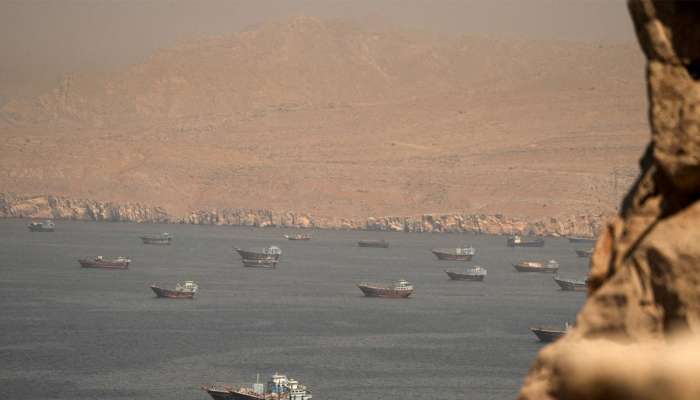
The 2026 Iran war has highlighted the vulnerability created by the Strait’s strategic importance. Unlike several other major maritime chokepoints, Hormuz has no comparable alternative sea route. When shipping through the Bab el-Mandeb became dangerous, vessels could divert around the Cape of Good Hope. Similarly, the Strait of Malacca has alternatives through the Sunda and Lombok straits. The Persian Gulf, however, remains heavily dependent on Hormuz for access to global markets.
The disruption therefore has consequences far beyond the region. It affects energy supplies, shipping costs, inflation and the broader global economy. It also raises questions about the credibility of the United States as the principal security provider in the Arabian Gulf.
Existing infrastructure demonstrates that alternatives are possible. Saudi Arabia’s East-West pipeline, built in the 1980s, transports oil from the eastern fields to Yanbu on the Red Sea. The pipeline has a capacity of about 7 million barrels per day, compared with nearly 20 million barrels per day that passed through the Strait of Hormuz before the current conflict.
The United Arab Emirates has also developed an alternative route. Its Habshan-Fujairah pipeline connects oil facilities in Abu Dhabi with the port of Fujairah on the Gulf of Oman, allowing exports to bypass Hormuz. The UAE is now seeking to expand this capacity.
History also provides other examples of attempts to reduce dependence on vulnerable maritime routes. Saudi Arabia built the Trans-Arabian pipeline to the Mediterranean in the 1950s, while the Eilat-Ashkelon pipeline in Israel was developed in the 1960s partly to provide an alternative to the Suez Canal. Both demonstrate the strategic value—and political difficulties—of overland energy corridors.
There were even proposals decades ago to construct a pipeline corridor through Oman’s Dhofar region to an Arabian Sea port. Plans to connect the oil-producing states of the Gulf with an Omani outlet never materialised, largely because of sovereignty and geopolitical concerns.
The current crisis underscores the cost of such dependence. When a major share of global energy exports relies on a single chokepoint, disruption can give one state disproportionate leverage over international markets. Diversified pipeline networks could reduce that vulnerability and give energy-producing countries additional options for reaching global consumers.
As Washington seeks a way out of the Iran crisis, it could also look beyond immediate military and diplomatic solutions and work with Gulf partners on a long-term energy infrastructure strategy.
A 21st-century “Stilwell Road”—a connected network of pipelines linking Gulf oil and gas producers with ports on the Arabian Sea, Red Sea and Mediterranean—would not eliminate geopolitical risks. But it could substantially reduce the economic leverage created by the Strait of Hormuz.
For the United States and the global economy, investing in such alternative routes could therefore be not only an infrastructure project, but a long-term strategy for strengthening energy security and reducing the consequences of future crises.