Monday 19 / October / 2026
New Delhi: The Asia Clean Energy Forum (ACEF) 2026 has highlighted a major shift in the region’s energy debate, with policymakers and industry experts increasingly focused not on whether the clean-energy transition should happen, but how quickly it can be achieved and how closely regional energy systems can be integrated.
Held at the Asian Development Bank (ADB) headquarters in Metro Manila, ACEF 2026 brought together more than 1,400 participants from 71 countries, including over 200 expert speakers across 40 sessions and workshops. Discussions were shaped by the ongoing Middle East crisis and growing concerns over energy security, climate change and the need to accelerate renewable-energy deployment.
A strong focus was placed on Global South cooperation, particularly among developing countries seeking to expand renewable energy, clean technology and energy infrastructure while reducing dependence on fossil fuels.
India at the centre of Global South cooperation
India has emerged as a major driver of renewable-energy cooperation across the Global South. A founding member of the ADB and its fourth-largest shareholder, India remains both a recipient of development financing and an increasingly important hub for technology and knowledge sharing.
India and the Philippines have maintained cooperation on clean energy since 2013 through their Joint Working Group on Renewable Energy. Their relationship was further elevated through the strategic partnership announced during Philippine President Ferdinand Marcos Jr.’s 2025 state visit to India.
India has also expanded its international renewable-energy partnerships. Alongside France, it co-founded the International Solar Alliance (ISA) in 2015. The organisation now has 124 signatory member countries and aims to mobilise $1 trillion in solar investment by 2030, including through its Global Solar Facility.
Green hydrogen and international partnerships
India is also positioning itself as a major hub for green hydrogen and clean-energy manufacturing.
Its National Green Hydrogen Mission, launched in 2023, targets production of at least 5 million metric tonnes of clean hydrogen annually by 2030. The programme is intended to support industrial decarbonisation while reducing India's dependence on imported fossil fuels.
New Delhi has developed clean-energy partnerships with the European Union, Australia, Germany and the Netherlands, covering areas including green hydrogen, clean technology, renewable energy and critical minerals.
India is also preparing to host the Bharat Renewable Energy Summit & Expo in November 2026, alongside the ninth session of the ISA Assembly and the fourth International Conference on Green Hydrogen. More than 50,000 delegates are expected to attend.
India’s renewable-energy expansion
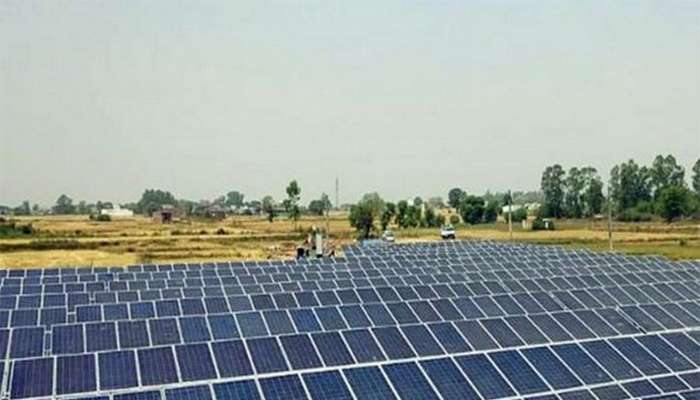
India's renewable-energy ambitions are supported by rapid growth in domestic capacity. By mid-2026, the country had reached approximately 288 GW of cumulative renewable-energy capacity, putting it on course toward its target of 500 GW by 2030.
The country is simultaneously seeking to build a major solar manufacturing ecosystem, leveraging its extensive coastline, relatively low production costs and strategic proximity to European and East Asian markets.
These efforts form part of India's broader objective of achieving net-zero greenhouse-gas emissions by 2070—a goal that will require major changes across the country's electricity, transport and industrial sectors.
The discussions at ACEF 2026 therefore point to a broader transformation: Asia's clean-energy challenge is increasingly about speed, scale and regional integration rather than simply deciding whether the transition should take place.