Wednesday 21 / October / 2026
Moscow: Muscat: Russia is exploring a potential direct railway connection to India through Central and South Asia, a proposal that could eventually provide an alternative trade route as geopolitical tensions, sanctions and disruptions around key maritime chokepoints reshape global energy flows.
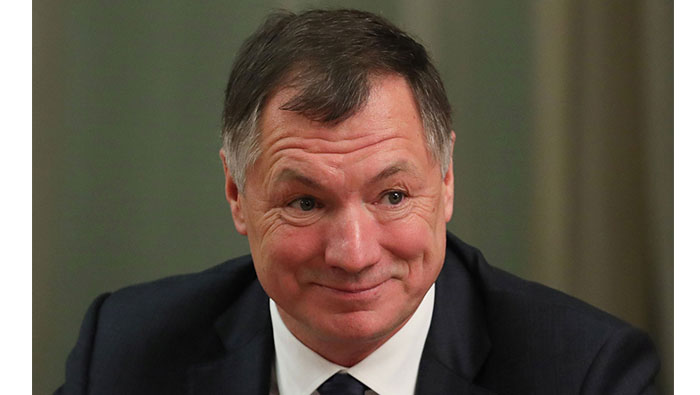
Russian Deputy Prime Minister Marat Khusnullin said on August 6 that a railway route to the Indian Ocean should be examined as Moscow seeks to expand transport options and secure long-term infrastructure financing. He cited possible routes through Turkmenistan, Iran, Afghanistan and Pakistan, saying that any option providing access to India could be considered.
The proposal remains at an early exploratory stage, with no detailed route alignment, capacity, cost estimate or construction timetable announced.
For India, the idea comes as the country seeks to strengthen the resilience of its energy supplies. India imports close to 90 per cent of its crude oil, while its dependence on Russian crude has risen sharply since the Ukraine conflict. Russian supplies reportedly accounted for 50.83 per cent of India's oil imports in July, equivalent to around 2.47 million barrels per day.
Analysts, however, say a rail corridor is unlikely to replace maritime oil shipments because of the enormous volumes involved. Priya Walia, vice-president for commodity markets for oil at Rystad Energy, described the proposal primarily as a strategic diversification route, rather than an immediate solution to India's crude supply requirements.
Oil tankers and pipelines remain far more suitable for transporting crude at scale, while rail could provide additional flexibility and an alternative for selected commodities and strategic goods.
The proposed corridor could nevertheless have broader significance beyond energy. A Russia-India railway passing through Central and South Asia could strengthen overland connectivity between Eurasian economies and reduce dependence on vulnerable maritime routes such as the Strait of Hormuz and the Bosphorus.
India has faced growing uncertainty over energy shipments as conflicts and disruptions in the Middle East have affected shipping through the Gulf. At the same time, Ukrainian attacks on Russian energy infrastructure have created additional risks around Russian supplies.
The proposal also comes against the backdrop of growing Western pressure on countries purchasing Russian energy. The US Senate has passed legislation that could permit tariffs of up to 100 per cent on imports from major buyers of Russian oil and gas, including India and China, although the measure still requires further approval before becoming law.
Political scientist Uday Chandra of Ashoka University said such pressure could strengthen incentives for Russia, India, China, Iran and Central Asian countries to develop alternative transport and payment networks that reduce exposure to Western-controlled systems.
A Russia-India rail connection would therefore represent more than an energy corridor. It could form part of a broader shift towards overland Eurasian trade networks, giving India greater connectivity with continental Eurasia while providing Russia with additional routes to Asian markets.
For New Delhi, however, diversification remains central. Analysts caution that India would not want to replace dependence on Middle Eastern oil and Hormuz shipping with excessive dependence on another single supplier or corridor.
The proposed railway is consequently best viewed as a long-term strategic option rather than an immediate alternative to seaborne crude imports. If developed, it could add another layer of resilience to India's trade and energy network while reflecting the growing fragmentation of global supply chains amid geopolitical competition.