Tuesday 04 / August / 2026
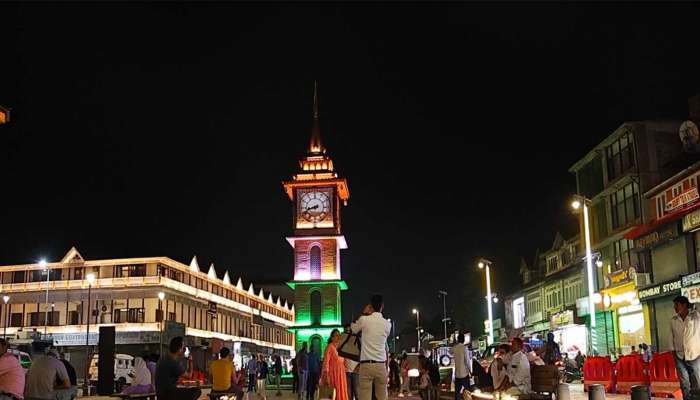
New Delhi: Travel across Indian administered Jammu & Kashmir today and conversations are increasingly about roads, schools, hospitals, industries and employment opportunities rather than conflict, violence or security concerns. Across towns and villages, socio-economic development has become a defining feature of public discourse. This shift reflects sustained public investment and policy initiatives by the Government of India, combined with the aspirations and enterprise of the people of Jammu & Kashmir.
For many residents, development is no longer an abstract political promise but a visible reality. All-weather roads have improved connectivity for people living in remote areas, making schools, hospitals and markets more accessible. The establishment of premier institutions such as AIIMS, IIT and IIM has expanded educational opportunities and raised aspirations among students, entrepreneurs and small businesses. As a result, discussions increasingly revolve around livelihoods, mobility and economic opportunity rather than day-to-day survival.
A decade ago, such a transformation would have seemed unlikely to many. While opinions differ on the political changes that have unfolded over the years, the abrogation of Article 370 marked a significant turning point in the region's governance and development trajectory. Since then, sustained public investment, administrative reforms and infrastructure expansion have accelerated growth. Equally important has been the willingness of the people of Indian administered Jammu & Kashmir to embrace new opportunities and work towards a more stable and prosperous future.
The foundations for this transformation were laid in 2015, when the Government of India approved a major development package for Jammu & Kashmir, triggering a large-scale infrastructure drive.
National highways were upgraded, tunnels were constructed through some of the country's most challenging terrain, and an extensive rural road network connected previously isolated communities. These projects not only reduced travel time but also generated employment and improved market access for rural populations.
Political opinions across the state continue to vary, but the scale of public investment over the past decade is widely evident through infrastructure development. Improved transport connectivity has become one of the most visible symbols of change, helping bridge the region's mountainous landscape with the rest of India. Landmark projects such as the Chenab Rail Bridge—the world's highest railway arch bridge—and the 324-kilometre Jammu-Baramulla railway line have significantly strengthened connectivity while reshaping the region's economic and social landscape.
Power infrastructure has also improved considerably. More reliable electricity has supported tourism, small industries and household welfare in a region that once faced chronic power shortages.
More than 16,700 households have adopted rooftop solar systems, helping reduce electricity costs while expanding clean energy use. Government programmes have also provided solar-powered irrigation pumps to farmers, while electricity subsidies have helped ease the financial burden on households. Compared with many other Indian states, Jammu & Kashmir has received substantial central support through tariff subsidies and related allocations.
Economic indicators point to notable improvements over the past decade. Per capita income has reportedly risen by around 170 percent to ₹168,243 in 2025-26. Between 2019-20 and 2024-25, income growth in the Union Territory outpaced that of several major Indian states. The economy has also become more diversified, with the services sector emerging as its primary growth engine alongside agriculture.
Human development indicators have also strengthened. Life expectancy has increased to 74.3 years, placing Indian administered Jammu & Kashmir among India's better-performing regions on this measure. Infant and neonatal mortality rates have declined, while institutional deliveries, immunisation coverage and the sex ratio have all improved, reflecting better healthcare access and welfare delivery.
Taken together, these developments suggest that the state is undergoing a broad socio-economic transformation. Expanded infrastructure, stronger public services, improved human development outcomes and growing economic opportunities are reshaping daily life across the region.
While political debates over its constitutional and governance changes continue, the visible expansion of connectivity, public investment and welfare programmes has become an important part of the region's evolving development story, laying the groundwork for long-term economic growth and greater stability.