Tuesday 20 / October / 2026
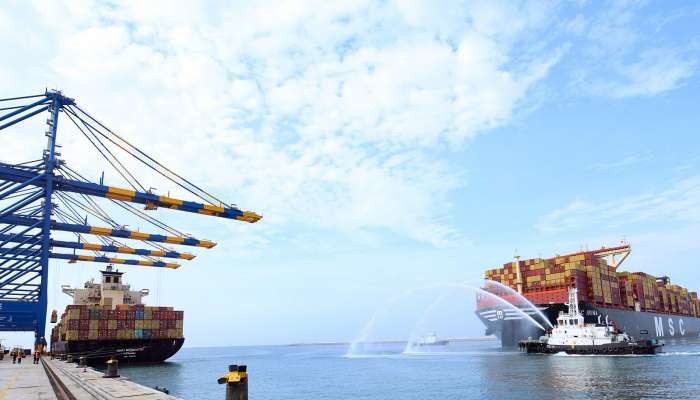
Indian exporters are gearing up to capitalise on the India-UK Free Trade Agreement (FTA), which came into force on Wednesday, with businesses in textiles, garments, footwear, automobiles and food products expecting stronger trade with Britain.
"We're seeing UK customers planning their business with us much further ahead than before," said Dipali Goenka, CEO of Welspun Living. "This kind of long-term planning was once common only with our US clients, but the FTA has changed that."
The agreement removes or lowers tariffs on 99 per cent of Indian exports to the UK and 90 per cent of British exports to India. The UK government has described it as its most significant bilateral trade deal since Brexit, with both countries expected to benefit from stronger economic growth over the long term.
For India's textile industry, the deal is expected to improve competitiveness by eliminating a major tariff disadvantage. Until now, Indian home textile exports faced duties of around 12 per cent, while competitors such as Bangladesh and Pakistan enjoyed duty-free access under the UK's Developing Countries Trading Scheme.
The FTA is also expected to benefit British whisky producers. Import duties on Scotch whisky have been cut immediately from 150 per cent to 75 per cent and will gradually fall to 40 per cent over the next decade.
Importers say the initial focus has been on ensuring customs documentation, certificates of origin and logistics systems are ready so shipments qualify for the lower tariffs. Larger gains are expected once businesses begin seeing the financial impact of reduced duties.
However, trade experts caution that the agreement's benefits will emerge gradually rather than immediately.
According to the Global Trade Research Initiative (GTRI), more than half of India's exports to the UK already entered duty-free under existing trade arrangements, while nearly half of India's imports from Britain consist of silver, which remains outside the FTA.
Analysts say the agreement's success will ultimately depend on whether sectors such as textiles, garments, footwear, seafood, automobiles, grapes and mangoes record higher export orders, larger shipment volumes and improved profit margins over the next one to three years.
Challenges also remain. UK quotas on steel imports, the planned Carbon Border Adjustment Mechanism (CBAM), and various non-tariff barriers could reduce some of the agreement's gains. In addition, many Indian small and medium-sized exporters have historically underutilised FTAs because of limited awareness of preferential rules and documentation requirements.
Industry experts say government agencies and trade associations will need to help businesses understand origin rules, certification procedures and compliance requirements to ensure exporters fully benefit from the new agreement.
The implementation of the Double Contribution Convention under the proposed UK-India Comprehensive Economic Trade Agreement (CETA) is set to lower the cost burden on professionals moving between the two nations and encourage greater bilateral mobility.
Speaking to ANI, Harjinder Kang, the UK's Trade Commissioner for South Asia and former Chief Negotiator for the India-UK Free Trade Agreement, stated that the mechanism would ease financial strains on temporary workers.
"It would encourage more two-way traffic because the cost burden would be lower," Kang said. "It directly affects the pockets of individuals moving between countries, as they would no longer have to pay two sets of social security contributions."
Under the framework, temporary workers are exempt from contributing to the host nation's social security system, provided they continue payments in their home country. Kang explained that the exemption window has been expanded significantly during the negotiation process.
"If you are a UK worker paying your National Insurance contributions in the UK, you do not then need to contribute to the host country's social security system if you are there on a temporary basis for a certain number of years," Kang said.
"The same principle applies to Indian nationals. If they are going to the UK temporarily and continuing to pay into their National Insurance or social security system in India, such as the Provident Fund, they would not have to pay National Insurance contributions in the UK," he added.
Kang noted that this provision targets professionals on short-term corporate deployments.
"This applies for a specific period. It was originally 36 months, but we agreed to extend it to 60 months, or five years. After that, it no longer applies," Kang stated. "If a company like Tata or Infosys is sending engineers, managers, or other professionals to the UK for a couple of years on a temporary assignment, this is where they would benefit."
The broader trade agreement aims to significantly accelerate commerce between the two major markets. Kang emphasised that the structural layout of the deal ensures balanced growth, with current trade figures demonstrating an even split between the two nations.
"It has to be a win-win. If it wasn't a win-win, no system was going to sign it off," Kang said. "If you look at our current trade, it's almost 50-50. It's not slightly in favour of India, and it's not heavily skewed either; it is almost evenly balanced."