Wednesday 07 / October / 2026
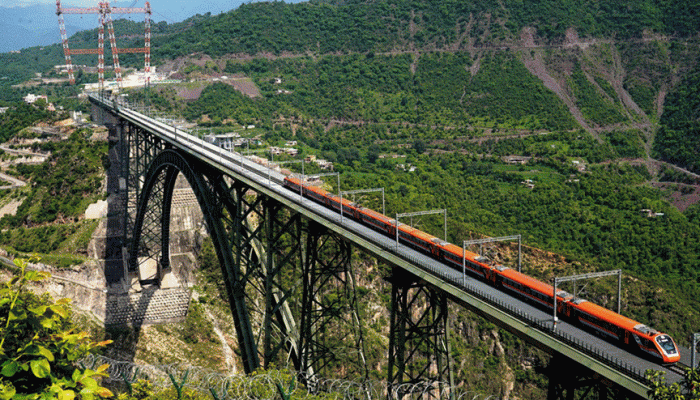
New Delhi: Indian industrialist Anand Mahindra on Sunday shared a video of the Vande Bharat Express crossing the iconic Chenab Rail Bridge in Indian administered Jammu and Kashmir.
The video quickly went viral, drawing a large number of likes, shares, and comments, and sparking widespread discussion across social media platforms.
In the clip, the premium Vande Bharat train can be seen gliding smoothly across the towering bridge, surrounded by the breathtaking Himalayan landscape.
Sharing his reaction, Anand Mahindra said he has added the journey to his bucket list.
He wrote: “Vande Bharat gliding across the Chenab Rail Bridge. The world’s highest railway arch bridge. Some journeys are transportation from point A to point B. Some are experiences. This one has definitely made it to my bucket list.”
Towering 359 metres above the riverbed, the Chenab Rail Bridge stands as the world’s highest railway arch bridge. It rises 35 metres higher than the Eiffel Tower. Spanning 1,315 metres, this steel arch structure is a key part of the Udhampur Srinagar Baramulla Railway Link and marks a significant milestone in Indian engineering.
Designed to endure harsh terrain and extreme weather, the bridge can withstand wind speeds of up to 260 kilometres per hour and is built to last 120 years. With a project cost of ₹1,486 crore, it is not just a bridge but a symbol of India’s technical prowess. Structural steel suitable for temperatures ranging from minus 10 to 40 degrees Celsius has been used, ensuring resilience across seasonal extremes. The most sophisticated ‘Tekla’ software was used for structural detailing, enabling high precision in design and execution.
The Udhampur–Srinagar–Baramulla Rail Link (USBRL) is one of the most ambitious railway projects undertaken in independent India. Stretching 272 kilometres through the rugged Himalayas, the project has been built at a cost of ₹43,780 crore. It includes 36 tunnels that span 119 kilometres and 943 bridges that knit together valleys, ridges and mountain passes. Designed to overcome the region’s challenging geography, it connects remote areas to the national rail network and marks a new chapter in mobility, trade and tourism for Jammu and Kashmir.