Saturday 17 / October / 2026
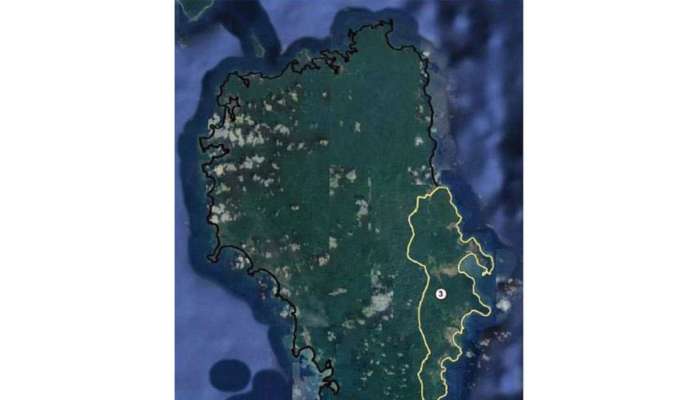
New Delhi: The Great Nicobar Project seeks to strengthen India’s presence in the Andaman Sea and its engagement with Southeast Asia. The Andaman and Nicobar Islands sit astride some of the world’s busiest maritime trade routes, particularly near the Malacca Strait, through which a significant portion of global commerce flows. For India, enhancing capabilities in this region is both an economic necessity and a strategic imperative.
For decades, India’s maritime strategy has been constrained by underutilisation of its island territories. While continental concerns dominated policymaking, the vast potential of the Indian Ocean region remained underleveraged. The Great Nicobar Project signals a decisive break from that past. It reflects a more confident India, one that understands that the future of global power will be shaped as much by sea lanes as by land borders.
The project envisions the development of critical infrastructure, including a transshipment port, an international airport, and associated urban and logistics ecosystems. These are not standalone components. Together, they form a comprehensive economic node designed to position India as a major player in global shipping and trade networks.
Today, a significant share of India’s transshipment cargo is handled by foreign ports such as Colombo, Singapore, and Dubai. This dependence has both economic and strategic costs. By developing a world class transshipment hub in Great Nicobar, India has the opportunity to retain more of this traffic domestically, reduce logistical inefficiencies, and enhance supply chain resilience.
Highlighting the strategic significance of the Great Nicobar Islands, Major General GS Rawat (Retd) on Saturday said the region's proximity to the Strait of Malacca, through which a major share of global and Chinese trade passes, makes it crucial for India's security and economic ambitions, even as concerns over ecological and environmental impact remain.
Speaking to ANI, he said, "Great Nicobar is 130-140 kilometres from the Strait of Malacca. 35-40% of the total trade of China and the world passes through there. It sure is a cause of concern that they will cause ecological and environmental disruption... but I assure you that if the government has approved such a large sum, it must have thought about the tribes there. Ecology, Economy, and Environment always go hand in hand. If we are to achieve economic prosperity, we must become a $10 trillion economy, and we must ensure our country's safety and security. From this perspective, the Greater Nicobar Islands have immense strategic importance."
He highlighted the strategic and economic significance of the Great Nicobar international container transit point while addressing environmental sustainability concerns.
"The international container transit point we are building here will bring us huge economic benefits, just like we currently receive in Colombo and Singapore. This will significantly impact the country's economic burden... This is an unsinkable base and a natural dominance in the Bay of Bengal, the Indian Ocean, and the Gulf, allowing us to dominate the region completely. If trees are being cut, they must be getting planted again... I can confidently say that this project will proceed while maintaining a complete balance between our plants and animals, our ecological and environmental aspects," he said.
In an era defined by geopolitical flux, the Indo-Pacific has emerged as the central theatre of global competition. From the rise of China’s maritime ambitions to the evolving role of regional powers, the strategic landscape is rapidly shifting. For India, maintaining a credible presence in the eastern Indian Ocean is essential to safeguarding its interests and ensuring regional stability.
The Great Nicobar Project must therefore be viewed through this broader lens. It is not simply a development initiative. It is a strategic investment in India’s long term security architecture.
At the same time, the project raises important questions about sustainability and ecological balance. Great Nicobar is home to rich biodiversity and indigenous communities whose way of life has remained largely untouched for centuries. Any large scale development must be carefully calibrated to protect these fragile ecosystems and cultural heritage.
This is where the real test lies.
India’s development journey has increasingly emphasised the need to balance growth with sustainability. From renewable energy expansion to green infrastructure initiatives, there is a growing recognition that economic progress cannot come at the expense of environmental integrity. The Great Nicobar Project offers an opportunity to demonstrate how this balance can be achieved in practice.
Transparent environmental assessments, robust mitigation strategies, and meaningful engagement with local communities will be critical. Development must not be imposed. It must be inclusive, participatory, and respectful of local realities.
There is also a technological dimension to consider. As India positions itself as a leader in digital infrastructure and smart logistics, the Great Nicobar Project can serve as a testing ground for next generation port and urban systems. From AI driven supply chains to sustainable energy integration, the possibilities are vast.
Equally important is the project’s potential to catalyse regional connectivity. By linking India more closely with Southeast Asian economies, it aligns with broader initiatives such as Act East and Indo-Pacific partnerships. In doing so, it reinforces India’s role as a bridge between South Asia and the wider Indo-Pacific region.