Saturday 03 / October / 2026
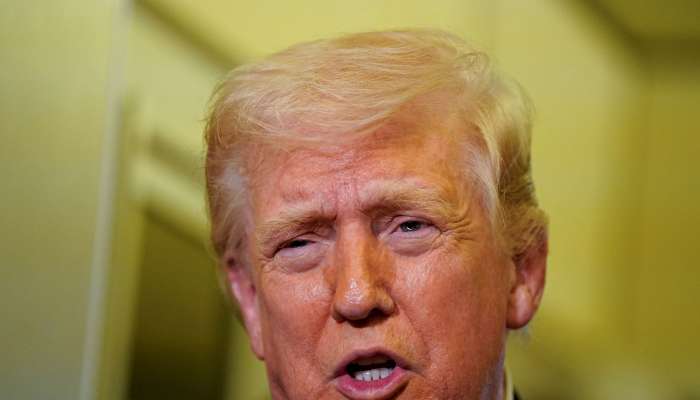
Washington DC: US President Donald Trump on Friday expressed dissatisfaction with Iran's latest proposal aimed at ending the ongoing conflict, while also casting doubt on whether a final agreement can be reached.
Speaking to reporters at the White House, Trump said, "They want to make a deal, but I'm not satisfied with it, so we'll see what happens."
He did not elaborate on the specific aspects of the proposal he found unacceptable but indicated uncertainty over Tehran's willingness to ultimately agree to a settlement.
"They've made strides, but I'm not sure if they ever get there," Trump added, while speaking on the White House's South Lawn.
The US President also pointed to internal divisions within Iran's leadership, suggesting that disunity could be affecting the negotiation process.
"The leadership is very disjointed. It's got two to three groups, maybe four, and it's a very disjointed leadership. And with that being said, they all want to make a deal, but they're all messed up," the US President said.
His remarks come after Iran submitted its latest proposal aimed at advancing negotiations to end the ongoing West Asia conflict with the US, in response to recent amendments introduced by Washington to a draft plan aimed at ending the conflict.
According to Axios, citing sources familiar with the matter, the latest proposal submitted by Iran through Pakistan, which is acting as a mediator in the talks, comes after US Special Envoy Steve Witkoff sent a list of amendments on Monday, focusing on reintroducing the nuclear issue into the draft framework.
Earlier, the Iranian state media IRNA reported that Tehran had submitted its latest proposal aimed at advancing negotiations to end the ongoing West Asia conflict with the US.
Tehran handed over the text of its new proposal to Pakistan on Thursday evening, though details of Tehran's counter-terms have not been fully disclosed.
Axios, citing the source, further reported that one of the proposed US amendments calls for Iran to commit that it will not transfer any enriched uranium from its bombed nuclear facilities or restart any nuclear-related activities at those sites while negotiations are ongoing.
Meanwhile, tensions within the Iranian leadership have reached a critical point as Iranian President Masoud Pezeshkian and Parliament Speaker Mohammad Bagher Ghalibaf reportedly seek the removal of Foreign Minister Abbas Araghchi.
According to Iran International, a UK-based media outlet focused on Iranian affairs, the two leaders have accused Araghchi of bypassing the presidency to follow directives from Iran's Revolutionary Guard.
The discord stems from allegations that Araghchi has acted less as a cabinet minister and more as an aide to Ahmad Vahidi, the commander of the Revolutionary Guards.
Sources familiar with the matter indicated that the Foreign Minister has been operating in full coordination with Vahidi, allegedly implementing policies based on his directives without keeping President Pezeshkian informed.
This internal rift has caused deep dissatisfaction for Pezeshkian, who has reportedly expressed to those in his inner circle that he will dismiss Araghchi if the current situation persists.