Thursday 02 / April / 2026
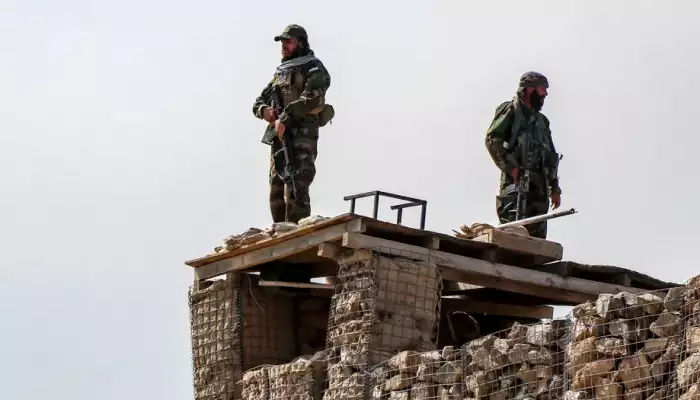
While Pakistan works on positioning itself as potential mediator in the war between the US, Israel and Iran, its forces continue to wage war on the Afghan Taliban along Pakistan's western border.
Pakistani forces are increasingly bombing border regions in Afghanistan. Pakistan is facing accusations of creating spheres of influence along the border, also known by its colonial-era name, the Durand Line.
At the same time, a "Pakistan-Afghanistan Peace Jirga" convened on March 31 in Peshawar, Pakistan, near the Afghanistan border. Jirgas are traditional gatherings of leaders in the Pashtun tribal areas to resolve conflicts.
The assembly issued a resolution calling for an immediate ceasefire and urged that the conflict be resolved through dialogue. Whether this resolution has any effect beyond political signaling remains to be seen.
Why is Pakistan fighting the Taliban regime?
In late February, Pakistan's defense minister said Islamabad was in a state of "open war" with Afghanistan and began a bombing campaign.
Pakistan accuses Afghanistan's Taliban-ruled government of supporting militant groups like the Tehreek-e Taliban Pakistan (TTP), which is blamed for a series of bloody attacks in Pakistan. The Taliban leadership in Afghanistan denies providing any support.
The initial clashes took place in the fall of 2025. The fighting also saw Pakistani forces targeting the Afghan capital, Kabul. Despite peace negotiations brokered by Turkey and Qatar, the two sides failed to achieve a permanent resolution of the conflict.
Claims of a Pakistani 'security zone'
Now, reports are emerging from Afghanistan's eastern provinces bordering Pakistan — including Paktia, Kunar and Nuristan — of artillery fire, drone strikes and blocked roads.
According to the Taliban, a civilian was killed and 17 others, including women and children, were injured in Kunar Province. Strikes were also reported in Kabul.
In Nuristan Province, in the remote districts of Kamdesh and Barg-e-Matal, residents have been reporting shortages of food, fuel and medicine for days. They say they have been cut off from the outside world.
Some media outlets are also reporting on a possible buffer zone stretching up to 32 kilometers (20 miles) inside Afghan territory, allegedly to prevent cross-border attacks by the TTP. However, this cannot be independently verified.
"Pakistan has seized a 32-square-kilometer area inside Afghanistan following overnight fighting, a security official said on Saturday, as cross-border clashes between the two countries escalated sharply," Arab News reported on March 23.
Border zone 'temporary measure'
Official sources in Islamabad have not yet confirmed the presence of any border zone.
Ali K. Chishti, a Riyadh-based security analyst, confirmed to DW that a buffer zone has been established. However, he emphasized that Pakistan is not seeking formal territorial expansion.
"This is exclusively a temporary measure until a solution is sought and some kind of joint mechanism is agreed upon," Chishti said.
Tahir Khan, a Pakistani foreign affairs analyst, told DW that Pakistan considers the frontier with Afghanistan to be an international border. "Any attempt to take control of Afghan territory would be considered a violation of international law," Khan said.
Meanwhile, Afghan journalist Sami Yousafzai told DW that obtaining reliable information from the ground is very difficult.
"I cannot confirm that part of Afghanistan has fallen to Pakistan," he said.