Saturday 05 / September / 2026
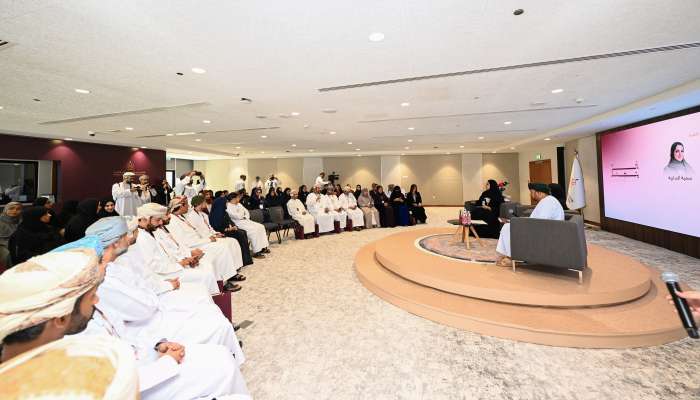
Muscat: The Royal Academy of Management (RAM) today held its second annual media briefing under the theme “Impact in Action.”
The event brought together media professionals and representatives of government communication departments in Oman, reaffirming RAM’s institutional commitment to transparency, impact measurement, and strategic partnership with the national media.
Designed as an interactive experience structured across five key stations, the briefing offered a comprehensive overview of RAM’s journey, achievements, and forward-looking plans. Participants engaged in curated presentations, visual showcases, and dialogue sessions highlighting how the Academy’s initiatives translate into tangible, measurable impact at individual, institutional, and societal levels.
As many as 11,984 beneficiaries have engaged with RAM’s programmes, dialogues, research, and initiatives. In 2025 alone, 2,258 participants took part in its activities, bringing the cumulative total number of direct programme participants to 4,006. The Academy recorded an overall service satisfaction rate of 88.6%, reflecting its continued focus on quality, participant experience, and measurable outcomes.
A key highlight of the briefing was RAM’s achievement of the prestigious LIFT (Learning for Impact Today and Tomorrow) Certification from the European Foundation for Management Development (EFMD Global), one of the world’s most respected accreditation bodies in leadership and management development. The LIFT framework is recognised internationally as a benchmark for measuring impact and sustainability across the entire learning value chain — from planning and delivery to assessment — at individual, organisational, sectoral, and societal levels. RAM is the first institution in the region to receive this certification, distinguished by its demonstrated contribution to society among LIFT-accredited organisations worldwide.
RAM further strengthened its international presence through the Future Readiness Award, delivered in partnership with Thinkers50, the United Kingdom–based global authority on management thought leadership.
During the briefing, RAM unveiled its 2026 operating model, aligned with the objectives of Oman Vision 2040 and structured around three core pillars: executive learning, strategic initiatives, and sectoral interactive units. The model encompasses specialised programmes in artificial intelligence, international negotiation, leadership, and logistics, alongside initiatives to activate the Programme Impact Unit, enhance participant experience measurement, and further advance digital services.
As part of its digital transformation agenda, RAM announced the launch of eight interactive digital programmes within its integrated digital learning ecosystem. The platform connects participants and alumni, offering a flexible and continuous learning journey supported by a comprehensive digital knowledge library. This blended learning model integrates digital and in-person programmes to ensure sustained engagement and long-term impact, while the Alumni Office continues to foster an active leadership network through curated knowledge exchanges and professional initiatives.
In its efforts to empower national talent, RAM continues to implement the National “One Government Team” Initiative. In its first year, the initiative targeted 5,000 employees across 19 government entities, achieving a 95% satisfaction rate. Looking ahead to 2026, the initiative will conclude its first cycle, assess the impact of its outcomes, and refine its operating model in preparation for its second phase, ensuring sustainable institutional performance aligned with Oman Vision 2040.
Reinforcing its commitment to positioning training as a strategic instrument for impact, RAM also launched the Certified Executive Learning Trainer Programme, designed to qualify 25 participants and build a national pool of professional facilitators capable of designing innovative, high-quality learning solutions in line with international standards.
The briefing concluded with alumni success stories demonstrating how executive learning has translated into improved institutional performance and decision-making efficiency, followed by an open dialogue between senior officials and media representatives. The Academy also expressed its appreciation for the role of national media institutions in amplifying its mission and communicating its measurable, multi-level impact to the wider public.
RAM emphasised that convening the annual media briefing forms part of a sustained institutional approach to aligning communication messages, strengthening partnerships with national media, and reinforcing the principle that meaningful impact is measured not by effort alone, but by tangible outcomes.