Saturday 10 / October / 2026
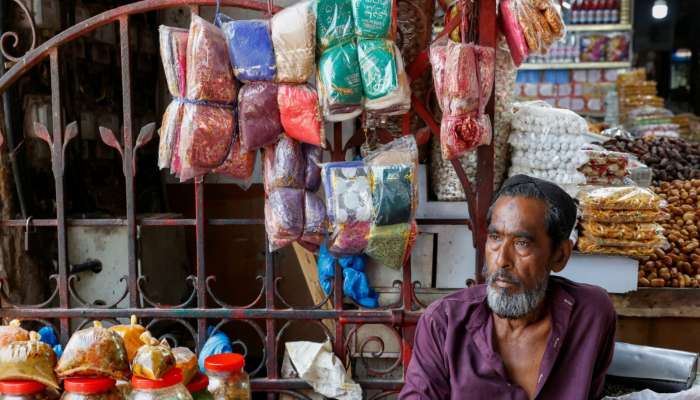
In the parched stretches of rural Pakistan, the contradiction is becoming harder to ignore. Markets remain stocked, harvest cycles continue, and food availability at the national level appears largely intact.
Yet, beneath this surface of adequacy lies a more fragile reality—millions of households are unable to secure consistent, nutritious meals.
The latest assessment by the World Bank-aligned Integrated Food Security Phase Classification (IPC) system underscores this imbalance.
The report, covering 45 vulnerable rural districts across Balochistan, Sindh and Khyber Pakhtunkhwa, estimates that 7.5 million people—21 percent of the assessed population—face ‘Crisis’ or worse levels of acute food insecurity between December and March.
Of these, 1.25 million are in ‘Emergency’, a category just one step below famine.
These figures do not describe a country running out of food. Instead, they reveal a system where access, affordability and resilience have eroded, leaving large sections of the population exposed to recurring shocks.
A fragile equilibrium masked by availability
The IPC classification provides a technical framework, but its implications are stark. Households in the ‘Crisis’ phase struggle to meet basic food needs without adopting harmful coping strategies such as reducing meal frequency, selling productive assets or accumulating debt.
Those in ‘Emergency’ face severe consumption gaps, rising malnutrition and heightened vulnerability to further shocks.
However, the report also highlights the importance of context. The current assessment spans 45 districts, a reduction from 68 districts in the previous round.
While the absolute number of affected individuals appears lower compared to earlier estimates, the narrower geographic scope complicates direct comparisons. Proportionally, the severity of food insecurity remains largely unchanged.
This continuity suggests that the problem is not episodic but structural. Pakistan’s food system appears locked in what analysts describe as a fragile equilibrium—one where availability persists, but resilience remains absent.
The persistence of structural drivers
The drivers behind the crisis are neither sudden nor unfamiliar. Instead, they represent a convergence of long-standing vulnerabilities that have intensified over time.
Residual damage from the 2025 monsoon floods continues to weigh heavily on agricultural productivity and rural livelihoods. Large swathes of farmland remain degraded, irrigation systems disrupted, and recovery uneven.
In parallel, prolonged drought conditions and erratic rainfall patterns have further strained water resources, particularly in arid regions.
Farmers and pastoral communities face declining incomes as crop yields fluctuate and livestock conditions deteriorate.
Water scarcity, crop diseases and the rising cost of agricultural inputs—such as fertilisers and seeds—have reduced production efficiency. These pressures are compounded by high fuel and transport costs, which increase the overall cost of bringing goods to market.
Localised insecurity in certain districts adds another layer of complexity, restricting mobility and disrupting trade flows.
In border regions, interruptions in cross-border trade further constrain economic activity, limiting both income opportunities and access to essential commodities.
Market dependence and erosion of purchasing power
The IPC report emphasises a critical distinction: Pakistan’s food security challenge is not primarily about supply but about access.
A growing number of households rely heavily on markets rather than subsistence farming. This dependence makes them acutely vulnerable to price fluctuations. Wheat flour, a staple in Pakistani diets, has experienced persistent price volatility, placing additional strain on household budgets.
Rising inflation, coupled with stagnant or declining incomes, has significantly eroded purchasing power. For many families, food expenditure consumes an increasing share of total income, leaving little room for other essential needs such as healthcare and education.
Debt has emerged as a common coping mechanism. Households report borrowing money to meet daily consumption needs, often at unfavourable terms.
While this strategy may provide temporary relief, it deepens financial vulnerability over time and reduces the ability to recover from future shocks.
The cumulative effect is a system where food may be physically available but economically inaccessible to a significant portion of the population.
Seasonal relief without structural change
The report projects a modest improvement in food security conditions following the wheat harvest and seasonal livestock sales. Between April and September, the number of people facing ‘Crisis’ or worse levels of food insecurity is expected to decline to 6.7 million.
However, this anticipated easing reflects seasonal dynamics rather than structural transformation. Harvest cycles temporarily increase food availability and household income, but they do not address the underlying vulnerabilities that drive food insecurity.
The persistence of millions in ‘Crisis’ even during relatively favourable periods underscores the limited impact of seasonal recovery. It suggests that the system remains highly sensitive to shocks, with little capacity to absorb disruptions or sustain improvements.
Regional disparities and concentrated vulnerability
Food insecurity in Pakistan is not evenly distributed. The districts covered in the IPC analysis—primarily in Balochistan, Sindh and Khyber Pakhtunkhwa—represent some of the most economically and environmentally vulnerable regions in the country.
These areas face a combination of geographic isolation, limited infrastructure and weaker institutional capacity. Access to markets, healthcare and social services remains constrained, exacerbating the impact of economic and climatic shocks.
In many of these districts, livelihoods are heavily dependent on agriculture and livestock, sectors that are particularly sensitive to environmental variability. The interplay between drought, floods and market instability creates a cycle of vulnerability that is difficult to break.
A crisis of resilience, not supply
The overarching conclusion of the IPC assessment is clear: Pakistan’s food security crisis is fundamentally a crisis of resilience.
The country’s agricultural system continues to produce sufficient food at the aggregate level, but systemic weaknesses prevent equitable distribution and access.
Market inefficiencies, income disparities and institutional limitations combine to create conditions where large segments of the population remain food insecure despite national availability.
This distinction has significant implications. A system focused primarily on production—without addressing access and resilience—risks perpetuating cycles of vulnerability.
Households remain exposed to economic shocks, climatic events and market fluctuations, with limited capacity to adapt or recover.
Widening gap between policy and reality
The persistence of acute food insecurity raises questions about the effectiveness of existing policy frameworks and institutional responses. While various programmes and interventions exist on paper, their reach and impact appear uneven.
The IPC findings suggest that structural challenges—ranging from weak market integration to limited social protection—continue to undermine efforts to improve food security outcomes.
In many cases, the gap between policy intent and implementation mirrors broader governance challenges.
As economic pressures intensify and environmental risks increase, this gap becomes more pronounced. The inability to translate policy into tangible improvements at the household level contributes to the ongoing fragility of the food system.
An entrenched vulnerability
The latest data does not depict an immediate humanitarian catastrophe on the scale of famine. Instead, it reveals a more insidious reality—one of persistent, widespread vulnerability that resists short-term fixes.
Millions of households continue to navigate a precarious existence, balancing limited resources against rising costs and unpredictable conditions. The absence of resilience means that even minor disruptions can push families deeper into food insecurity.
In this context, Pakistan’s food security challenge is less about scarcity and more about systemic imbalance.