Tuesday 20 / October / 2026
On 27 January 2026, the European Union (EU) and India concluded negotiations on a long-awaited Free Trade Agreement (FTA). Talks had initially begun in 2007 but repeatedly stalled, reflecting the political and economic sensitivities embedded in the bilateral relationship. It took both sides almost 20 years to agree on a common text, underscoring both the ambition and complexity of the agreement. Overall geopolitical considerations facing a shifting global strategic environment triggered strategic calculations and led to renewed efforts to recalibrate their partnership.
The EU, for its part, has recently pushed to diversify its trade partnerships with unprecedented determination. In Brussels, policymakers have grown increasingly wary of China’s state-led economic practices while simultaneously grappling with a more aggressive and often unpredictable shift in US trade policy. This, together with the wider fragmentation of global economic governance, has reinforced the EU’s resolve to reduce strategic dependencies and broaden its network of economic partners.
Amid Russia’s invasion of Ukraine and an increasingly assertive pursuit of national interests by Washington and Beijing, the EU fears for the future of open markets and the rules-based international order on which the bloc’s prosperity depends. In this context, the new FTA with India represents an additional building block of this diversification agenda, complementing the recent agreement between the EU and Mercosur, and signalling an effort to anchor Europe’s economic future in a wider network of partners.
India, meanwhile, has also faced mounting economic pressure from Washington, including increased scrutiny of its oil imports from Russia. These pressures intersect with India’s broader economic trajectory. Strengthening ties with major partners such as the EU, therefore, offers both an economic buffer and a strategic hedge, helping to reduce exposure to geopolitical volatility and overreliance on any single country.
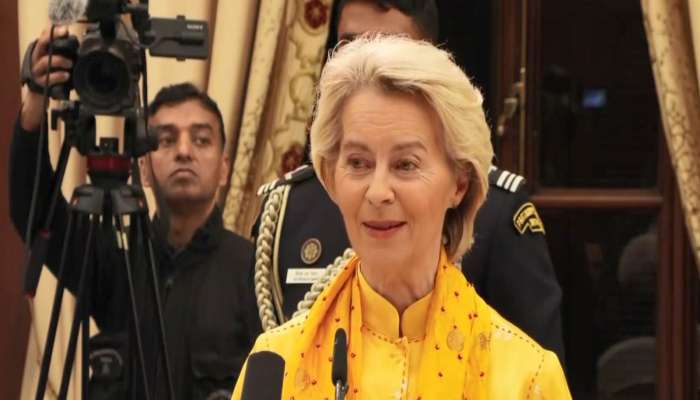
Political leaders of the EU and India chose to give their renewed trade commitment prominent public visibility, describing it as “the mother of all deals”. To conclude negotiations, Commission President Ursula von der Leyen and President of the European Council Antonio Costa travelled together to New Delhi together, signalling the combined weight of the European Commission as well as the EU’s member states behind the FTA. On the day before officially concluding the FTA. To show their geostrategic importance to the wider Indian public, von der Leyen and Costa were given the honour of participating as principal guests by Prime Minister Narendra Modi at the official parade marking Republic Day, India’s national holiday.
Beyond the positive impact that economists assess for trade between the EU and India under the agreement, both sides were keen to present their new alliance as a timely move by two of the world’s largest democratic economies to re-strengthen credible and reliable trade frameworks, with the ambition of generating impact well beyond their bilateral relationship.
For the EU, the political stakes are particularly high. Brussels must demonstrate the extent to which its new trade strategy can weather what is likely to remain a challenging global environment, with a powerful spoiler of EU interest in the White House. What better way to be equipped than with a deal with India to make that case for European power? Yet, the EU must deliver well beyond the agreement’s future entry into force. India will continue to pursue an energetic and pragmatic trade policy at the global level beyond the EU.
The conclusion of negotiations marks only the first step. Both sides must now secure swift ratification and, more importantly, deliver credible implementation so that the agreement delivers tangible economic benefits and political weight. Substantively, the EU-India deal is much less prone to the political controversies that characterised the final steps of the EU-Mercosur deal. The politics of signing the deal with India will be much easier at the EU level. However, the damaging impact of the European Parliament’s vote in January 2026 to defer the Mercosur agreement to the European Court of Justice (ECJ), forced the Commission to apply the deal provisionally , should not be underestimated.
Any further signs that the EU is unable to deliver on its promises, and fast, would be dangerously damaging in the current global environment. More than ever before, the EU and its member states must demonstrate that they are willing and able to stand their ground. Doubts about Europe’s cohesion and power have spread rapidly over the past months. Europeans themselves must take the largest responsibility for this perception. Yet, such doubts have also been actively peddled by others, including what has until now been Europe’s most important and trusted partner in the world.
If positive signs of impact for both Europeans and Indians saw the light of day in the months following the new FTA’s entry into force , there is a lot more to gain within the relationship between the EU and India. A strong and strategic partnership could create ripple effects across their respective regions and even globally, providing a spark of stability in an increasingly fragmented world. Europeans should actively promote this opening for renewed collaboration well beyond trade – both domestically , bringing in stakeholders on matters of global governance and security, for example, and internationally with Indian counterparts.
For its part, India will need to become accustomed to Europe still addressing areas of disagreement, despite the existence of an FTA. In recent years, Russia’s war of aggression against Ukraine, and India’s relations with Russia in the energy and defence sectors have been among the foremost concerns in Europe. That said, both actors will have to learn that postponing difficult discussions over problems is not the right approach for the future.
For the EU, this requires a foreign policy strategy flanking the FTA – a clear roadmap to fill the opening space with life and to mitigate what can still go wrong with strong political determination.
Almut Möller is Director for European and Global Affairs and head of the Europe in the World programme at the EPC.