Tuesday 20 / October / 2026
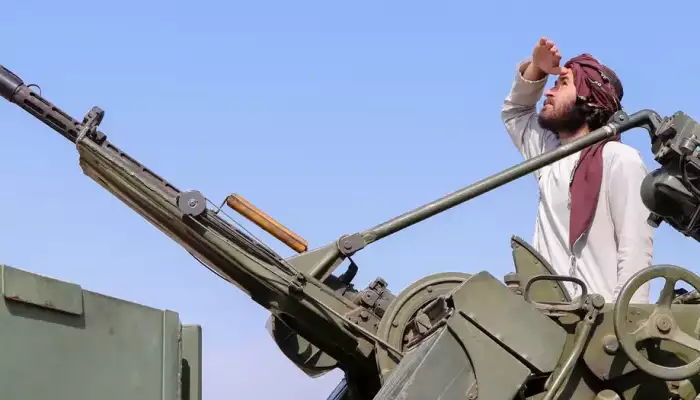
Since the Taliban takeover of Afghanistan in August 2021, tensions have simmered with neighboring Pakistan.
On Friday, those tensions again reached a boiling point, with both sides exchanging strikes in the worst escalation in fighting since the Taliban controlled much of southern Afghanistan in the 1990s.
The last large-scale outbreak of violence killed 70 people on both sides in October 2025. Several rounds of talks at the time followed an initial ceasefire brokered by Qatar and Turkey, but no lasting agreement materialized.
On Friday, Pakistan's defense minister clearly spelled out a new level of escalation, declaring "open war" between Islamabad's forces and the Afghan Taliban.
Pakistan's 'deadliest year' in a decade
Pakistan has long accused the Taliban in Kabul of supporting militant groups including the Tehreek-i-Taliban Pakistan (TTP), or the "Pakistani Taliban," along with the "Islamic State" of Khorasan Province (ISIS-K).
Earlier this month, ISIS-K claimed an attack on a Shiite mosque in Islamabad that killied at least 31 people, in the deadliest attack on the Pakistani capital in over a decade. Pakistani officials said the suicide bomber had traveled to Afghanistan before the attack.
"The security threat from terrorist groups, especially TTP but also ISIS-K residing in Afghanistan, has been increasing, which made 2025 the deadliest year in a decade for Pakistan in terms of casualties from such violence," Maleeha Lodhi, an international affairs expert and former Pakistani ambassador to the US and the UN, told DW
"The surge in cross-border terror attacks from Afghan soil since the Taliban returned to power has been confirmed by successive reports of the UN Security Council's sanctions monitoring team, the latest of which was earlier this month," Lodhi added.
How did the latest round of fighting begin?
Last Sunday, Pakistan's military carried out airstrikes in Afghanistan, targeting what they said were militant hideouts of TTP and ISIS-K in border provinces like Nangarhar, Paktika, and Khost.
A few days later on Thursday evening, a Taliban government spokesperson said the group launched "large-scale offensive operations against Pakistani military bases and military installations along the Durand line," referring to a colonial-era name for the border.
He said the operations were a response to Sunday's airstrikes. The Taliban's Defense Ministry said 19 Pakistani army posts were destroyed.
Hours later on early Friday morning, Pakistan launched large-scale airstrikes on multiple Taliban military targets in several Afghan cities. Pakistani Defense Minister Khawaja Asif said Pakistan's "patience has reached its limit."
Pakistani Information Minister Attaullah Tarar told DW that targets were struck in Kabul, Paktia, and Kandahar, with over 130 Afghan Taliban fighters killed.
Tarar said several headquarters, ammunition depots, tanks, and artillery systems were destroyed. Afghanistan's Taliban-run Defense Ministry said 55 Pakistani soldiers were killed, with several "captured alive."
Assessments of death tolls and damage from either side could not be independently confirmed.
"Still, right now," claimed Taliban government spokesman Zabihullah Mujahid late on Friday, "Pakistani planes, reconnaissance aircraft, are flying over Afghanistan's airspace."
Pakistan 'primary instigator'
Muhammad Israr Madani, head of the Islamabad-based think-tank International Research Council for Religious Affairs, told DW in a 2024 interview that while the Afghan Taliban leadership "grasps the sensitivity of the TTP issue, the mid- and lower-level cadre do not" due to their shared jihadist ideology.
One of the reasons that the Taliban government in Afghanistan is reluctant to use force against the TTP is that it could fracture its own ranks and potentially drive Pakistani militants towards groups like the "Islamic State."
"The common Afghan views Pakistan as the primary instigator and a supporter of violence within Afghanistan," said Tameem Bahiss, a Kabul-based security analyst.
"After enduring four decades of conflict, with Afghanistan finally achieving a semblance of peace, they perceive Pakistan's airstrikes as an attempt to portray Afghanistan as a haven for militants and to drag the nation back into another cycle of bloodshed," he told DW.
The Taliban leadership could use this sentiment for its own legitimacy.
Military strikes the 'new normal?'
Qamar Cheema, an Islamabad-based security expert, told DW, that Pakistani military strikes "have become the new normal in Afghanistan."
"Pakistan wants the Afghan people to understand that the Taliban are harboring terrorists. Therefore, Pakistan will continue targeting military sites associated with the Taliban, TTP, and ISIS-K hideouts," Cheema said.
"Islamabad has used all its options, including regional diplomacy and direct communication, but nothing has been honored. As a neighboring Muslim country, Pakistan appears to inflict damage in an attempt to alter Taliban behavior," he added.
Former ambassador Lodhi said that Islamabad has exhausted the diplomatic option, and has embraced a strategy of "raising the costs" for the Taliban for not acting against the TTP.
"Having made it clear to the Afghan Taliban that mass casualty attacks from Afghan soil will invite a kinetic response, Pakistan is likely to continue a coercive approach, which has also involved shutting down the border and suspending trade," Lodhi said.
Afghanistan's Taliban government on Friday said it wants to engage in dialogue to resolve its conflict with neighboring Pakistan.
"We have repeatedly emphasized a peaceful solution and still want the problem to be resolved through dialogue," Mujahid said during a press conference.