Wednesday 25 / February / 2026
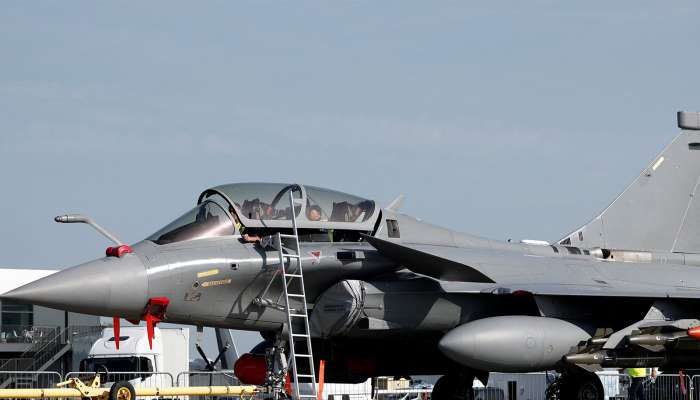
India’s indigenous LCA Tejas fighter jet program might be struggling with cost-overruns and repeated timeline delays, but New Delhi may have already set its sights on not just a fifth-generation but also a sixth-generation combat aircraft.
After setting aside Rs 15,000 crore (US$ 1.7B) for developing prototypes of AMCA, India’s indigenous fifth-generation fighter jet program, New Delhi is now reportedly exploring teaming up with France for co-development and co-manufacture of a sixth-generation fighter under the Future Combat Air System (FCAS) program.
According to media reports, initial talks have been held on India’s possible entry into the program launched in 2017 by France, Germany, and Spain.
Notably, over the last eight years, little progress has been made on FCAS, owing to fundamental differences among partner nations on leadership, workshare, and the aircraft’s basic design parameters, to the point that there is a high likelihood that France and Germany will break the alliance and go their separate ways.
This is where India fits in, as designing and developing a sixth-generation fighter jet alone would be a costly and high-risk proposition for France.
Partnering with India will not only generate additional funds for the FCAS program but, given the Indian Air Force’s large size and need for hundreds of aircraft in the coming years, it will also secure a large fleet order for the under-development fighter, bringing down its production costs substantially.
At the same time, collaboration on FCAS could potentially accelerate India’s exposure to sixth-generation technologies such as manned-unmanned teaming, combat cloud networking, and advanced propulsion and stealth, which will also help accelerate India’s own fifth-generation Advanced Medium Combat Aircraft (AMCA).
The Germany-France Bickering Over FCAS
France and Germany are currently at odds over the Sixth-Generation Fighter Jet project, reportedly struggling to agree on the work-sharing terms.
FCAS is Europe’s €100 billion project to develop next-generation air power by 2040, incorporating stealth technology, drone swarms, AI control, and a hyper-connected cloud combat system.
The project was to be a joint-development project between France’s Dassault Aviation, Germany/Spain’s Airbus, and Spain’s Indra.
According to the initial agreement, Dassault will work on the Next-Generation Fighter (NGF) design, Airbus will work on drone and cloud technologies, and Indra will work on sensors.
However, the project got stalled as France’s Dassault sought an 80% stake in the NGF (New Generation Fighter), while Germany wanted an equal split. There are also fundamental differences in the aircraft’s design profile and role.
German Chancellor Friedrich Merz said last week that the project no longer worked for his country, as France wanted a carrier-capable and nuclear-capable aircraft, both of which Berlin has no requirement for.




