Thursday 22 / October / 2026
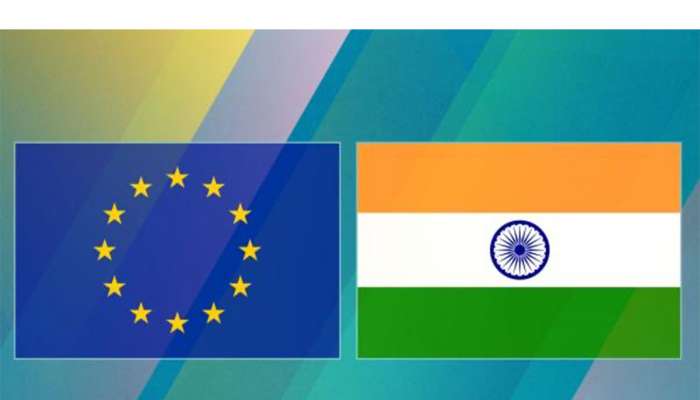
European Council President António Luís Santos da Costa and the European Commission President Ursula von der Leyen, paying a State Visit to India as Chief Guest at the 77th Republic Day celebrations, carry deep diplomatic, strategic, and economic significance.
It conveys the historic recognition of India’s global standing, the strong push to finalising Free Trade Agreement (FTA), India’s positioning as a strategic bridge in the multipolar world and the enhancement of security and defence partnership.
The European Council (EC) said the visit strengthens the bilateral relationship between India and Europe. “India is a crucial partner for the EU. Together, we share the capacity and responsibility to protect the rules-based international order. This meeting will be a key opportunity to build on our partnership and drive progress in our cooperation,” Costa said.Ursula von der Leyen has called India “a pillar of certainty in an increasingly uncertain world”, stressing inter-regional cooperation, security and defence cooperation.
A few months ago, the council endorsed the ‘New Strategic EU-India Agenda’ which stressed prosperity and sustainability, technology and innovation, security and defence, and connectivity and global issues, besides FTA. Underlining India’s role in the increasingly complex geopolitical outlook, it acknowledged the establishment of a security and defence partnership. “The Council also welcomes closer collaboration between the EU and India on security and defence matters,” it said.
French President Emmanuel Macron underscored India’s importance in meeting the global security challenges and maintaining peace and stability.Even British Prime Minister Keir Starmer extended support to India for a permanent place on the UN Security Council, even as he praised the trade deal with India, calling it “the biggest and most economically significant” since the UK left the EU.
Observers stated that the EU saw New Delhi as an important and strategic player in global trade streamlining, in which New Delhi—and not just as a bilateral partner, but as a systemic actor in shaping the future of global trade governance. Carnegie Europe Director Rosa Balfour called the EU and India like-minded partners who can help ensure stability in international trade. “There’s a lot of promise to increase the exchange of goods, the mobility of people, the exchange of capital, investments, and technological cooperation. It seems to present the seeds of an alternative strategy to a global trade war,” she said.
Many European leaders and officials endorsed a deeper partnership with India in recent times as they viewed India as a reliable growth engine and a contributor to regional and maritime security. The latest visit by the German Chancellor Friedrich Merz is seen as central to the European shift toward India. “Highly dynamic India and technologically advanced Germany share essential interests,” said the leader of the EU’s strongest member.
The growing need for cooperation in technology and security is widely spoken of by the European leaders. Spanish President Pedro Sánchez sought to boost ties and cooperation, especially in defence.After inaugurating an Airbus assembly facility in the Indian state of Gujarat, Sánchez said “This plant sums up perfectly the excellent state of bilateral relations between Spain and India.” Speaking about how India and the EU complement each other, Italian Ambassador Antonio Bartoli said “Italy is one of the most interesting and reliable partners, and we can develop a lot together. This will be even more enhanced by the conclusion of the FTA.”
Economic ties between the EU and India continued to deepen over the years, as the trade in goods increased by 90 percent over the past decade. With trade touching Euro 120 billion, the EU became India’s second-largest trading partner in 2024. Now, FTA is expected to be signed during the upcoming 16th EU-India Summit, thus consolidating these gains and providing a comprehensive framework for deeper economic integration. Ursula von der Leyen said a historic trade agreement was just around the corner. “Some call it the mother of all deals. One that would create a market of 2 billion people, accounting for almost a quarter of global GDP,” she said.
The FTA is more than an economic partnership as it offers the EU strategic hedging against the geopolitical manoeuvrings by the global superpowers, said former Indian Ambassador to France Mohan Kumar. “EU and India have the potential to occupy independent poles in an emerging multipolar world,” he said. Kumar further said that New Delhi was a serious claimant to the leadership of the Global South, even as the EU and India have had the potential to become independent poles in a growing multipolar world. “The geopolitical alignment between the EU and India is unmistakable,” he said.