Friday 23 / October / 2026
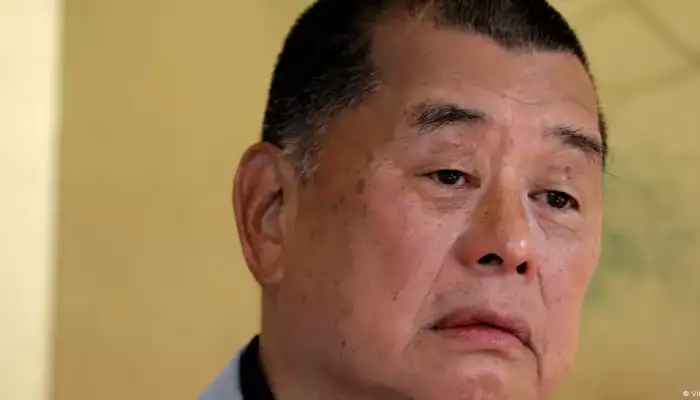
Pro-democracy media tycoon Jimmy Lai was found guilty on Monday of conspiracy to collude with foreign forces and of publishing seditious material under a national security law.
The verdict, handed down by a three-judge panel at Hong Kong's High Court, could see Lai jailed for life.
During the hearing, one of the three judges, Esther Toh, said the court had no doubt that Lai had "never wavered" in his intention to "destabilize" China, and that he harbored "hatred and resentment" toward the country.
Lai, one of the most prominent critics of the Chinese Communist Party (CCP) leadership, was reportedly sitting impassively with his arms folded while listening to the ruling, flanked by several security officers.
The 78-year-old defendant has been held in detention for five years and previously pleaded not guilty to all charges. A mitigation hearing is scheduled for January 12. His lawyer said Lai would decide after sentencing whether to appeal.
What was Jimmy Lai found guilty of?
At Monday's hearing before the verdict, Judge Toh noted that the written judgment spans 855 pages, with only selected portions read aloud in court.
She said that "as early as before the implementation of the national security law… [Lai] sought to use the United States to counter China," citing messages between Lai and his assistant Mark Simon on the messaging app WhatsApp.
The messages indicated that Simon had arranged meetings between Lai and US officials and lobbied on Lai's behalf.
Lai, founder of the now-shuttered Apple Daily tabloid, was also found guilty of using the newspaper to publish "seditious materials."
During the 2019 pro-democracy protests in Hong Kong, Lai's Apple Daily served as a key source of news for local and international audiences.
What does the long-awaited verdict indicate?
Lai was first arrested in 2020, the same year Beijing imposed the sweeping national security law in Hong Kong to tighten its control over the former British colony, despite pledging to give it a high degree of autonomy ahead of the 1997 handover.
His national security trial only began in December 2023, which was initially expected to last about a month but ultimately stretched to around 156 hearing days.
"The lengthy verdict speaks nothing about the verdict's quality," Eric Lai, a senior fellow at Georgetown Center for Asian Law (GCAL), told DW. "The outcome of the trial is too certain: there's little room for the court to make a decision departing from Beijing's will," he added.