Friday 09 / October / 2026
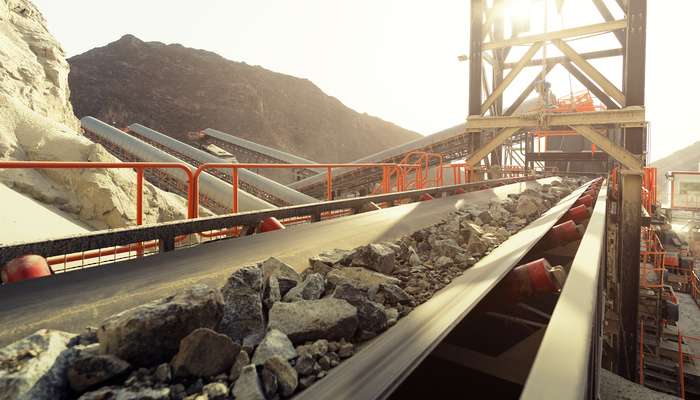
Muscat: The mining sector in the Sultanate of Oman is considered one of the promising sectors, with a clear roadmap that enhances exploration efforts and provides reliable data on mineral resources in various governorates.
Airborne and geochemical surveys conducted by Oman Mining Development Company during the past period reveal geological evidence of several strategic ores, including: gold, copper, zinc, lead, and chromium.
These results indicate the presence of fertile geological environments that require further detailed work to verify the size and quality of these resources.
Engineer Matar bin Salim Al Badi, CEO of Oman Mining Development Company, confirmed that current indicators reflect promising exploration opportunities in the Sultanate of Oman, stressing that the current stage is still within the scope of technical studies, while the existence of commercial quantities of any ore - including gold - requires the completion of detailed exploration phases in accordance with international standards.
He added that continuous exploration is essential to ensuring the sustainability of mining projects and extending the lifespan of existing plants, thus contributing to enhancing the economic value of the mining sector in the Sultanate of Oman.
In a statement to the Oman News Agency, he explained that the official announcement of the reserve size will be made after reaching internationally recognised standards, such as the Australian or Canadian standards, which are accepted by banks and investors as reliable evidence of project viability.
Therefore, it is still too early to announce the precise quantities of gold available before these thorough studies are completed,” he added.
He said that the mining sector in the Sultanate of Oman witnessed an important regulatory development between 2017 and 2023, and a new investment model similar to the oil sector was adopted, based on the allocation of large mining concession areas.
This model is used globally, where aerial geophysical surveys of large areas (such as a thousand square kilometres) are economically viable, compared to aerial surveys of small areas of around 5 square kilometres previously.
He added that Oman Mining Development Company – the investment and development arm of the mining sector – operates as a holding company and owns 14 concession areas with a total area of about 24,000 square kilometres.
The company began its intensive exploration work in 2022, noting that prior to the launch of the company’s new strategy, which was approved last month, the company carried out extensive surveys that included an aerial survey of areas exceeding 16,000 square kilometres and exploratory drilling operations that reached more than 100,000 metres in total depths to take samples and analyse more than 80,000 samples through geochemical surveys on the ground and the use of satellite surveys to identify targeted exploration points.
He explained that the company’s strategy aims to reduce investment risks by providing accurate geological data and information that contributes to attracting investors to enter into mining projects, and developing the mining system to include the responsible development of mineral ores and rare earth minerals and attracting international partnerships.
He pointed out that the focus is on metallic and precious metals (such as gold, copper, zinc, lead, and chromium). As for industrial minerals, the company focuses on quality projects with large-scale production and ensures economic feasibility, especially the industrial minerals production project in the Shuwaimiyah district with a specialised marine berth for export, which aims to produce 23 million tonnes of limestone and gypsum raw materials in the first phase, reaching 40 million tonnes in the future.
He pointed out that community acceptance of mining projects is a prerequisite for their success and sustainability, taking into account past experiences in some mining areas, stressing that the company has invested more in the current project to ensure the application of the best global environmental practices, such as the use of dry treatment technology for mining waste, which is an environmentally friendly method that protects groundwater and the surrounding area.
He said the company seeks to establish a strong supporting mining services sector that the local economy can rely on in the future. The company has already begun issuing tenders to localise specialised mining laboratories and develop and localise exploration drilling and surveying companies, in order to build an integrated and independent local services system.
He explained that the company aspires to develop an integrated mining industry in the Sultanate of Oman, encompassing all aspects of the sector, from research and academic programmes to specialised service companies.
The success of this approach is evident in the provision of services by some local drilling companies in the Gulf Cooperation Council (GCC) countries.
He stated that the company’s strategy is divided into three detailed sub-strategies that focus on maximising added value locally instead of exporting raw materials.
The first is the industrial minerals strategy, which is based on establishing specialised industrial complexes such as the Duqm Industrial Center, which focuses on industries based on salt and silica, and the Shalim Industrial Center, which specialises in industries based on limestone and gypsum, relying on the industrial minerals project in the Shuwaimiyah district as a main supplier of raw materials.
He said the second strategy focuses on chromium ore, which extends across the mountain range from the state of Shinas to the state of Wadi Bani Khalid, to bring the Sultanate of Oman back onto the map of global chromium exporters, and to establish an industrial centre for chromium that focuses on purifying and raising the purity of the ore. The company supports the establishment of chromium smelting areas in Sohar to produce “ferrochrome” as a final product with a higher market value compared to the primary raw material of chromium.
He added that the third sub-strategy currently under development is systematic exploration, where exploration areas have been divided into three main geological belts: the Samail belt, which includes ophiolite rocks rich in minerals such as copper and gold, the Hawasina belt, which includes important mineral deposits containing minerals such as copper and gold as well, and the southern region of Mahout, where exploration is currently underway for minerals such as zinc and lead.
He explained that the establishment of a new specialized metals trading arm for the "Omani Metals Trading Company" to be authorised to sell and trade gypsum and chromium ores in the Sultanate of Oman starting from June 2026 comes to maximise the benefit and economic return from these ores, develop new markets for them, and double the market share of the Sultanate of Oman in gypsum and chromium globally.
The CEO of Oman Mining Development Company spoke about the three levels of the mining sector: the upper level, which represents the exploration and mine development phases that the company undertakes mainly to reduce risks and attract investments; the middle level, which includes the basic industries that follow the extraction of the raw material, such as purification plants and smelters or refineries, as the company is looking for partnerships to implement them; and the lower level, which represents the downstream industries that are based on the processed raw materials resulting from smelters and refineries, and this area is entirely dedicated to private sector investments.
Regarding investment in the 14 mining concession areas, he emphasised that the company has conducted extensive surveys, including drilling more than 100,000 metres and analysing 80,000 geological samples, indicating significant investments in the exploration and geological survey phase to reduce risks and attract partners.
In response to a question about the abundance of rare earth minerals in the Sultanate of Oman, the CEO explained: "We are in the exploration and research phase, and determining the quantities is still uncertain, but there is an initial probability of their presence." He pointed out that the volume of investments injected into exploration and prospecting operations has reached more than OMR20 million during the past two years, explaining that the contribution of the mining sector to the national economy is still limited at present compared to the oil and gas sectors, but there are concerted efforts to gradually increase this contribution, with the aim of reaching about 10 percent by 2040 according to the economic transformation plans.”
He said that the company is currently working on a number of strategic projects aimed at enhancing the contribution of the mining sector to the gross domestic product, most notably the copper project in Yanqul. Work is currently underway to establish the first copper production project in the state of Yanqul, and it is expected that trial operation will begin by the end of 2026. It has reserves estimated at 22.9 million tonnes of copper ore, and Sohar mines, and work is underway to develop two mines.


