Tuesday 06 / October / 2026
Muscat: The GCC’s mergers and acquisition (M&A) deal value in the first half of 2021 has not fully picked up according to a new report. The total value in 2021 first half was $14 billion, 47 per cent below the levels of the first half of 2020, the report added.
“The Gulf Cooperation Council’s (GCC’s) M&A market is recovering from the pandemic, with the volume of deals for the first half of 2021 relative to the first half of 2020 increasing by 39 per cent,” according to a new report by Boston Consulting Group (BCG)in collaboration with Germany’s Professor Sönke Sievers of Paderborn University.
Following an unprecedented economic shock caused by the sudden global health crisis, mergers and acquisitions (M&A) activity stopped in its tracks in 2020. However, the segment has since rebounded strongly, with deals soaring in volume and value in 2021.
The report, titled Master the Art of Breaking Up, sheds light on both positive and negative scenarios that have transpired across global markets in recent times, including in the GCC.
This 18th annual analysis of the GCC’s M&A landscape is based on BCG’s M&A database of more than 4,500 deals from January 1990 to June 2021. This edition of the report comes after the impact of COVID-19 had been seen on the sector.
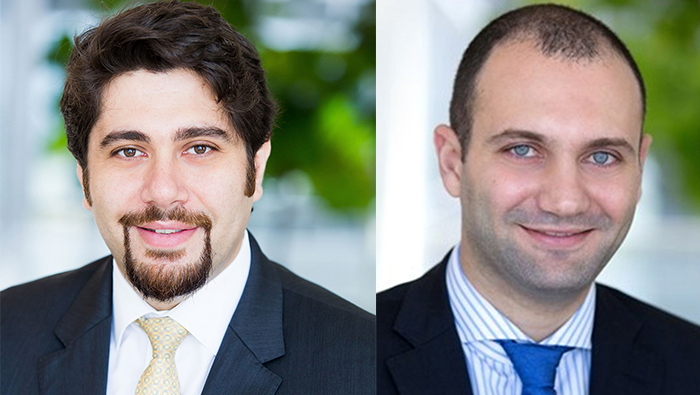
“Despite the ongoing crisis, the impact on M&A deals being made has proven to be temporary, with volume rallying substantially this year following an intense period of difficulty not long ago,” explained Ronald Maalouf, Managing Director and Partner, BCG.
“The outcome for the region is attributed to a higher volume of transaction, as well as corporate decision-makers, investors, and deal brokers operating across the region. Their adaptability has collectively enabled the M&A segment to rebound favourably generally, although deal value must now follow the volume of deals in rebounding before the re-emergence processes are concluded, which rests with a collective effort from respective local markets,” he added.
Notwithstanding global M&A deal value rallying thus far in 2021, the GCC has seen a contrary trend in this area, with overall regional deal value down by 47 per cent when comparing the first half of 2020 to the first half of 2021.
For example, the Kingdom of Saudi Arabia (KSA), had recorded a decrease in deal value in the first eight months of 2021, albeit an increase in the volume of deals by 13 per cent. The decrease of deal value is an indication of less large-scale transactions that the Kingdom has seen in previous years – such as Saudi Aramco’s acquisition of SABIC in 2019 and the National Commercial Bank’s merger with Samba Financial Group in 2020. However, the growth in the volume of deals for the Kingdom in 2021 further indicates a more diverse and less concentrated number of deals – highlighting stronger deal activity in the Kingdom.
Similarly, in Qatar, deal value decreased in the first eight months of 2021, although the volume of deals had grown by over five times when compared against the first eight months of 2020. Akin to the trends in KSA, Qatar’s 2020 figures were propelled by a large merger in 2020 – a $2.2 billion merger between Masraf Al Rayan and Al Khaliji Commercial Bank propelling overall value in 2020 to $4 billion (double the country’s $2 billion deal value average between 2015 to 2020).
Meanwhile, deal value in the United Arab Emirates (UAE) has increased sharply alongside the volume of deals in the first eight months of 2021, recording a total of 100 deals amounting to $11 billion. This is mainly due to a rebound in large deals, with four such transactions valuing over $1 billion in total, contributing to a 433 per cent increase compared to the first eight months of 2020.
“These examples illustrate that deal value in the GCC will follow a volume of rebounding from the pandemic,” said Ihab Khalil, Managing Director and Partner, BCG. “This will stem from several factors that continue unfolding across the region, such as increasingly favourable economic conditions, industrial and regional consolidations, and widespread sustainability efforts. That being said, the coming period is one where value creation can also be attained in other areas, including on the back of divestitures,” he added.
BCG’s report highlights that regional sellers have gained more longer-term value from divestments than their peers at the global level, with cumulative abnormal returns (CARs) reaching a median of 1.8 per cent, which is particularly notable when benchmarked against the global 0.3 per cent.
Furthermore, relative total shareholder returns (RTSR) for the region, which measure outperformance or underperformance of a seller’s value creation compared with its benchmark index during the two years after a divestiture, have also risen.
The GCC figure now stands at 6.6 per cent compared to the global 1.6 per cent, conveying that – in spite of divestment volume trending downwards in recent years - sizeable shareholder value can result from frequent portfolio restructuring and divestitures of non-core assets.
“Looking ahead, those affected by recent events more severely will likely utilise divestments for several purposes with a view to deriving value, whether it be raising cash generation levels, optimising portfolios, or honouring corporate obligations,” concluded Maalouf.