Saturday 22 / August / 2026
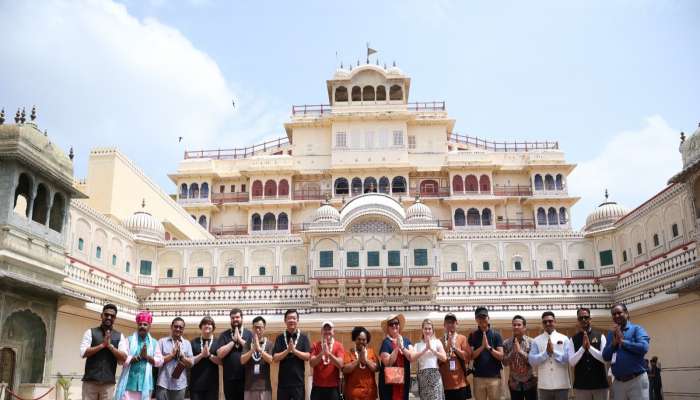
New Delhi: India is set to host the 17th BRICS Summit in New Delhi next month amid a shifting geopolitical landscape, growing geoeconomic imbalances and mounting challenges to the rule-based multilateral order.
Under its BRICS leadership, India is expected to promote a positive, people-centred agenda focused on growth and development, reform of global governance and practical responses to emerging global challenges. The approach seeks to strengthen cohesion within the grouping while addressing perceptions surrounding its expanding role in global affairs.
The summit is expected to be guided by the theme “Building for Resilience, Innovation, Cooperation and Sustainability”, reflecting India’s emphasis on strengthening national and collective capacities, encouraging innovation and advancing sustainable development.
BRICS has assumed growing importance because of the economic and strategic weight of its members. The grouping represents almost half of the world's population, more than half of global manufacturing, around a quarter of merchandise trade and about a third of global GDP. Its members also account for a significant share of global energy resources and critical materials, while more than half of global GDP growth is estimated to originate from BRICS economies.
As major emerging powers, BRICS countries have increasingly sought greater autonomy in economic and diplomatic decision-making while supporting developing nations and advocating a more multipolar international system. The grouping has also expanded cooperation on issues including climate change, health, terrorism, debt, trade, technology and sustainable development.
A key element of India's broader approach to cooperation with the Global South is its maritime vision, SAGAR — Security and Growth for All in the Region. First outlined by Prime Minister Narendra Modi in 2015, the policy places the Indian Ocean at the centre of India's regional security and development outlook.
The Indian Ocean carries a substantial share of global energy and commercial traffic, making maritime security critical to global economic stability. SAGAR focuses on securing India's mainland and island territories, strengthening cooperation with maritime neighbours, building partner capacities, promoting collective action and supporting sustainable development.
The policy also emphasises greater maritime engagement, based on the principle that countries of the Indian Ocean region have a primary role in ensuring the stability and prosperity of their shared maritime space.
India's development-partnership philosophy similarly stresses cooperation based on the priorities of partner countries. Modi articulated this approach during his 2018 address to the Ugandan Parliament, emphasising partnerships that respect local priorities and help countries realise their own potential.
India has also played a significant role in shaping the BRICS vision, with political and security cooperation, economic development and cultural exchanges forming key pillars of the grouping. Consensus-based decision-making and an emphasis on practical projects have helped expand cooperation across multiple sectors.
During India's BRICS presidencies in 2012, 2016 and 2021, cooperation advanced in areas including agriculture, industry, trade and investment, technology and innovation, green energy, climate change, humanitarian assistance and disaster response, and people-to-people exchanges.
The evolution of SAGAR into MAHASAGAR — Mutual and Holistic Advancement for Security and Growth Across Regions represents a broader extension of India's maritime and development partnership vision to the wider Global South. It brings together maritime cooperation with economic diplomacy, technology sharing and digital connectivity.
The Indian Navy has consequently emerged as an increasingly important instrument of India's maritime outreach through deployments, exercises, capacity-building programmes and humanitarian missions across the Indian Ocean and beyond.
The growing emphasis on maritime cooperation reflects the strategic importance of sea lanes to global commerce. Nearly two-thirds of global trade moves through Indo-Pacific maritime corridors, while about 90% of India's trade by volume is transported by sea.
Through the MAHASAGAR vision and its BRICS presidency, India is seeking to position cooperation, resilience and sustainable development at the centre of its engagement with the Global South, while supporting a more inclusive and multipolar global order.