Friday 21 / August / 2026
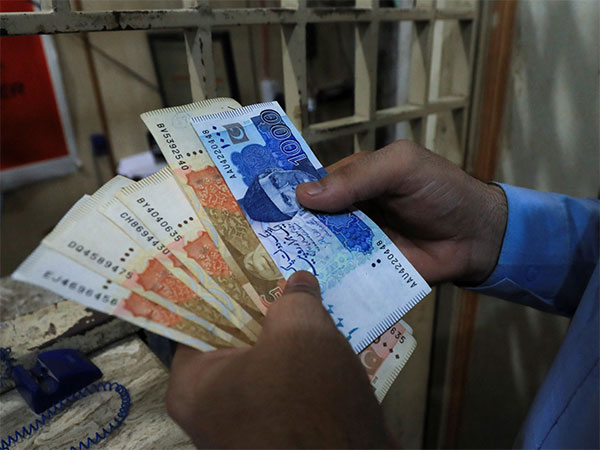
Pakistan’s economy has again managed to hit the international headlines. This time, it is the mounting foreign exchange crisis stemming from the intense pressure to pay back around $4.8billion of external debt.
However, the current forex crisis has aggravated over the last few decades. The country’s macroeconomic vitals are dismal, reeking of an ailing economy. After some policy measures, though there has been little progress towards stability, experts opine that the stability is dicey to sustain .
Investor confidence is a non-negotiable macroeconomic vital. Unfortunately, Islamabad has not been able to fare well in building investors' confidence as well. FDI has fallen by 33 percent in FY26, settling at 1.195 billion U.S. dollars .
This is a part of a more gradual systemic fall over the years as the recent inflows remain limited with $1.92 billion in 2023-24, $1.83 billion in 2024-25, and about $800 million in the first six months of 2025-26. As a share of GDP, FDI has remained below 0.45 percent. The dwindling confidence in the economy is also actively expressed through the exit and downsizing of several multinational firms in recent years.
These include Procter & Gamble’s decision to shut down manufacturing operations in Pakistan, along with exits or reduced presence by companies such as Shell, Telenor, Uber, Yamaha, Eni, some foreign banks, and pharmaceutical firms. This poor confidence in the business environment speaks volumes about the present and future of the economy. The present downsizing implies setbacks to multiple economic vitals, including the employment rate, consumption expenditure, and the poverty rate, and results in negative shocks to social indicators such as education and health.
The economy is working on a negative feedback loop. The withdrawal of investments directly results in a dwindling of the multiplier effect, which has a direct bearing on different macroeconomic vitals, resulting in further slowing down of an already ailing economy.
The labour force surveys reveal that the unemployment rate has increased from 6.3 percent to 6.9 percent between 2020–21 and 2024–25, with women and youth experiencing the highest levels of joblessness .
Urban unemployment remains substantially higher at 8 percent vis-à-vis rural unemployment at 6.3 percent. Besides, urban women face as high as 17–18 percent unemployment. Data since 2015 shows that job creation has slowed relative to population and labor force growth, intensifying youth competition for fewer quality jobs.
On the poverty eradication front, the World Bank has noted a tendency of poverty reversal in Pakistan, implying that the poverty headcount in Pakistan has increased to 44.7 percent. It implies that almost half of its population is living below the poverty line, subjected to abject poverty conditions.
What is even more unfortunate is the fact that the given figures are a conservative count, as they are not based on the most up-to-date data. Thus, given the current economic situation in Pakistan, experts opine that the figures with an updated dataset would reflect an even more gruesome reality of Islamabad. As per the multidimensional poverty index (MPI), about 40 percent of the Pakistani population is deprived of basic health, education, and living standards, considered necessary to live a meaningful life .
The trade front has also been showing dismal facts. Trade sector data also shows a rising imbalance. In the first half of fiscal year 2025-26, exports declined by 8.70 percent to $15.18 billion compared to $16.63 billion in the same period a year earlier, while imports increased by 11.28 percent to $34.4 billion from $30.90 billion. This pushed the trade deficit to $19.20 billion in the first half of the fiscal year. In November 2025 alone, the trade deficit rose nearly 33 percent year on year to $2.86 billion, while exports fell 15.4 percent to $2.39 billion.
Pakistan remains highly vulnerable to any external economic shock, exposing its fault lines and rendering any stability short-lived. Pakistan spends around 4 percent of its GDP annually on fuel and fertilizer from the Gulf . As it imports a majority of its fuel and food from West Asia and relies significantly on Gulf remittances, the current West Asian crisis has put the economy under significant strain, with Islamabad ordering austerity measures like the closure of schools and a reduced work week to deal with the oil crisis. Besides, any extension of the crisis period is expected to have a severe impact on Pakistan’s economy, as the economy is maintaining very low foreign exchange reserves, while the public debt situation has worsened .
Let us look at some more vitals. Public debt has risen from around Rs. 43 trillion in 2018 to Rs. 80.52 trillion by the close of fiscal year 2025, while external debt and liabilities stood at $138 billion. Economic growth for the last three years has averaged about 1.7 percent. The government's debt is worth 70 per cent of GDP, and gross financing needs are among the highest in the world.
The West Asian crisis further burdened the energy supply situation in the economy, with rising petrol and LNG prices. The hiking of energy prices further distorts economic activities due to higher transport costs, higher agricultural input costs, and increases in the prices of essential goods. Inflationary pressure has therefore intensified across multiple sectors. As part of its IMF programme, Pakistan has committed to further electricity tariff adjustments and to capping subsidies at Rs830 billion. This means additional pricing pressure is expected even as households and businesses continue to face high energy and living costs.
Besides, the economy’s external financing position has also come under pressure as the UAE reportedly sought the return of $3.5 billion , while China pressed for repayment of $220 million owed to United Energy Petroleum. These developments came at a time when Pakistan remained dependent on external support and rollover arrangements.
The situation is even more heart-wrenching as the leaders are unperturbed by the situation of the citizens, as they always manage to escape bankruptcy, by margins, through external funds. As recent as Saudi Arabia’s extension of $3 billion loans to boost its forex reserves, to 25 IMF bailouts it has secured since it joined the multilateral institutions, is both impressive and appalling. It is impressive for its ability to just manage to escape from the burning house by taking money from every external source possible, till it is ready to run into its fiscal troubles. Unfortunately, this last-minute stitch strategy is also the very nadir of the Pakistani awaam, who face the lowest socio-economic indicators and standards of living in South Asia.
The multidimensionality of economic problems also needs multidimensional solutions. However, there has been little impetus to improve its situation, as the leaders are still stuck in the suboptimal patterns of misplaced economic decision-making. The economy’s problems are structural .
They are rooted in a deep-seated, unstable democratic setup, a garrison nature of the state, and an entrenched setup of patronage politics with excessive power in the hands of the few: namely, the clergy, the military, and the elites. The deteriorating health of the economy, as experts have opined, needs more than stabilization .
The economy is marred with modest economic growth, high unemployment (especially youth unemployment), weak job growth, declining household consumption, and weakening exports and capital inflows. Because the economy always manages to save itself at the last minute, the reforms have always been put on the back burner of the leadership priority. As a result, any stability (achieved through foreign funds) never meets sustainability as the economy never meets transformations.