Thursday 21 / May / 2026
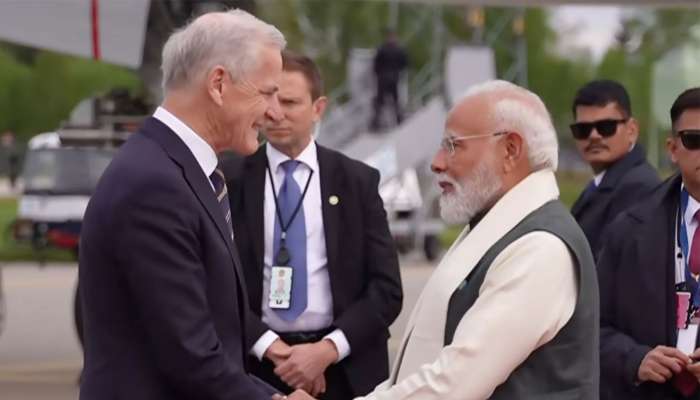
Prime Minister Narendra Modi’s current tour of Europe, taking him to the Netherlands, Sweden, Norway and Italy, is more than a diplomatic showcase. It is an effort to convert domestic political momentum into deeper economic and security cooperation with Europe. Modi arrives seeking progress on semiconductors, defence co-production, supply chain resilience and the long-pending EU–India free trade agreement (FTA). The message is clear: India wants to move from rhetoric to delivery.
The timing is deliberate. The April–May state elections boosted Modi’s Bharatiya Janata Party (BJP) and its allies, which now control 21 of India’s 28 states, covering roughly 80% of the population and 72% of its territory. Such dominance has not been seen since the 1970s, when Indira Gandhi and the Indian National Congress held comparable political control.
The key breakthrough was West Bengal, a state of around 100 million people, where the BJP took power for the first time. The result was immediately contested, with opposition parties alleging that around 9 million voters, mostly Muslims, had been removed from the electoral register, affecting the BJP’s path to control.
The dispute has intensified concerns over political polarisation. For European capitals, scrutiny of minority rights in India may become a point of friction in a deepening partnership. During the Dutch leg of Modi’s tour, Prime Minister Rob Jetten raised the treatment of minorities, a criticism Indian officials rejected.
Yet the broader significance for the EU lies in continuity. The results give New more political capital at a moment when EU–India relations are shifting from diplomatic aspiration to concrete agreements. With Modi strengthened, the risk that domestic instability could derail the FTA or the emerging defence-industrial partnership has been reduced.
However, the EU cannot treat India as a single implementation space. New Delhi may ratify an agreement, but India’s states will determine whether implementation succeeds. The BJP failed to win Tamil Nadu, one of India’s most export-driven states. The southern industrial powerhouse, with the country’s second-largest state economy, saw power shift from the ruling Dravida Munnetra Kazhagam (DMK) and its Communist allies to Tamilaga Vettri Kazhagam (TVK). Although opposing the BJP politically, the new leadership remains committed to external trade and EU market access.
However, other states, including Kerala, Punjab and parts of West Bengal, remain wary of exposing agriculture, fisheries and labour-intensive sectors. Several BJP-aligned northern states support the deal politically but worry about compliance costs for smaller manufacturers.
The EU must therefore engage not only New Delhi, but also state-level actors and regulatory systems.
Modi’s tour also coincides with the first anniversary of Operation Sindoor. Indian officials presented the operation as a success, but it exposed India’s reliance on ageing Russian equipment and slow procurement systems. The episode sharpened calls to diversify defence suppliers, accelerate technology transfers and build more resilient supply chains. European capitals took note. For the first time in decades, India began to frame ties with Europe not merely as trade policy, but as a national security necessity.
This shift now appears more likely to endure. Modi’s electoral gains provide stability; Operation Sindoor delivered the geopolitical shock; and his Europe tour signals intent. Together, they may create the conditions for an EU–India partnership that is operational, durable and substantive, rather than merely rhetorical.