Wednesday 18 / March / 2026
A quiet but consequential transformation is taking shape on the outskirts of Hyderabad. Spread across 25,000 square feet at Hardware Park near the international airport, Raghu Vamsi Aerospace Group’s newly launched Citadel Campus is far more than another industrial addition to the city’s skyline.
It represents a confident statement about where India’s defence manufacturing ecosystem stands today—and where it is headed.
In one decisive move, the company has combined deep-technology infrastructure with a bold portfolio of indigenously developed unmanned and autonomous defence systems, reinforcing India’s steady march towards strategic self-reliance.
The launch of the Citadel Campus, backed by an investment exceeding ₹100 crore, reflects the maturation of India’s private defence industry.
What once revolved primarily around licensed production and incremental assembly has now evolved into full-spectrum capability: design, integration, manufacturing, testing, and validation under one roof.
This integrated approach gives India not just capacity, but control—over timelines, over intellectual property, and over future technological direction.
Raghu Vamsi Aerospace Group enters this phase with solid credentials. Operating ten manufacturing facilities across three countries and employing over 1,000 skilled professionals, the group already supplies aero-engine and missile subsystems to global original equipment manufacturers as well as Indian defence public sector undertakings.
The Citadel Campus builds on that foundation, enabling faster turnaround, scalable production, and deeper involvement in strategic programmes that demand speed and precision.
What truly distinguishes the new campus is its alignment with the emerging character of modern warfare.
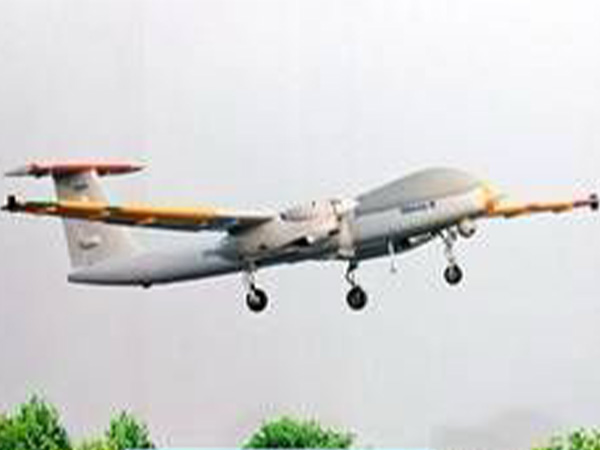
Alongside the infrastructure expansion, Raghu Vamsi unveiled six indigenously developed unmanned and autonomous defence products, collectively underscoring India’s growing competence in next-generation systems.
From jet-powered loitering munitions and long-endurance kamikaze UAVs to tethered surveillance drones and autonomous ground combat systems, the new portfolio reflects a design philosophy rooted in flexibility, range, and operational depth.
These systems—branded under names such as RV Astra, RV Maya, RV Lakshya, RV Rudra, RV Indra, RV Yodha, and RV Drishti—are designed for roles that span surveillance, deep-strike missions, battlefield logistics, and mission support.
With operational ranges exceeding 300 kilometres and speeds reaching up to 650 kmph, they illustrate how Indian platforms are now engineered for complex, multi-domain scenarios.
Just as importantly, they signal a transition in India’s defence posture: from dependence on imported UAVs and propulsion technologies to domestic development and manufacturing at scale.
The technological ambition on display is matched by a carefully structured collaboration ecosystem. To consolidate capabilities and accelerate defence exports, Raghu Vamsi Aerospace Group signed four significant memoranda of understanding at the launch event.
Each partnership addresses a critical layer of India’s defence innovation stack, creating synergy between the armed forces, public sector enterprises, academia, and advanced research institutions.
A strategic MoU with the Indian Army’s 515 Army Base Workshop focuses on co-design, development, testing, and validation of advanced drone platforms.
Under this framework, ARROBOT will assist the workshop in evolving into a system integrator, supporting the establishment of dedicated drone manufacturing facilities.
This collaboration highlights a new model of engagement, where the armed forces are active participants in shaping and refining the systems they deploy.
Another MoU, signed with Bharat Dynamics Limited, centres on the co-development and supply of fully indigenised 200 kgf thrust-class engines for next-generation autonomous fighter aircraft.
This partnership strengthens propulsion—a domain long recognised as a strategic differentiator—and places Indian industry at the heart of future air combat platforms.
The academic and research dimensions are equally significant. An MoU with IIIT Hyderabad covers the co-development of AI-based autonomy, intelligent perception, swarm intelligence, and mission systems for defence UAVs.
Meanwhile, collaboration with the International Advanced Research Centre for Powder Metallurgy and New Materials (ARCI) targets laser cladding, additive manufacturing, and thermal barrier coatings for advanced aero-engine technologies.
Together, these partnerships reflect a seamless flow from laboratory innovation to deployable systems.
The importance of the Citadel Campus was underscored by the presence of senior leaders from India’s defence and scientific establishment at the launch.
Vice Admiral Sanjay Vatsayan, Vice Chief of the Naval Staff; senior leadership from Bharat Dynamics Limited; senior officers from the Indian Army; former DRDO Chairman Dr. G. Satheesh Reddy; and senior advisors from the Ministry of Defence all attended the event.
Their presence signalled institutional confidence in the direction and depth of India’s private defence manufacturing capabilities.
At its core, the Citadel Campus embodies a philosophy that goes beyond physical infrastructure.
As Vamsi Vikas, Founder and Managing Director of Raghu Vamsi Aerospace Group, articulated, the investment is about building core defence technologies in India using homegrown talent.
The emphasis is not merely on meeting domestic requirements, but on developing systems that are globally benchmarked and ready for the next era of warfare.
This outlook aligns seamlessly with India’s broader strategic vision. Defence manufacturing is no longer viewed solely through the lens of procurement; it is increasingly recognised as a pillar of economic growth, technological sovereignty, and geopolitical influence.
Facilities like the Citadel Campus strengthen India’s strategic depth by ensuring that critical technologies are designed, owned, and refined within the country.
Hyderabad’s emergence as a hub for aerospace and defence innovation provides an ideal backdrop for this transformation. With its robust ecosystem of research institutions, manufacturing clusters, and skilled workforce, the city has become a natural home for advanced defence programmes.
The Citadel Campus adds momentum to this trajectory, reinforcing Telangana’s role in India’s national security architecture.
Perhaps most importantly, the new campus represents confidence—confidence in Indian engineers, Indian designers, and Indian manufacturing systems. It reflects a belief that India can shape the future of unmanned and autonomous warfare not as a follower, but as a contributor and supplier.
As the doors of the Citadel Campus open, they reveal more than cutting-edge labs and assembly lines. They reveal a defence ecosystem coming into its own—integrated, collaborative, and forward-looking.
In that sense, this 25,000-square-foot facility is not just an industrial milestone; it is a marker of India’s arrival as a serious force in global aerospace and defence manufacturing